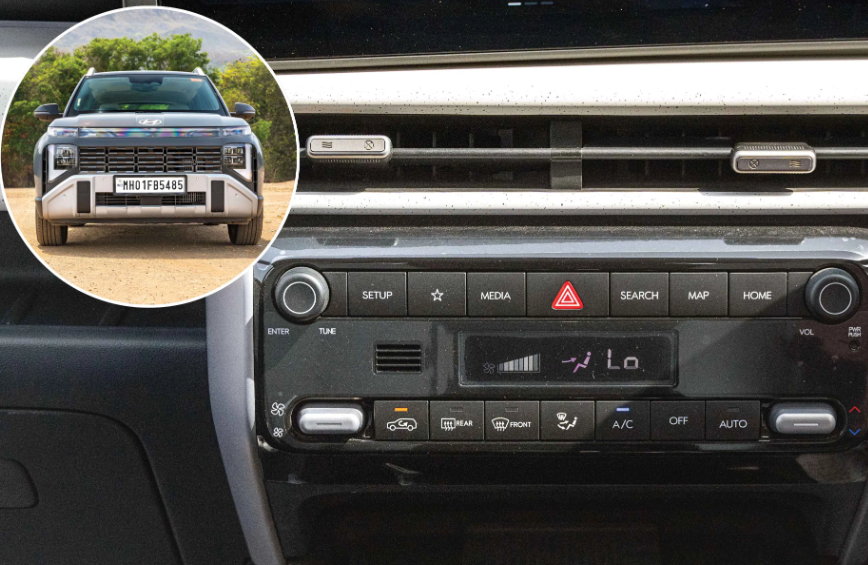
When cabin temperatures feel closer to an oven than a car interior, air-conditioning stops being a comfort feature and becomes a survival tool.
That is exactly what makes the latest compact SUV AC torture test so fascinating.
With summer temperatures soaring beyond 40°C across India, seven compact SUVs were pushed into one of the harshest real-world tests imaginable. Parked under direct sunlight for two hours, windows sealed shut, engines off and interiors baking in the heat, these SUVs faced a simple challenge:
Which one could cool down the fastest?
The answer wasn’t as obvious as many buyers might expect.
A Heatwave, Seven SUVs and One Brutal Test
This wasn’t a laboratory exercise.
Every vehicle was left exposed to direct sunlight before being driven through a fixed route while sophisticated thermal sensors tracked what was happening inside the cabin.
Five separate temperature points were monitored:
- Ambient temperature
- Cabin temperature
- AC vent temperature
- Driver-area temperature
- Rear-seat temperature
The goal was straightforward: measure how effectively each SUV could bring occupants relief after sitting in extreme summer conditions.
And the numbers quickly revealed major differences.
Must Read: 2026 Surprising Mileage Face-Off: Skoda Kushaq Quietly Beats Kia Seltos Where It Matters
Test Conditions at a Glance
| Parameter | Setup |
|---|---|
| Sun Exposure | 2 Hours |
| Windows | Fully Closed |
| AC Setting | Lowest Temperature |
| Blower Speed | Maximum |
| Mode | Recirculation |
| Driving Route | Fixed Route |
| Driving Speed | 50-60kph |
| Test Duration | 17 Minutes |
But that’s only part of the story.
The real surprise came once the cooling systems got to work.
Hyundai Venue Sets the Benchmark
Among the vehicles tested, the Hyundai Venue delivered one of the strongest early performances.
The SUV achieved an impressive 12.5°C temperature drop in just the first minute.
That is the kind of cooling performance drivers immediately notice when stepping into a car that has been sitting under a blazing sun.
The Venue also recorded:
- Lowest driver-area temperatures
- Lowest rear-seat temperatures
- Lowest overall cabin temperatures
A key factor appears to be the design of its AC vents, which provide broad airflow coverage throughout the cabin.
The result?
A cabin that cools rapidly and distributes cold air effectively to both front and rear occupants.
Interestingly, the Venue’s temperatures began creeping up slightly toward the latter stages of the drive. The increase wasn’t dramatic, but it stood out because the SUV had established such a strong lead early in the test.
That small detail highlights how demanding these conditions truly were.
Kia Sonet Fights Back Despite a Tough Disadvantage
If the Venue impressed, the Kia Sonet delivered its own noteworthy performance.
And it arguably started with a handicap.
The test vehicle was an X Line variant featuring:
- Dark matte exterior paint
- All-black cabin theme
Both factors typically absorb and retain more heat.
Yet the Sonet remained highly competitive.
Its vertically oriented air-conditioning vents helped spread cool air effectively across the cabin, creating a distinctly chilled environment while on the move.
While it didn’t cool as aggressively as the Venue, the Sonet still delivered very good performance in isolation.
That’s where things become interesting.
The gap between vent cooling, cabin cooling and final idle temperatures showed noticeable variation, suggesting that achieving low temperatures is only one part of the equation. Maintaining them consistently may be equally important.
Why This Test Matters More Than Ever
For years, buyers have compared compact SUVs based on:
- Mileage
- Features
- Touchscreens
- Safety ratings
- Performance figures
But during an Indian summer, none of those matter much if occupants are uncomfortable.
A powerful AC system can completely change the ownership experience, especially for families spending hours in city traffic or long-distance highway journeys.
As temperatures continue rising across many parts of the country, cooling performance is becoming a more important purchase factor than ever before.
And this test highlights something many consumers overlook:
Not all climate-control systems are created equal.
The Contrarian View: Are AC Torture Tests Telling the Full Story?
Not everyone will agree that such tests represent everyday usage.
After all, most owners don’t leave their vehicles parked under direct sunlight for two hours before immediately setting off with windows sealed shut and the AC running at maximum power.
Real-world conditions vary significantly.
Factors such as:
- Cabin occupancy
- Traffic conditions
- Humidity levels
- Vehicle colour
- Window tinting
- Parking location
can all influence cooling performance.
That doesn’t make the results less valuable. It simply means buyers should view them as a stress test rather than a complete reflection of daily ownership.
The Bigger Question
The compact SUV segment has become one of India’s most fiercely contested markets.
Manufacturers continue battling over features, technology and performance figures.
Yet one of the most important everyday experiences remains surprisingly simple:
How quickly can a vehicle make you comfortable after stepping inside on a 40°C afternoon?
The Hyundai Venue has set an early benchmark in this round of testing, while the Kia Sonet has demonstrated that it remains a strong contender even under punishing conditions.
But with more SUVs still part of the broader comparison, one question remains unanswered:
When temperatures become truly unbearable, which SUV can stay coolest when it matters most?
Editorial Disclaimer: This article is based entirely on publicly available information from the cited source material. No facts, figures, outcomes, quotes or conclusions have been fabricated. Analysis and interpretations are limited to the available data and may evolve as additional information emerges.