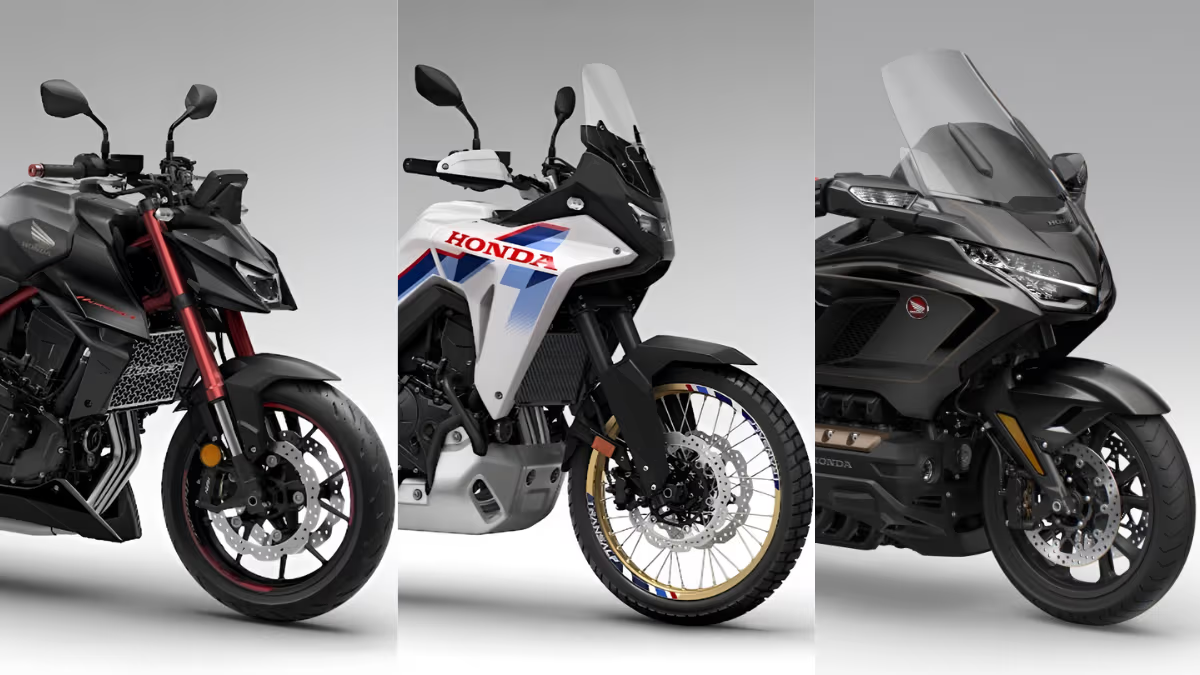
Motorcycle fans weren’t exactly expecting a full-blown tech refresh from Honda this week.
But India’s premium bike segment just got hit with something that quietly changes how you ride in traffic… and how you think about manual control.
E-Clutch is here in more bikes. A flagship returns. And a luxury icon gets a darker, moodier identity change.
And the reactions? Already divided.
Table of Contents
ToggleWhat Just Happened
Honda has rolled out a 2026 update for its big-bike lineup in India with three major moves:
- CB750 Hornet now gets E-Clutch
- XL750 Transalp also gets E-Clutch
- CBR1000RR-R Fireblade SP returns to India
- Gold Wing gets a new premium paint update
On paper, it looks like a clean refresh.
In reality, it’s a subtle but important shift toward automation in motorcycles.
The biggest talking point is the E-Clutch system — now expanded beyond the NX500 into larger, more performance-focused machines.
New pricing snapshot (India, ex-showroom Gurugram)
- CB750 Hornet E-Clutch: ₹10,49,000
- XL750 Transalp E-Clutch: ₹13,20,000
- Fireblade SP: ₹33,50,000
- Gold Wing: ₹44,30,000
That price jump on the E-Clutch variants alone is already sparking debate.
Why the E-Clutch Is Stirring Debate
The system sounds futuristic: no need to pull the clutch lever while starting, stopping, or shifting.
But here’s the emotional conflict — riders are split.
On one side, it feels like relief:
- Less fatigue in traffic
- Smoother gear shifts
- Still allows manual clutch use when needed
On the other side, purists are uneasy.
Because riding has always been about control — and E-Clutch quietly redefines that boundary.
Must Read: Citroën’s ₹1.4 Lakh Benefits Shock 2026 SUV Buyers in India
What Changed (And What Didn’t)
Mechanically, nothing dramatic has changed in the bikes themselves.
- CB750 Hornet still uses its 755cc parallel-twin engine
- XL750 Transalp continues as a middleweight adventure tourer
- Fireblade SP keeps its 1000cc inline-four producing 217PS and 113Nm
- Gold Wing retains its six-cylinder touring setup
So the real story isn’t horsepower.
It’s interaction.
You’re no longer fully managing the clutch in certain scenarios. And that’s where the conversation gets interesting.
Market Impact: A Quiet Shift in Premium Motorcycling
This move places Honda ahead in a very specific race — not speed, but usability.
If this spreads, expect competitors to react.
What this could trigger:
- Faster adoption of semi-automated clutch systems
- More “city-friendly” performance bikes
- Higher entry pricing for tech-equipped variants
- A new divide: traditional vs assisted riding purists
And that divide is already forming online.
Key Takeaway
The bikes didn’t become faster.
They became easier to live with — and that changes everything.
Contrarian View: Is This Actually Dilution of Riding Skill?
Not everyone is impressed.
A growing group of riders argues this is a slippery slope.
Their concern is simple:
If clutch control disappears step by step, what happens to core riding skill?
They believe:
- Traffic convenience is being prioritized over engagement
- New riders may never fully learn manual control
- “Assisted riding” could eventually become the default expectation
On the flip side, supporters argue this is the natural evolution — just like ABS once was controversial and is now mandatory in most markets.
So the question isn’t whether it’s useful.
It’s whether it changes what “real riding” means.
What Else Changed: Fireblade SP & Gold Wing Updates
Beyond the tech debate, Honda also played with emotion and aesthetics.
Fireblade SP returns
The CBR1000RR-R Fireblade SP is back in India with:
- Same aggressive MotoGP-inspired design
- Grand Prix Red with blue graphics
- High-end components like Öhlins Smart-EC 3.0 suspension and Brembo Stylema R brakes
It’s not subtle. It’s a statement machine.
Gold Wing gets darker
The Gold Wing now comes in Gun Metal Black Metallic — replacing the earlier Bordeaux Red tone.
It’s a visual shift toward a more stealth, premium identity rather than classic touring chrome presence.
Small change. Big personality shift.
What Happens Next
The real test begins now — not in dealerships, but in daily traffic.
Will riders embrace clutch-free convenience?
Or will they feel something is missing every time they shift without the lever?
Honda has opened a door here. But whether India walks through it… is still uncertain.
Because sometimes, the smallest mechanical change triggers the biggest identity crisis in motorcycling.
Final Thought
This isn’t just a model update. It’s a quiet question being asked to riders:
Do you want more control… or more convenience?
And the industry is about to find out which answer wins.
Disclaimer
This article is based on publicly available information. No facts, specifications, or outcomes have been fabricated. Interpretations and analysis may evolve as new information emerges.