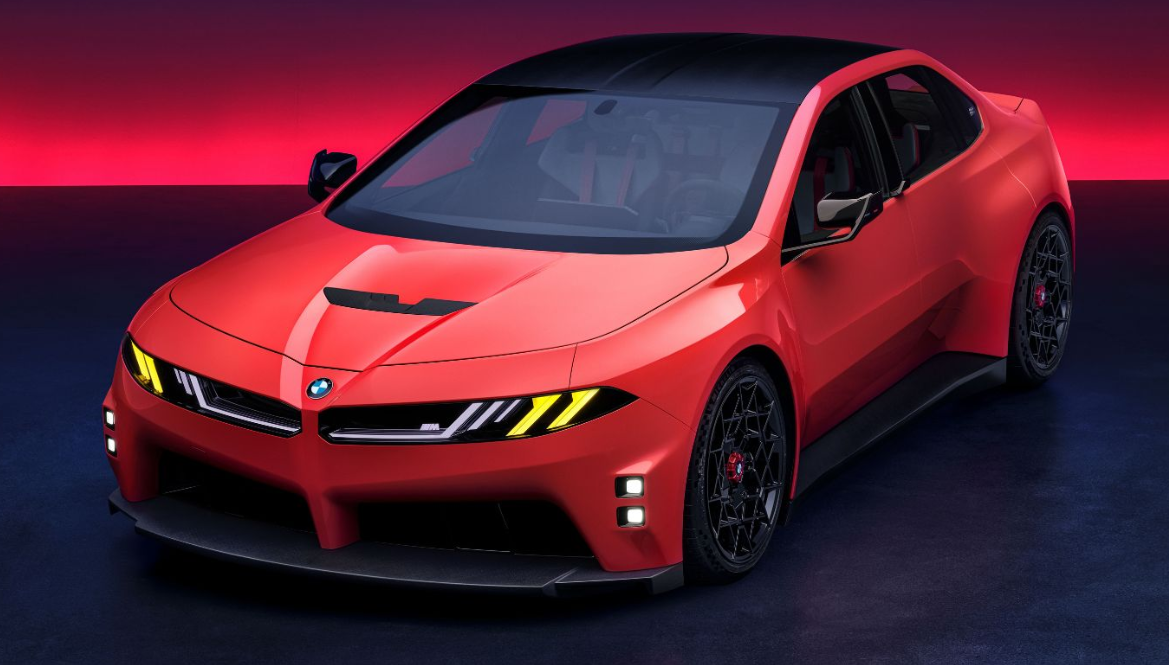
BMW just pulled the covers off something that could redefine the future of its performance division.
At the legendary 24 Hours of Le Mans, the German automaker unveiled the M Concept Neue Klasse — a dramatic preview of what future all-electric BMW M cars may look like. And while the aggressive styling grabbed attention immediately, the real story sits beneath the bodywork.
Because this isn’t just another electric concept.
It’s BMW’s clearest signal yet that the electric M3 era is getting very real.
A New Chapter for BMW M Has Officially Begun
For decades, the BMW M badge has been associated with roaring engines, precision handling, and track-focused performance.
Now BMW is preparing for a future where electricity replaces combustion — without abandoning the performance DNA that made M famous.
The M Concept Neue Klasse showcases a completely new M-specific electric architecture built around BMW’s sixth-generation Neue Klasse technology platform.
And the numbers alone suggest BMW is not approaching this transition cautiously.
Key Highlights
- Four electric motors
- 800-volt electrical architecture
- Battery pack exceeding 100 kWh
- Individual wheel power and braking control
- M-specific sixth-generation battery technology
- Faster charging capability
But that’s only part of the story.
Must Read: 2026 Skoda Kylaq Sportline Brings a Massive Twist to India’s Fast-Growing SUV Battle
The Technology BMW Is Betting On
The biggest talking point is BMW’s newly developed M eDrive system.
Instead of relying on a conventional dual-motor setup, BMW has engineered a four-motor configuration paired with M Dynamic Performance Control software.
That allows the system to manage each wheel individually for both power delivery and braking functions.
In simple terms, the car can constantly adjust how power reaches every corner of the vehicle.
The goal?
Sharper responses, improved traction, and a driving experience that still feels worthy of an M badge.
BMW also says the system delivers extremely high energy recuperation capability while improving response times.
That matters because one of the biggest criticisms of performance EVs has always been weight and driving feel.
BMW appears determined to tackle both.
The Design Is Aggressive — And Intentionally So
One look at the concept and it’s obvious BMW wants people talking.
Wide wheel arches.
Muscular shoulders.
An unmistakably planted stance.
The company has heavily linked the design to its motorsport roots through functional aerodynamic upgrades.
Notable features include:
| Exterior Feature | Purpose |
|---|---|
| M aerodynamic mirrors | Improved airflow |
| Bonnet air outlet | Functional cooling and aero benefits |
| Large rear diffuser | Aerodynamic efficiency |
| Ducktail spoiler | Increased downforce |
And this is where things become interesting.
BMW has merged the traditional kidney grille and headlight elements into a single design feature, creating one of the concept’s most distinctive visual signatures.
The front also introduces M Yellow Lights inspired by endurance racing machines, including the BMW M Hybrid V8.
At the rear, newly developed three-dimensional Track Lights frame the diffuser and further emphasize the concept’s race-bred character.
Lightweight Materials Meet Sustainability
Performance remains the focus, but BMW is also pushing sustainability.
The concept uses natural-fibre components in several areas, including:
- Front splitter
- Rear diffuser
- Bonnet air outlet
- Roof graphics
BMW says these materials help support both lightweight construction and environmental goals.
The exterior is finished in Monza Red metallic, while centre-lock wheels featuring red and blue accents strengthen the connection to BMW M heritage.
Inside, It Feels More Race Car Than Luxury Car
Step inside and BMW’s priorities become obvious.
The cabin adopts a minimalist, performance-first philosophy.
Four newly developed bucket seats incorporate integrated natural-fibre structural elements, while a dual-tone Bathurst Blue and Berry Red Merino leather theme references BMW M colors.
Other highlights include:
- Red five-point harnesses
- Black nubuck leather trim
- Floating dashboard design
- Illuminated hexagonal M detailing
- Red-accented steering wheel controls
- Performance-focused digital displays
BMW says every aspect of the interior has been configured around driving performance.
The Contrarian View: Will Traditional M Fans Be Convinced?
Not everyone will celebrate this shift.
For many enthusiasts, the emotional appeal of BMW M has always been tied to engine sound, mechanical character, and the raw sensation delivered by internal-combustion performance cars.
A four-motor electric future may offer extraordinary speed and technology, but some purists will inevitably ask whether it can replicate the emotional connection that defined generations of M vehicles.
That debate isn’t going away anytime soon.
And BMW appears fully aware of it.
The company is effectively making a high-stakes bet that advanced software, instant torque, and motorsport-derived engineering can create a new kind of M experience.
What Happens Next?
The M Concept Neue Klasse is still a concept, but its message is difficult to ignore.
BMW is no longer treating electrification as a side project for its performance division.
Instead, the company is building a future where high-performance electric M cars sit at the center of the brand’s strategy.
The concept offers the clearest preview yet of what an electric BMW M3 could become — from its four-motor architecture to its race-inspired design and next-generation battery technology.
The bigger question now isn’t whether BMW M is heading into the electric era.
It’s whether this new generation of performance EVs can win over the enthusiasts who helped build the legend in the first place.
Editorial Disclaimer: This article is based solely on publicly available information released regarding the BMW M Concept Neue Klasse. No facts, specifications, outcomes, timelines, or claims have been fabricated. Analysis and industry interpretation may evolve as additional information becomes available.