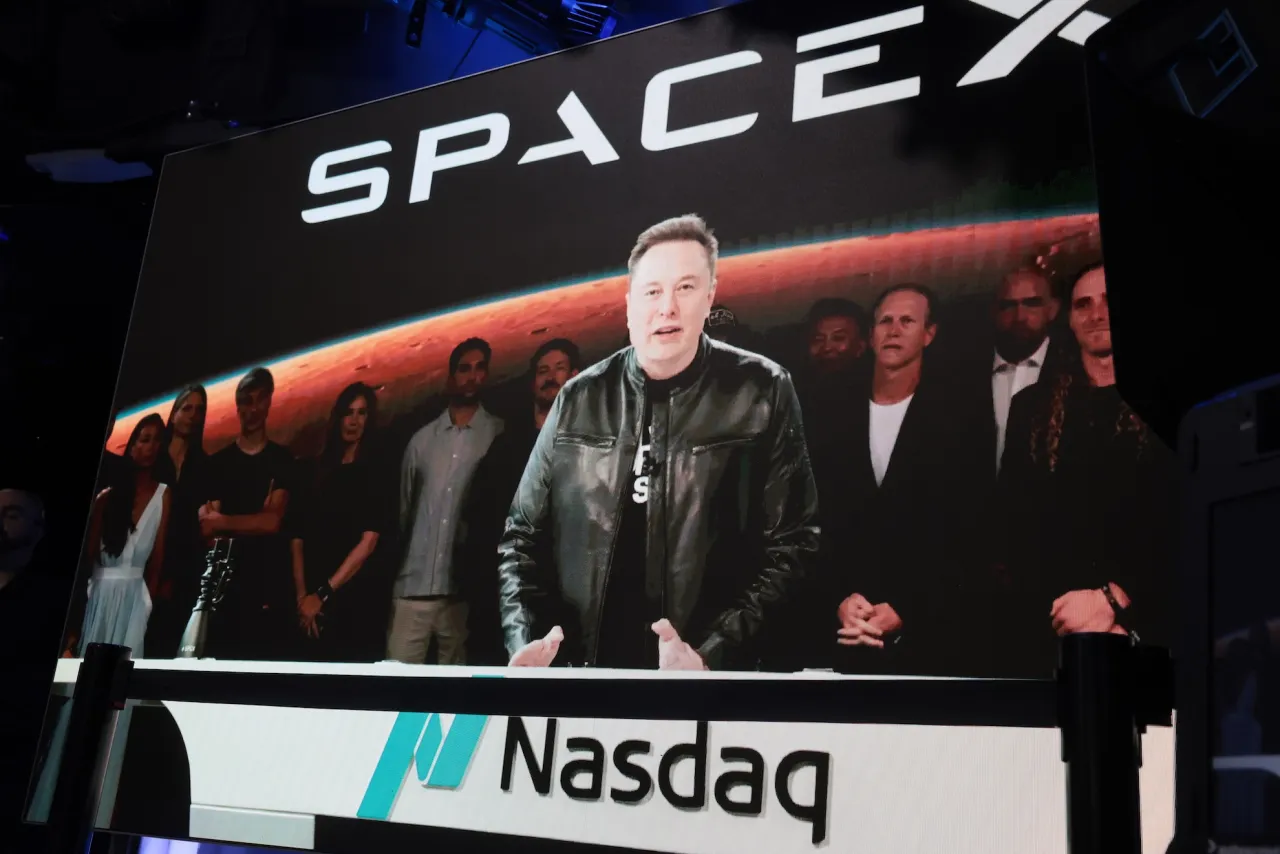
For years, SpaceX felt almost untouchable.
Now, for the first time, the rocket giant is being judged minute-by-minute by public markets.
And the numbers coming out of its historic 2026 IPO are hard to ignore.
SpaceX priced 555.6 million shares at $135 each, raising an astonishing $75 billion and becoming the largest IPO in history. Within hours of its Nasdaq debut, shares opened at $150, climbed sharply during trading, and eventually closed at $160.95—up 19% on the day.
That alone would have made headlines.
But the bigger story may be what this moment means for Elon Musk, investors, employees, and the future direction of one of the world’s most ambitious companies.
What Happened
The long-awaited SpaceX IPO finally arrived after years of speculation.
Investor demand appeared intense from the opening bell.
By midday, shares had surged roughly 30% before settling lower and finishing the day with a still-impressive 19% gain.
According to Robinhood, the debut generated record-breaking traffic on its trading platform as retail investors rushed to follow one of the most anticipated public offerings ever.
Must Read: Meta AI Unit Chaos in 2026: Shocking “Gulag” Claims Inside 6,500-Engineer Team
IPO Snapshot
| Metric | Figure |
|---|---|
| Shares Offered | 555.6 million |
| IPO Price | $135 |
| Capital Raised | $75 billion |
| Opening Price | $150 |
| Closing Price | $160.95 |
| First-Day Gain | 19% |
The scale of the offering instantly placed SpaceX in financial history books.
But that’s only part of the story.
Elon Musk’s Power Just Got Even Bigger
Few IPOs are as closely tied to a single individual as this one.
SpaceX’s filing revealed that Musk controls roughly 85.1% of the company’s voting power.
That level of influence is extraordinary even by technology-industry standards.
The IPO also pushed Musk’s paper wealth above the trillion-dollar mark, making him the world’s first trillionaire according to coverage surrounding the offering.
Supporters see that as proof of extraordinary value creation.
Critics see something else: a growing concentration of economic and corporate power around a single individual.
And this is where reactions started exploding.
The Winners Go Beyond Musk
The IPO created winners across multiple groups.
Thousands of employees suddenly found themselves sitting on potentially life-changing wealth.
One figure stood out:
- Approximately 4,400 employees could reportedly become millionaires
- Major Wall Street banks earned roughly $500 million in fees
- Early investors received a major liquidity event
- Retail investors finally gained direct market access to SpaceX shares
Musk himself publicly thanked employees as shares climbed, posting messages of appreciation throughout the day.
But not everyone celebrating the IPO is focused on stock prices.
Many investors are watching what happens next.
A Surprise Tesla Twist
One of the most discussed moments of IPO day didn’t come from trading screens.
It came from a CNBC interview.
SpaceX COO Gwynne Shotwell suggested that a merger between SpaceX and Tesla “might make Elon’s life a little easier.”
The comment immediately reignited speculation that has circulated for years.
No merger announcement exists.
No transaction has been proposed.
But the remark was enough to trigger fresh debate about whether Musk’s sprawling business empire could become even more interconnected in the future.
That possibility remains entirely speculative.
Still, investors are paying attention.
The Numbers Behind the Excitement
The IPO filing offered an unusually detailed look inside SpaceX.
And some of the numbers are far less glamorous than the soaring stock chart.
Key Financial Figures
- 2025 revenue exceeded $18 billion
- 2025 net loss reached approximately $4.9 billion
- Total historical losses have surpassed $37 billion since the company’s founding
Those figures highlight a fascinating contradiction.
SpaceX is one of the most admired companies in the world.
Yet it remains a business investing enormous sums into long-term projects, including Starlink, Starship, artificial intelligence initiatives, and future growth opportunities.
That creates both opportunity and risk.
The Contrarian View
The excitement surrounding the IPO is understandable.
But investors may eventually face harder questions.
SpaceX’s public-market debut has created enormous expectations overnight.
Now the company enters a world where quarterly results, shareholder pressure, and valuation scrutiny become unavoidable realities.
The challenge is simple:
Can a company built around long-term moonshot ambitions continue operating with the same freedom now that public investors expect measurable financial performance?
That tension could become one of the defining stories of the next chapter.
What Happens Next?
The first trading day delivered exactly what many expected: massive attention, huge trading volumes, and another dramatic milestone in Elon Musk’s career.
Yet the IPO may ultimately be remembered for something bigger.
SpaceX is no longer just a private company pursuing ambitious goals in space, satellite internet, artificial intelligence, and advanced technology.
It is now a public company facing constant scrutiny from investors around the world.
The stock surged.
Employees celebrated.
Wall Street collected its fees.
Musk expanded his influence even further.
But the biggest question remains unanswered:
Will public markets accelerate SpaceX’s ambitions—or slowly force one of the world’s most ambitious companies to think smaller?
Editorial Disclaimer
This article is based entirely on publicly available information from the source material provided. No facts, outcomes, quotes, statistics, timelines, or insider information have been fabricated. Analysis and interpretation may evolve as new information emerges.