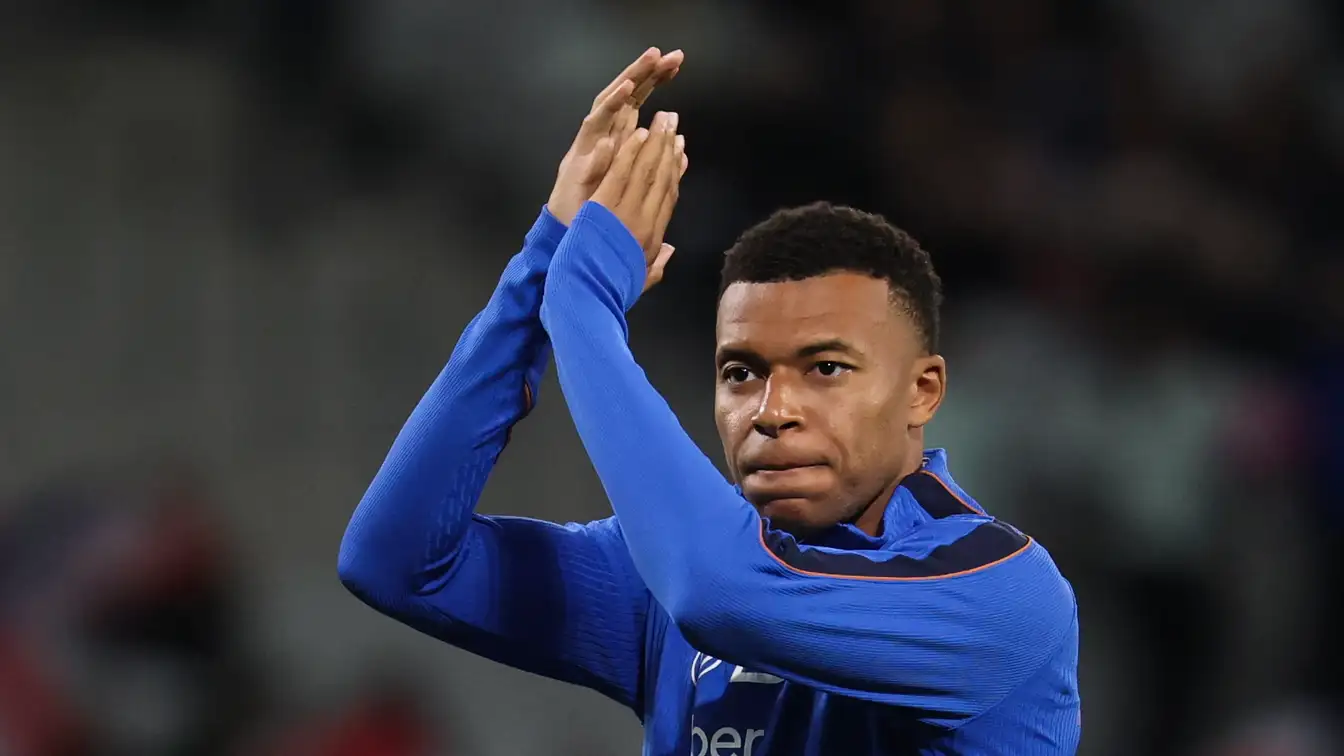
He’s scored in finals, carried France on the biggest stage, and still hears the same criticism echoing louder than the cheers.
Now Kylian Mbappe is promising something different ahead of 2026 — and it’s not about goals.
It’s about defending.
And that alone is shaking up expectations around France’s World Cup push.
Table of Contents
ToggleWhat Happened
Kylian Mbappe has publicly admitted he needs to “take another step forward defensively” if France national football team are going to win the 2026 World Cup.
Speaking in an interview with Le Parisien, Mbappe didn’t hide behind PR polish. Instead, he directly addressed one of the longest-running critiques of his game — his defensive work rate when France lose possession.
And the motivation? He made it personal.
He said he is “ready to do things right” because winning the World Cup is the ultimate goal.
Even more unusual: the questions came from his brother Ethan, adding a personal edge to an already emotional admission.
France open their campaign against Senegal national football team in what is expected to be a high-pressure Group I clash.
Must Read: Man Utd Transfer Shock in 2026 as Real Madrid Step Aside in £80m Fernandes Race
Why This Matters
Mbappe is not just another star in the system — he is the system.
At 27, he already has:
- 12 World Cup goals (2018 + 2022 combined)
- A World Cup title in 2018
- A Golden Boot in 2022
- A reputation as France’s decisive attacking force
But the conversation around him has quietly shifted.
Modern tournament football demands more than goals. It demands pressing, tracking, structure — especially in expanded World Cups where margins are thinner and fatigue hits harder.
And France know it.
A key internal belief in the camp is simple:
If Mbappe defends more, France become almost unplayable.
But that “if” is exactly where the debate begins.
Key Takeaway
Mbappe isn’t changing his talent — he’s trying to change how complete that talent looks on the biggest stage.
Industry Reaction: Support, Pressure, and a Warning Sign
The reaction has been split between admiration and caution.
Ousmane Dembele has defended Mbappe’s scrutiny, calling the criticism “excessive” and suggesting global stars are often judged beyond football logic.
Inside the France setup, however, the tone is more practical than emotional.
Mbappe remains the tactical centerpiece — but also the emotional anchor. Teammates reportedly still see him as the leader who defines France’s attacking identity.
Meanwhile, former Arsenal manager Arsène Wenger offered a different angle.
He suggested Mbappe was unfairly singled out during a difficult spell at Real Madrid, where inconsistent team performances made him an easy target.
Wenger’s broader belief is blunt:
a fresh, motivated Mbappe entering a World Cup is still the most dangerous weapon in world football.
Hidden Problem: The Defensive Question Won’t Go Away
Here’s the uncomfortable part for France.
Mbappe’s admission doesn’t erase years of tactical debate.
Coaches have long weighed the trade-off:
- Protect Mbappe’s energy for attacking bursts
- Or demand full defensive responsibility in elite pressing systems
In knockout football, that balance becomes critical.
And opponents notice everything.
Teams like Senegal will almost certainly test his side of the pitch early — not just to exploit space, but to force a response.
That’s where this story becomes tactical, not emotional.
Contrarian View: Is This Even the Right Fix?
Not everyone believes Mbappe should change.
A growing counter-argument inside football analysis circles is simple:
Why force your most explosive attacker into heavy defensive duties if it reduces his output in transition?
The logic:
- Elite forwards decide tournaments
- Defensive structure should compensate for them
- Overloading stars with dual roles can blunt attacking sharpness
In that view, France’s challenge isn’t Mbappe’s defending — it’s designing a system where he doesn’t need to become a full-time presser.
It’s a subtle but powerful disagreement:
adapt the player… or adapt the team.
What Happens Next
Mbappe now heads into a tournament where scrutiny will be immediate.
All eyes will be on:
- His defensive positioning without the ball
- How France balance structure vs freedom
- Whether his energy shifts change his attacking impact
- And whether early group-stage matches reveal real tactical adjustments
There’s also a historic subplot building underneath everything.
Mbappe already sits on 12 World Cup goals — just four away from Miroslav Klose’s record of 16.
If he improves defensively without losing attacking edge, France could be watching history unfold in real time.
If not, the debate around him will only get louder.
Final Word
Mbappe’s message is clear: evolution is no longer optional — it’s part of the mission.
But football rarely rewards perfect balance. It rewards what survives pressure when everything tightens.
And at the 2026 World Cup, the real question might not be whether Mbappe can defend more…
It might be whether France can afford him to.
Disclaimer: This article is based on publicly available information from interviews and reported statements. No facts, quotes, or outcomes have been invented. Interpretations may evolve as new details emerge during the 2026 World Cup cycle.