Ohio’s governor race just took a sharp turn — and it’s not only about policy anymore.
It’s about identity, belonging, and whether voters feel they can “recognize” the candidate asking for their trust.
At the center of it all: Vivek Ramaswamy, a wealthy biotech entrepreneur and former presidential candidate now running to lead one of America’s most politically symbolic states.
And in rural Ohio, some voters are asking a blunt question: Is he really one of us?
Table of Contents
ToggleWhat Happened
In a small Appalachian town in Ohio, a Lincoln Day dinner turned into a snapshot of a larger political tension.
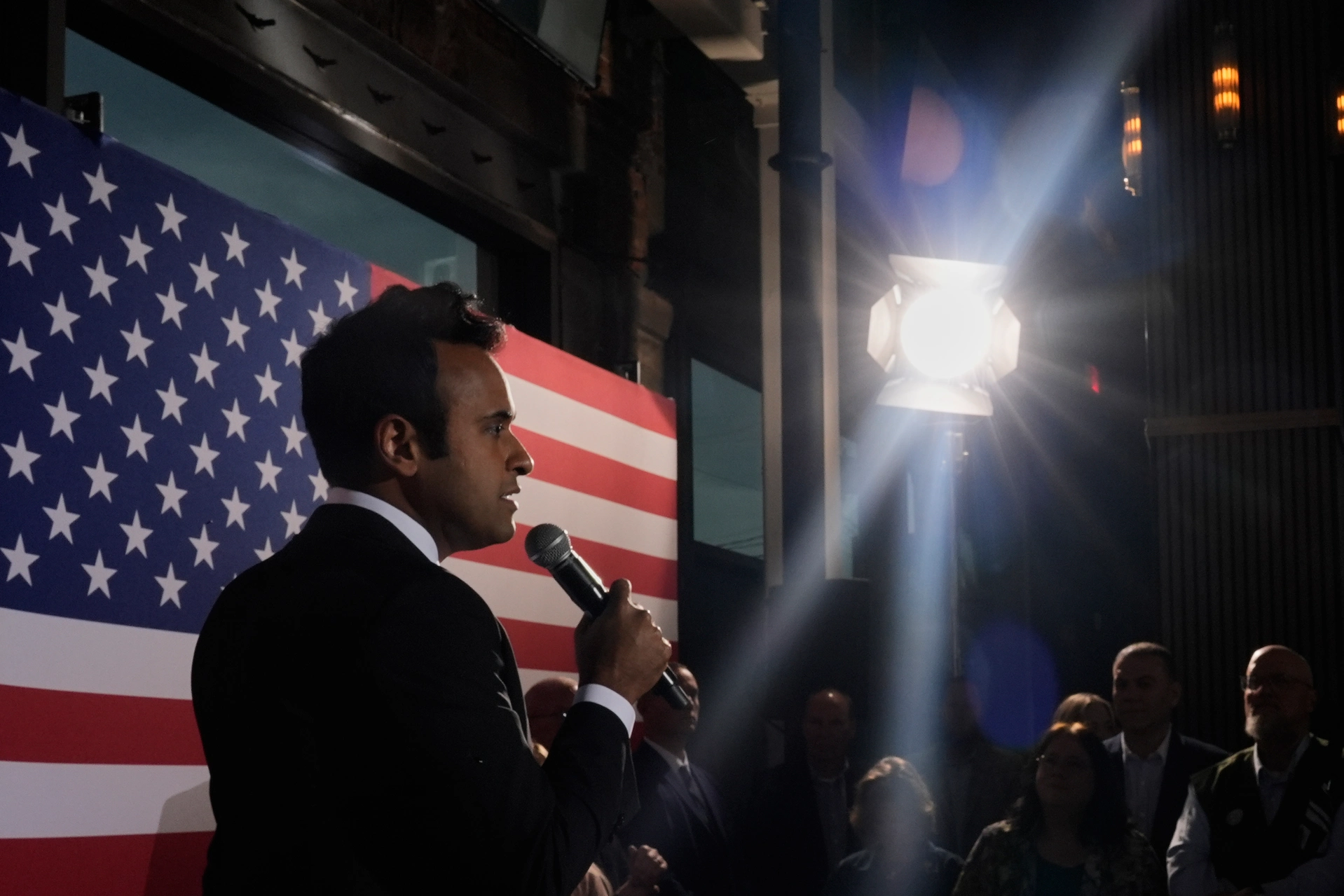
Ramaswamy walked into a school gym filled with red-white-and-blue decorations, steak dinners, and GOP loyalists. He spoke about the “American dream” — a message he repeats across the state.
But reactions were mixed.
Some voters applauded his promise to rebuild opportunity in declining industrial regions. Others quietly questioned whether his background — as an Indian American Hindu with elite Ivy League credentials — fits the identity of the state’s Republican base.
One local GOP figure put it bluntly:
“When you get to eastern Ohio, they look at him like they don’t know how to accept him.”
That sentiment now sits at the center of the race.
Must Read: 2026 Shock: 2 Anthropic AI Models Pulled After US Order Sparks Global Alarm
Why It Matters
Ohio is not just another state race — it’s a national signal.
- It has shifted from swing state to GOP stronghold
- It is deeply white and historically Christian in many regions
- It reflects broader Republican debates about identity and populism
Ramaswamy’s pitch is simple: anyone can achieve the American dream through hard work.
But critics — and even some supporters — say that message feels complicated coming from someone perceived as part of America’s elite class.
A union worker summed up the skepticism:
“They don’t even know what work boots are.”
The Cultural Fault Line Inside the GOP
The tension surrounding Ramaswamy isn’t just local. It mirrors a larger identity debate inside the Republican Party:
- “Heritage Americanism” influencers online argue that ancestry defines belonging
- Others push a more traditional civic nationalism
- Ramaswamy himself publicly rejects identity-based exclusion
Even within GOP circles, reactions are split.
Some voters see him as a symbol of opportunity and merit. Others see distance — cultural, economic, and personal.
Key Perception Divide
| Group | View of Ramaswamy |
|---|---|
| Union workers | Too elite, out of touch |
| GOP strategists | Competitive but untested |
| Rural voters | Mixed curiosity and skepticism |
| Supporters | Strong pro-growth outsider |
Why His Wealth Became a Political Issue
Ramaswamy’s biography is part of his brand:
- Harvard and Yale education
- Biotech startup success
- Private jet campaign travel
- Net worth in the billions (as described in the article context)
He argues this proves he understands how to create success.
But critics say it distances him from working-class voters who feel left behind by deindustrialization.
One union official compared the disconnect to lived experience:
“When you’re driving 120 miles at 4 a.m. to a job site… it’s different.”
That contrast is becoming a recurring campaign theme.
Hidden Tension: Identity vs. Policy
While the campaign focuses on jobs, manufacturing revival, and industrial investment, interviews across Ohio reveal something quieter but persistent.
Some voters don’t explicitly say race or religion — but reference familiarity, culture, and “fit.”
Campaign allies argue this fades once voters hear him speak. Others say it’s deeper than messaging.
A local GOP strategist warned the dynamic echoes past elections where identity quietly influenced outcomes, even when not openly discussed.
Contrarian View: Is This Actually About Race?
Not everyone agrees the issue is identity.
Supporters argue the real friction is economic, not cultural.
A GOP strategist described it as political timing more than personal bias:
- Inflation concerns
- Industrial decline
- War-related economic anxiety
- Anti-elite sentiment
From this perspective, skepticism toward Ramaswamy would apply to any wealthy, Ivy League candidate — regardless of background.
One supporter compared it to previous Republican success stories, arguing voters ultimately prioritize policy alignment over identity once persuasion kicks in.
What Happens Next
Ramaswamy’s campaign is betting that Ohio voters will eventually prioritize:
- Job creation promises
- Manufacturing revival plans
- Tax and regulatory reforms
His opponents, including Democrat Amy Acton, are emphasizing affordability, fairness, and lived working-class experience.
The unanswered question is whether identity skepticism is a temporary hesitation — or a structural barrier that policy messaging cannot fully overcome.
And with Ohio’s political identity already shifting once in the last decade, the 2026 race may reveal something bigger than one candidate:
Whether modern American politics is still driven more by ideas… or by recognition.
Disclaimer
This article is based on publicly available reporting and factual material from the provided source. No facts, quotes, or outcomes were invented. Interpretations reflect journalistic synthesis and may evolve as new information becomes available.