A small software update rarely creates excitement.
But Tata Motors is claiming something far bigger with the 2026 Tiago EV: charging times cut by as much as 40%.
And after real-world testing, the numbers are turning heads.
For anyone who has ever waited impatiently at a charging station, this may be one of the most meaningful upgrades the Tiago EV has received—despite looking almost identical underneath.
So what exactly changed?
And is this enough to make India’s most affordable electric hatchback even more attractive?
The Surprise: Same Battery, Dramatically Faster Charging
At first glance, the update seems almost impossible.
The 2026 Tata Tiago EV continues with the same 24kWh battery pack, the same 320V electrical architecture, and the same electric motor as before.
No larger battery.
No higher-voltage platform.
No headline-grabbing hardware revolution.
Yet Tata says charging performance has improved dramatically.
The company focused on refining software systems, battery management strategies, cell balancing processes, accelerator calibration, and energy optimization algorithms.
The result?
A significantly quicker charging experience.
And that’s where things become interesting.
Must Read: 2026 Hero Xtreme 250R Delivers a Surprising 39.21kpl Mileage Result
Real-World Charging Test Reveals the Difference
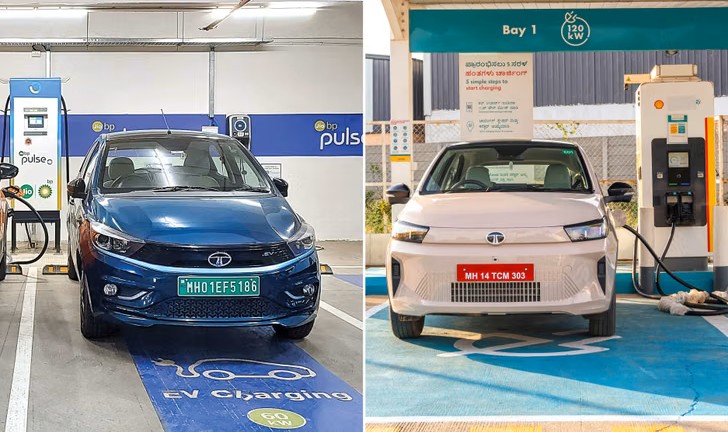
To verify Tata’s claims, the Tiago EV was connected to a 120kW DC fast charger.
The outcome closely matched the company’s official figures.
The battery charged from 20% to 80% state of charge in exactly 30 minutes.
That’s a major reduction compared to the previous version.
Charging Performance Snapshot
| Model | Charging Window | Time |
|---|---|---|
| 2026 Tata Tiago EV | 20% – 80% | 30 minutes |
| Previous Tiago EV | 20% – 80% | 45 minutes |
The improvement isn’t just visible on paper.
During testing:
- Average charging speed reached 24kW
- Peak charging speed touched 32kW
- Charging performance remained stronger throughout the session
By comparison, the outgoing model averaged around 15kW and peaked at roughly 19kW.
That’s a noticeable leap for an EV that retains the same battery size.
Why This Matters More Than Most People Think
Range figures often dominate EV conversations.
But charging speed can have a bigger impact on daily convenience.
A vehicle that spends less time plugged in becomes easier to live with.
That’s especially important for owners taking occasional highway trips between cities.
A 15-minute difference may not sound dramatic.
But repeated across multiple charging stops over months or years of ownership, it becomes meaningful.
And Tata appears to be targeting exactly that pain point.
The Catch Nobody Should Ignore
There is, however, one important detail.
Charging remains fastest during the middle section of the battery’s charge curve.
As with most electric vehicles, speeds begin falling significantly at higher states of charge.
The slowdown becomes particularly noticeable beyond 90%.
In fact, the final stretch is surprisingly gradual.
One Eye-Opening Statistic
- 93% to 100% charge required an additional 21 minutes
That means drivers seeking maximum efficiency may still find it smarter to disconnect before reaching a full charge unless absolutely necessary.
Battery protection and thermal management remain priorities.
And this is where EV charging often becomes more complicated than simple headline numbers suggest.
AC Charging Remains Practical for Home Users
Not everyone relies on DC fast chargers.
Many Tiago EV owners charge overnight at home.
Tata’s claimed AC charging figures remain practical for daily usage:
Home Charging Options
3.3kW Wallbox Charger
- 10% to 100% charge: Approximately 9 hours
7.2kW Wallbox Charger
- 10% to 100% charge: Approximately 3.5 hours
For urban users, that means the car can still comfortably recharge while parked overnight.
Contrarian View: Is This Really a 40% Improvement?
Not everyone may view the upgrade the same way.
Critics could argue that the Tiago EV still operates on a relatively modest charging platform compared with newer EV architectures entering global markets.
Even with improved software and battery management, peak charging speeds remain far below what many premium EVs can achieve.
However, that comparison may miss the point.
The Tiago EV competes in India’s affordable EV segment, where value, accessibility, and ownership costs matter far more than headline charging records.
Viewed through that lens, shaving 15 minutes off a charging stop becomes a meaningful real-world upgrade.
What Happens Next?
The most fascinating part of this story isn’t the charging speed itself.
It’s how Tata achieved it.
Rather than redesigning the battery pack or overhauling hardware, the company appears to have extracted more performance through software optimization and battery management improvements.
That raises a bigger question for the EV industry.
How much untapped performance still exists inside today’s electric vehicles?
If software can unlock gains this noticeable without changing core hardware, future updates across the industry could become just as important as new battery technologies.
And for Tiago EV buyers, that possibility may be almost as valuable as the faster charging itself.
Editorial Disclaimer: This article is based entirely on publicly available information and test data reported in the source material. No facts, figures, outcomes, or statements have been fabricated. Analysis and interpretation may evolve as additional information becomes available.