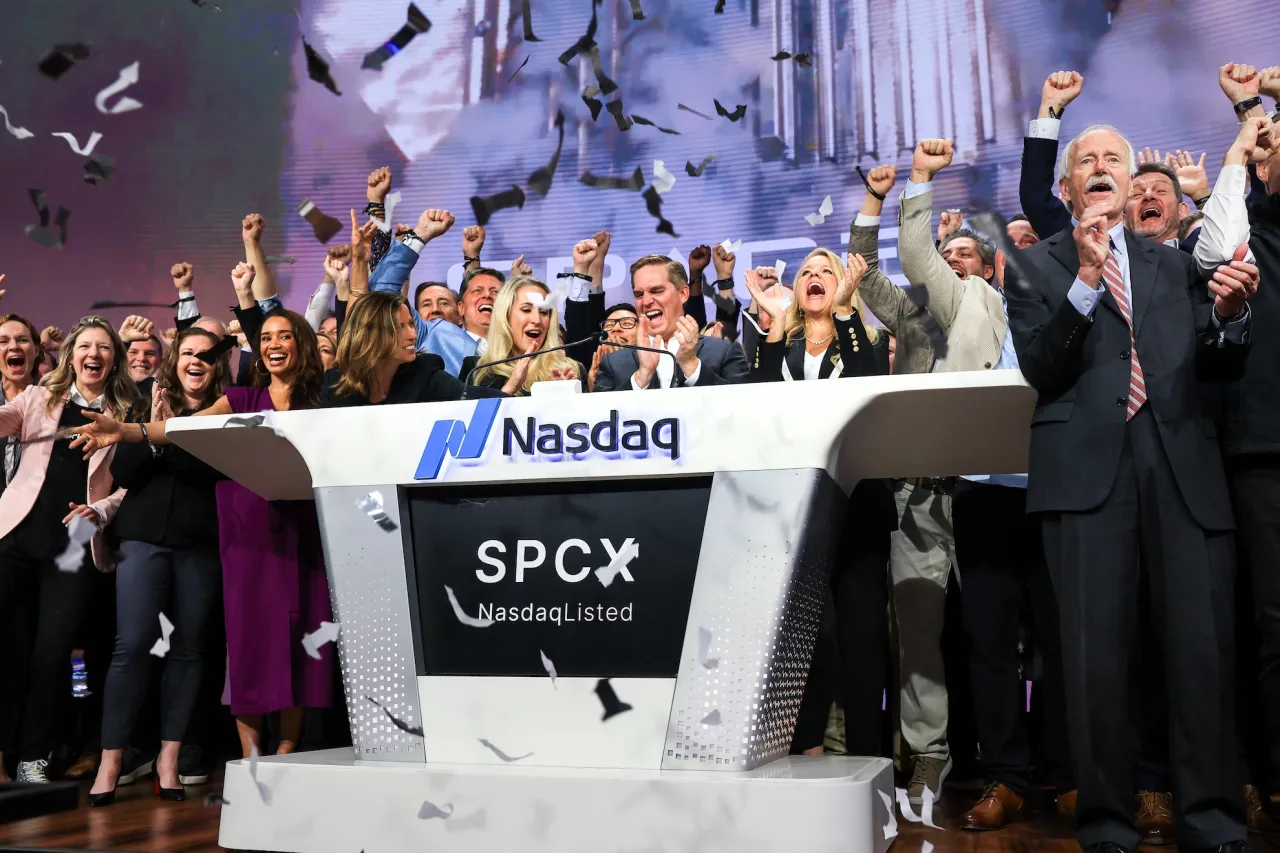
The biggest IPO in history just happened.
But the story may not be SpaceX itself.
It may be the chain reaction now spreading across the technology industry as AI companies race toward public markets, investors chase the next breakout winner, and startups rush to position themselves around a rapidly changing ecosystem.
And according to TechCrunch’s Equity podcast hosts, the consequences could extend far beyond a single stock listing.
Table of Contents
ToggleSpaceX May Have Opened the Floodgates
This week, SpaceX completed what TechCrunch described as the largest IPO ever, a milestone that made CEO Elon Musk the world’s first trillionaire.
Yet one of the most striking themes emerging from the discussion wasn’t simply SpaceX’s size.
It was what comes next.
Several major AI companies—including OpenAI and Anthropic—have reportedly confidentially filed for their own public market debuts, setting up what could become one of the busiest and most closely watched IPO periods in recent tech history.
That possibility is already changing conversations across Silicon Valley.
As TechCrunch’s Kirsten Korosec noted, the center of gravity in technology appears to be shifting.
For years, investors talked about FAANG:
- Facebook (now Meta)
- Amazon
- Apple
- Netflix
- Google (Alphabet)
Now, a new acronym is gaining attention:
MANGOS
| Company | Sector |
|---|---|
| Meta | AI & Platforms |
| Anthropic | AI |
| NVIDIA | AI Infrastructure |
| AI & Search | |
| OpenAI | AI |
| SpaceX | Space & AI |
The message is clear: AI labs and deep-tech companies are increasingly becoming the market’s main attraction.
The Real Battle May Be OpenAI vs Anthropic
SpaceX may have crossed the finish line first.
But another race is quietly taking shape.
According to the podcast discussion, OpenAI and Anthropic could be competing not only in AI development, but also in IPO timing.
Why?
Because investor capital isn’t unlimited.
Neither is public-market attention.
Anthony Ha pointed to analyst discussions suggesting that getting to market first could offer advantages when investors are deciding where to place enormous amounts of money.
The concern is simple:
If too many giant AI companies seek funding at the same time, competition for capital could intensify.
And that’s where things become interesting.
While headlines often focus on technological breakthroughs, timing itself may become a strategic weapon.
Musts Read: SpaceX’s Massive 2026 Surge Just Raised 5 Game-Changing Questions for Tesla
A Bigger Shift Is Already Underway
The most fascinating part of the conversation wasn’t about stock prices.
It was about behavior.
Companies throughout the economy are already changing course because of AI.
Some startups are reportedly raising money around concepts popularized by SpaceX, including orbital data centers.
Others are attempting to build businesses around infrastructure they believe AI demand will require.
Key Takeaway
AI may be reshaping the economy long before its ultimate technological impact is fully understood.
Sean O’Kane argued that AI is already altering economic decisions simply because companies are racing to build around it.
That ripple effect is showing up in unexpected places.
Even Traditional Industries Are Pivoting
One example discussed on the podcast involves major automakers.
According to O’Kane, companies such as Ford and General Motors are exploring ways to use battery-production capacity to support energy needs tied to data centers.
The reasoning is straightforward:
AI requires enormous computing power.
Computing power requires enormous energy.
Energy demand is creating new business opportunities.
Even companies that aren’t AI developers are looking for ways to participate in the boom.
And investors are paying attention.
The result is a growing network of industries attempting to connect themselves to AI growth.
But Not Everyone Is Convinced
This is where the conversation took a more skeptical turn.
Korosec compared today’s environment to earlier periods when companies tried to position themselves as the “next Tesla.”
Many pursued similar strategies.
Not all succeeded.
Her warning was direct: copying successful companies does not automatically create success.
The temptation is understandable.
SpaceX attracts attention.
Tesla transformed industries.
AI is attracting record levels of investment.
But history suggests that chasing trends can be dangerous when business fundamentals take a back seat.
Contrarian View
The dominant narrative says AI is creating a new economic era.
The contrarian argument is that some companies may simply be rushing toward whatever currently excites investors.
If businesses begin reshaping themselves primarily to benefit from AI enthusiasm rather than genuine competitive advantages, today’s excitement could create tomorrow’s challenges.
That doesn’t mean the AI boom is misplaced.
It simply means hype and opportunity can coexist.
What Happens Next?
The coming months could provide some answers.
OpenAI.
Anthropic.
SpaceX.
And potentially other technology firms preparing for public markets.
Each IPO will offer investors a new opportunity to evaluate how much they believe in AI’s long-term future—and how much they are willing to pay for it.
But the bigger question may not be who goes public next.
It may be whether this wave of AI-driven enthusiasm creates lasting economic transformation or encourages a generation of companies to follow a blueprint that only a few can successfully execute.
For now, one thing seems certain:
The AI IPO race has started.
And the entire technology market is watching.
Editorial Disclaimer: This article is based solely on publicly available information and statements discussed in TechCrunch’s Equity podcast and related reporting. No facts, quotes, outcomes, projections, or insider information have been added or fabricated. Analysis reflects information available at publication time and may evolve as new developments emerge.