Something unusual just surfaced from the AI world—and it’s not a new model or feature drop.
It’s a warning about permission, power, and energy… straight from Microsoft CEO Satya Nadella.
And it’s forcing a hard question the tech industry doesn’t like answering.
If AI doesn’t prove its value, will society simply stop accepting its cost?
What Happened
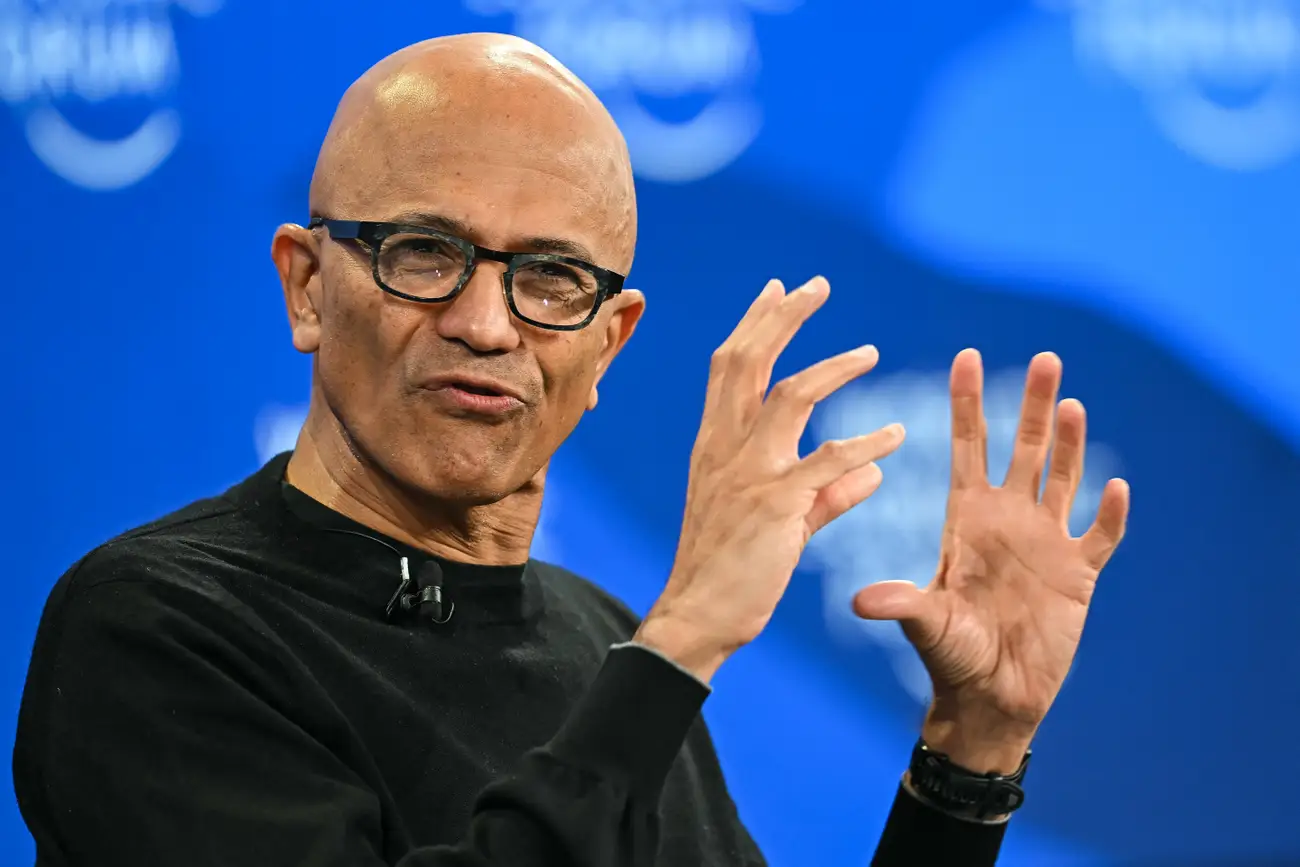
At a discussion during the World Economic Forum Annual Meeting 2026 in Davos World Economic Forum, Satya Nadella, CEO of Microsoft, delivered a sharp observation that quickly started circulating across tech circles.
His core warning:
“We will quickly lose even the social permission to actually take something like energy, which is a scarce resource, and use it to generate these tokens…”
He wasn’t talking in abstract terms.
He was pointing directly at AI systems that consume massive computing power—but may not always deliver visible real-world benefits.
And that’s where the tension begins.
Because AI isn’t just “software” anymore. It’s energy-heavy infrastructure competing with real-world needs.
Why This Matters
Nadella’s argument cuts through the hype cycle.
AI is often discussed in terms of:
- model size
- speed
- output volume
- benchmarks
But he shifts the focus to something far more uncomfortable:
Does AI actually improve human life?
He names the areas that matter most:
- healthcare outcomes
- education systems
- public sector efficiency
- business competitiveness
If AI doesn’t improve these areas, he suggests society may stop justifying its energy consumption altogether.
And that idea hits a nerve in 2026.
Because AI demand is rising—but so is pressure on:
- electricity grids
- data center expansion
- environmental sustainability
The Hidden Pressure Behind AI Growth
Behind the scenes, the AI boom is increasingly tied to physical constraints.
Here’s the uncomfortable reality shaping the industry:
| Factor | Pressure Point |
|---|---|
| Energy demand | Rising due to large-scale AI training |
| Data centers | Rapid global expansion |
| Public scrutiny | Increasing focus on sustainability |
| Corporate ROI | Pressure to show real-world value |
Nadella’s point lands right in the middle of this triangle.
And suddenly, AI is no longer just a tech story—it’s an infrastructure and ethics story.
Industry Reaction: Quiet but Tense
Inside tech circles, reactions have been mixed.
Some leaders see it as a necessary reality check.
Others see it as a warning shot aimed at the entire generative AI ecosystem—where systems often produce high volumes of output without guaranteed real-world impact.
And this is where things become interesting.
Because the industry has spent years optimizing one thing:
scale.
Now it’s being asked to justify:
purpose.
Contrarian View: Not Everyone Agrees
But there’s a strong counterargument brewing.
Critics of Nadella’s framing argue:
AI should not be judged only by immediate, measurable “social outcomes.”
Their view:
- innovation often creates value that appears later
- early-stage technology always looks inefficient
- restricting progress based on current utility could slow breakthroughs
In other words, today’s “energy cost concern” might be tomorrow’s “transformational foundation.”
This creates a philosophical divide:
- One side demands efficiency + accountability
- The other defends exploration + long-term disruption
And neither side is fully wrong.
What Happens Next
The real question isn’t whether Nadella is right or wrong.
It’s what companies will now be forced to prove.
AI developers may increasingly need to answer:
- What real-world problem does this solve?
- Does this reduce cost or improve outcomes?
- Is the energy usage justified by impact?
That shift could quietly reshape how AI systems are built in the next few years.
Because if his warning gains traction, the industry may move from:
“How big can we build?” → “Why are we building this at all?”
Final Thought
Nadella’s statement doesn’t reject AI—it challenges its direction.
And in a world where AI is becoming as fundamental as electricity itself, the idea of “social permission” becomes surprisingly powerful.
If society stops seeing value in the output… what happens to the input?
That question is now hanging over the entire AI industry.
Disclaimer: This article is based on publicly available information from the cited remarks and event coverage. No facts, quotes, or outcomes have been fabricated. Interpretations reflect contextual analysis and may evolve as new information emerges.