Factories just got a bold new idea dropped into their future.
Not a humanoid robot. Not a single-task machine.
But something that refuses to specialize at all.
That’s the promise behind Theker’s newly raised $85M Series A in 2026—and it’s already splitting opinions across the robotics world.
Because if one machine can do everything, what does that mean for the entire idea of automation?
Table of Contents
ToggleWhat Happened
Barcelona-based robotics startup Theker has raised $85 million in a Series A round, calling it “Europe’s largest ever robotics Series A.”
The round came less than a year after a record seed raise, signaling something unusual: investors are not waiting for slow robotics validation cycles anymore.
The funding mix is also telling.
- Led by US venture firm CRV
- Backed by Samsung
- Supported by Aglaé Ventures, tied to LVMH
That combination—tech, manufacturing, and luxury capital—says a lot about where robotics demand is heading.
But the real shock isn’t the money.
It’s what Theker says it’s building.
Must Read: 2026 Shock: Bezos’ Prometheus Raises $12B, Sparking Massive AI Engineering Shift
The Robot That Refuses to Specialize
Most industrial robots are trained for one thing. Pick. Pack. Sort. Repeat.
Theker is trying to break that rule entirely.
Instead of fixed-purpose machines, its system is designed to be reconfigurable:
- swap arms
- change hands
- resize structure
- adapt to different industrial environments
From sorting packages to handling bottles or folding garments, the idea is the same:
One robot. Many jobs. No specialization required.
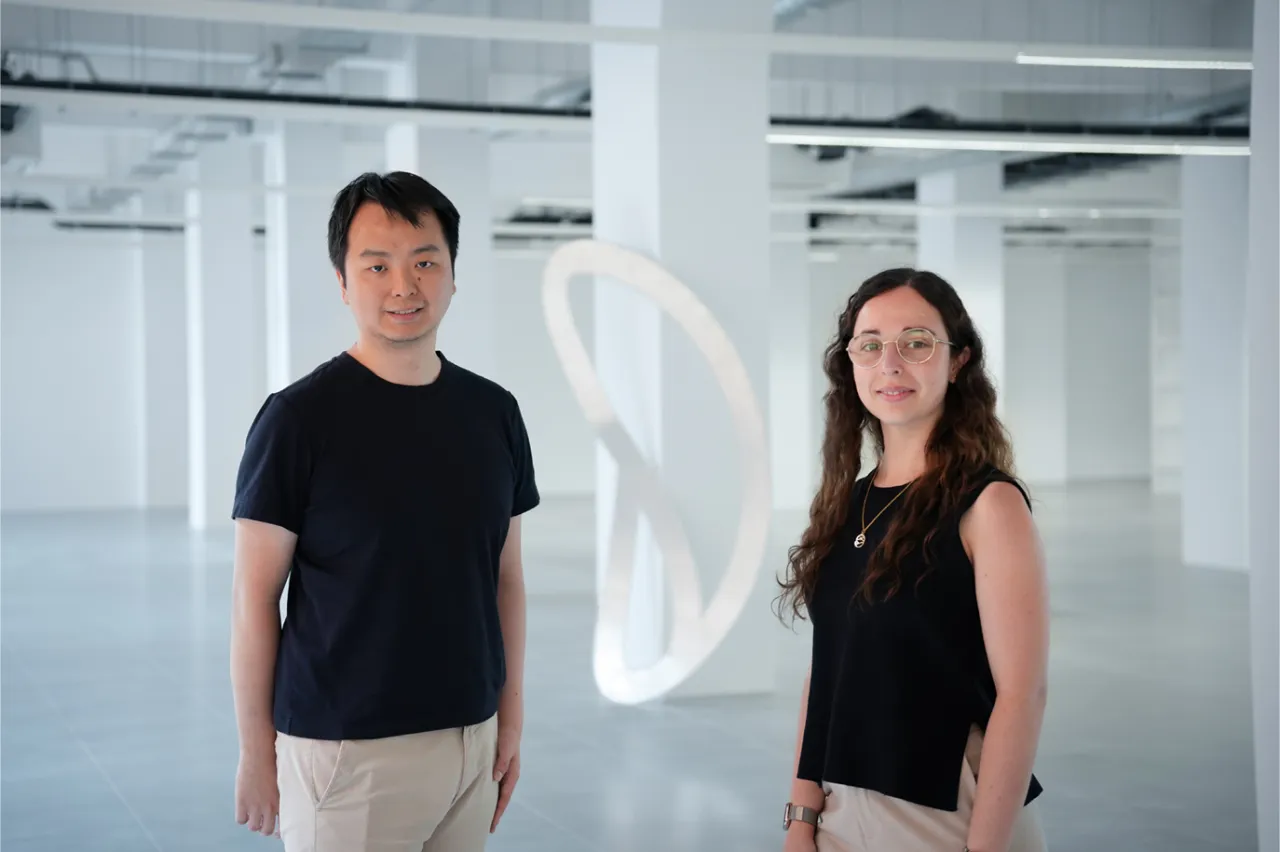
Co-founder Carla Gómez Cano summed up the philosophy simply: real factory work is messy, not repetitive.
And that’s where things become interesting.
Because robotics has always struggled with messiness.
Even giants like humanoid-focused systems—think early-stage approaches inspired by companies like Boston Dynamics—still rely on controlled environments or narrow task design.
Theker is betting the opposite.
Why It Matters Right Now
Factories across Europe, Asia, and the US are under pressure.
Labor shortages are getting worse. Costs are rising. Flexibility is becoming more valuable than precision optimization.
Theker is positioning itself directly in that gap.
A quick snapshot of its early momentum:
| Signal | Meaning |
|---|---|
| $85M Series A | Strong investor conviction |
| 15,000 job applications | Massive early hype |
| Inditex early backing | Real-world retail validation |
| Barcelona HQ | Europe-first robotics hub strategy |
That last point matters more than it looks.
Theker isn’t just building robots. It’s betting that Europe—not Silicon Valley—can become a serious robotics deployment center.
The Factory Strategy That Breaks Silicon Valley Norms
Here’s where Theker diverges from typical deep-tech startups.
Instead of running endless pilot programs, it says it skips “innovation departments” entirely.
That means no slow corporate experimentation loops.
Instead:
- direct deployment conversations
- logistics and operations teams first
- shorter sales cycles
To prove traction, Theker has even built a showroom in Barcelona and plans global expansion across Europe, the US, and Asia.
And hiring pressure is already intense.
“We already received 15,000 job applications,” Gómez Cano said, adding that scaling could push the team toward 120 people within a year.
That’s not a quiet startup anymore.
That’s acceleration mode.
Industry Reaction: Excitement… and Unease
Investors love flexibility. Manufacturers love efficiency. But robotics engineers? Not everyone is convinced.
The core concern is simple:
Can a general-purpose robot really outperform specialized machines in industrial environments?
Because historically, specialization wins.
Warehouses, factories, and logistics systems are built on optimization—not adaptability.
And reconfigurable systems introduce new complexity:
- hardware swapping overhead
- calibration issues
- maintenance unpredictability
- software coordination challenges
That’s where skepticism is starting to build.
But not everyone sees it as a weakness.
Some investors argue the industry has been stuck in “task thinking” for too long—and that real-world environments demand adaptability, not perfection.
Contrarian View: The “Generalist Robot” Might Be a Trap
Here’s the uncomfortable argument gaining traction quietly in robotics circles:
A robot that does everything may end up doing nothing exceptionally well.
Factories don’t just want flexibility. They want:
- speed
- reliability
- near-zero downtime
- predictable output
And generalization can threaten all of that.
Even Theker’s strongest supporters admit the risk: switching between tasks might cost efficiency that specialized robots already solved years ago.
So the real question becomes:
Is Theker building the future of robotics—or overengineering a solution to a problem factories don’t actually have?
What Happens Next
Theker now faces a critical transition phase.
Money is not the issue anymore. Execution is.
The company is expanding across continents while trying to prove that its reconfigurable robotics model can survive real factory conditions—not just showroom demos in Barcelona.
And investors are watching closely, especially strategic backers like Samsung, which could turn from investor into customer if discussions succeed.
If that happens, Theker’s concept stops being experimental.
It becomes infrastructure.
But if it doesn’t?
It becomes another ambitious robotics idea that was ahead of its time—or simply too broad to work.
Final Thought
Theker isn’t just building a robot.
It’s challenging a core belief in industrial automation: that machines should be narrow, optimized, and predictable.
Now the industry has to answer something bigger than funding rounds or demos:
Can general-purpose robotics actually survive the real world of factories?
Or will specialization win again—just like it always has?
Disclaimer: This article is based on publicly available information from the source material provided. No facts, figures, or outcomes have been fabricated. Interpretations reflect analysis at the time of writing and may evolve as new information emerges.