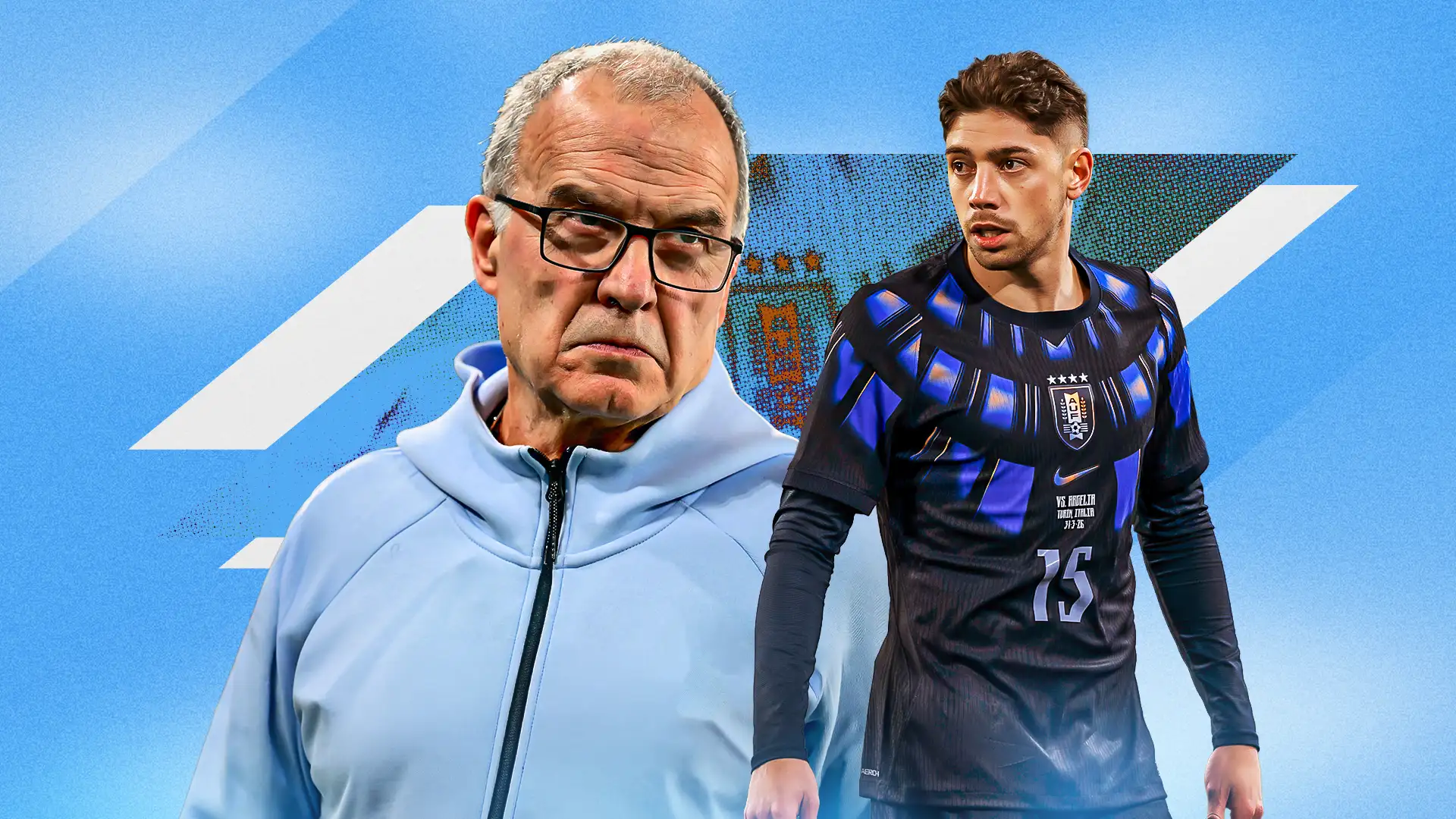
Something unusual is happening around Uruguay ahead of their 2026 World Cup opener.
This isn’t a team entering the tournament surrounded by excitement alone. It’s a team carrying questions, tension, and a coach who has publicly described himself as “toxic.”
And that is exactly why Marcelo Bielsa’s Uruguay may be one of the most fascinating stories of the entire World Cup.
As Uruguay prepare to face Saudi Arabia, the spotlight is not only on the players. It is firmly fixed on the man standing on the touchline — a coach admired by some of football’s greatest minds and criticized by some of his own stars.
The next few weeks could define how his Uruguay era is remembered.
The Dream Start That Changed Everything
When Bielsa was appointed Uruguay coach in May 2023, expectations were enormous.
The Argentine arrived with a reputation built over decades. While his trophy cabinet may not match some of football’s biggest names, his influence on the game is almost impossible to ignore.
At his unveiling, Bielsa spoke passionately about Uruguay’s talent and the connection between the national team and its supporters.
At first, though, there was resistance.
His willingness to move on from iconic veterans such as Luis Suarez and Edinson Cavani sparked debate across the country. Many wondered whether he was dismantling part of Uruguay’s football identity.
Then came the results.
Everything changed.
Uruguay defeated Brazil.
Then they stunned world champions Argentina in Buenos Aires.
The victory ended an extraordinary drought stretching back to 1937 and immediately transformed perceptions of Bielsa’s project.
Even Lionel Messi acknowledged the impact.
Uruguay’s aggressive pressing and rapid transitions overwhelmed one of the strongest teams in international football.
Suddenly, Bielsa looked like a visionary again.
Must Read: 2026 World Cup Hit by Massive Travel Chaos as Uruguay Faces Worrying Delay Before Saudi Arabia Clash
Key Moments of Bielsa’s Early Uruguay Era
| Event | Impact |
|---|---|
| Appointed in 2023 | Major rebuild begins |
| Veterans phased out | National debate erupts |
| Beat Brazil | Momentum grows |
| Beat Argentina in Buenos Aires | Belief explodes |
| Third place at Copa America | Expectations soar |
But that was only part of the story.
The Moment Everything Started Unraveling
The mood shifted dramatically after the 2024 Copa America.
What had appeared to be a successful project suddenly faced serious internal criticism.
And the loudest voice belonged to Uruguay’s all-time leading scorer.
Following his international retirement, Luis Suarez delivered a remarkable public assessment of life under Bielsa.
His comments painted a very different picture from the one many supporters saw on the pitch.
Suarez claimed players had experienced repeated disrespect and suggested frustrations inside the camp had reached dangerous levels.
His warning was stark.
According to Suarez, players would eventually reach a breaking point.
And this is where reactions started exploding.
Because Bielsa’s reputation has always lived between two extremes.
For some, he is a football genius.
For others, he is simply impossible to work with.
“I’m Toxic”: Bielsa’s Extraordinary Admission
Most coaches spend their careers trying to project calm.
Bielsa did the opposite.
After a humiliating 5-1 defeat to the United States in November 2024, he delivered one of the most revealing explanations of his personality football has seen in years.
He accepted responsibility for the defeat.
Then he went even further.
Bielsa openly described himself as a source of tension.
He called himself obsessive.
He described himself as robotic.
He admitted that associating with him could make life more difficult for others.
Those comments reinforced what football has long known about “El Loco.”
His intensity is both his greatest strength and his greatest weakness.
Why Bielsa Divides Opinion
- Relentless tactical demands
- Extreme attention to detail
- High-intensity playing style
- Emotional distance from players
- Complete obsession with improvement
For believers, those traits create elite teams.
For critics, they eventually exhaust everyone around him.
The contradiction sits at the heart of his career.
The Hidden Risk Facing Uruguay
The concern isn’t just about personalities.
It’s also about sustainability.
Bielsa teams are famous for their intensity.
They press relentlessly.
They run relentlessly.
They attack relentlessly.
But historically, critics have argued that such demands can eventually drain players physically and mentally.
That concern resurfaced after the heavy defeat to the United States.
Bielsa himself refused to offer excuses.
Instead, he blamed his own decisions.
That honesty earned respect.
But it also raised fresh questions about whether his methods still work at the highest level.
The Contrarian View: Maybe Everyone Is Missing The Point
Not everyone sees a crisis.
In fact, some observers believe the criticism itself proves Bielsa’s value.
After all, football’s coaching elite continue to speak about him with extraordinary admiration.
Pep Guardiola has repeatedly praised Bielsa’s influence on the game.
Mauricio Pochettino has described him as special precisely because he is different.
And there is evidence supporting their view.
Uruguay’s biggest performances of the last few years have often come under Bielsa.
The victories over Brazil and Argentina were not accidents.
They were tactical masterclasses.
From this perspective, the tension surrounding Bielsa may simply be the price of innovation.
Great ideas are rarely comfortable.
What Happens Next?
That is the question hanging over Uruguay’s World Cup campaign.
There is perhaps no team at the tournament with a wider range of possible outcomes.
Uruguay could emerge as genuine contenders.
Or they could unravel under the pressure.
Even Bielsa appears to recognize that his time with the national team may be nearing its conclusion.
Which makes every match feel bigger.
Every tactical decision more scrutinized.
Every result more significant.
The uncertainty is impossible to ignore.
And maybe that’s fitting.
Because nearly 40 years into his coaching career, Marcelo Bielsa remains football’s ultimate contradiction — admired, criticized, influential, exhausting, brilliant, divisive.
As Uruguay begin their 2026 World Cup journey, one question looms larger than ever:
Has “El Loco” finally lost his touch, or is the football world about to witness another reminder of why so many still consider him a genius?
Editorial Disclaimer: This article is based entirely on publicly available information and statements referenced in the source material. No facts, quotes, outcomes, or events have been fabricated. Analysis and interpretations may evolve as new information emerges during the 2026 FIFA World Cup.