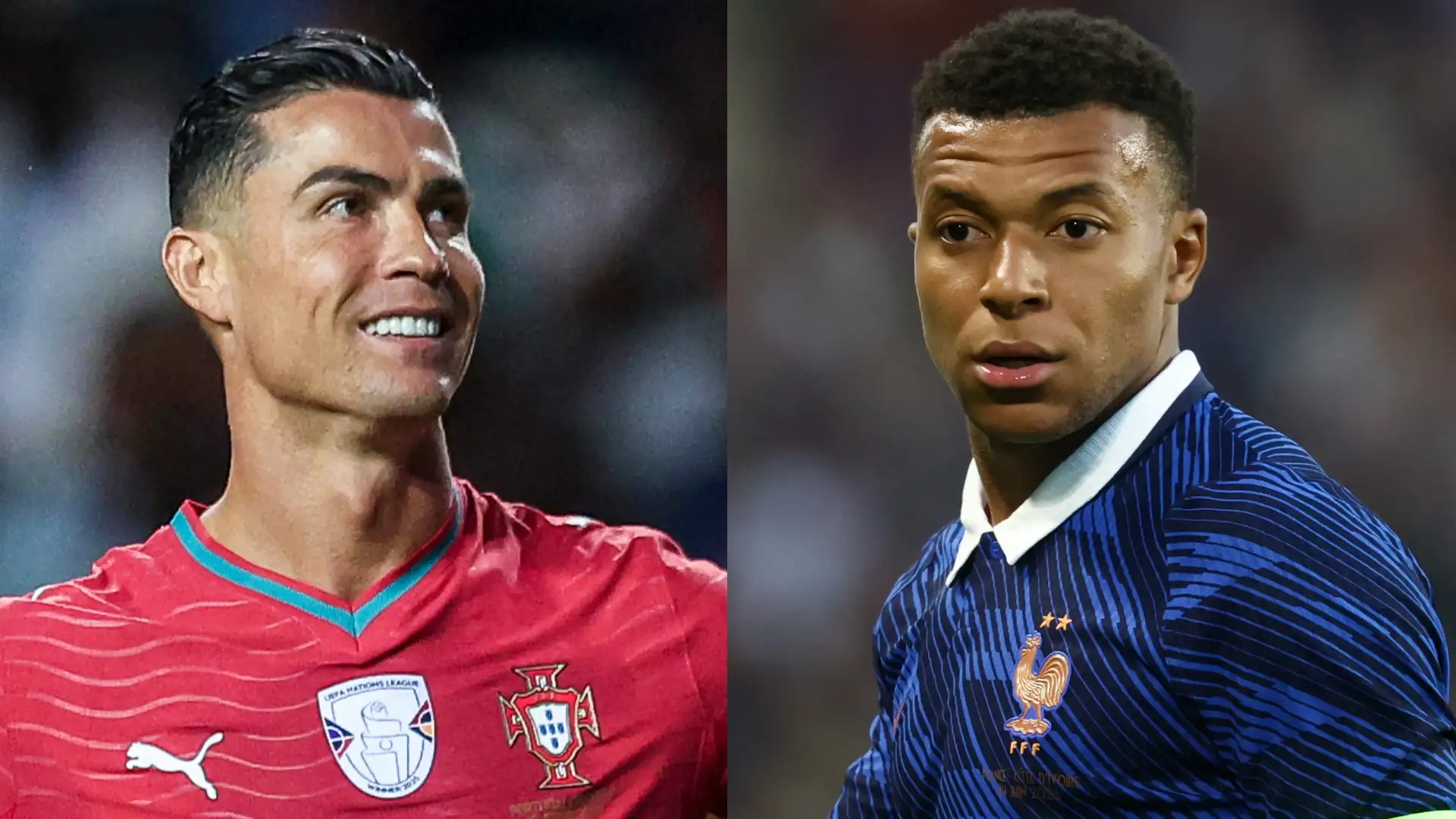
Kylian Mbappe has spent most of his life being told he was destined for greatness.
Now, one World Cup winner believes that may also be his biggest challenge.
As France prepares to begin another World Cup campaign, a fascinating debate has resurfaced around the Real Madrid superstar: can a player built to be football’s central character fully embrace a collective team identity?
It is a question that cuts far deeper than goals, trophies, or individual awards.
And according to former France defender Frank Leboeuf, the answer may shape the next chapter of Mbappe’s career.
The Star Who Was Always Meant to Be the Main Character
Few footballers have followed a path as extraordinary as Mbappe.
The French forward exploded onto the scene as a teenager at Monaco, won the World Cup with France in 2018, scored a hat-trick in the 2022 World Cup final, became Paris Saint-Germain’s all-time leading scorer, and later completed a blockbuster move to Real Madrid.
Today, he remains one of the most recognizable athletes on the planet.
But Leboeuf believes that success has created a unique challenge.
Speaking to GOAL in association with World Cup Betting, the 1998 World Cup winner suggested Mbappe has been conditioned from an early age to be football’s leading figure.
That mindset, he argues, can be difficult to change.
And that’s where things become interesting.
Must Read: 2026’s Surprising Ballon d’Or Twist: Dembele’s Massive World Cup Chance
Football Keeps Delivering the Same Lesson
Leboeuf pointed to a trend that has become increasingly difficult to ignore.
The biggest trophies are often won by the strongest teams—not necessarily the teams with the biggest stars.
Liverpool was one example he highlighted.
Rather than relying on a single superstar, the club built success around a collective unit featuring players such as Mohamed Salah, Virgil van Dijk, Alisson, Andy Robertson and Trent Alexander-Arnold.
The point was simple:
- Individual brilliance matters
- Team chemistry matters more
- Collective identity often decides titles
According to Leboeuf, football repeatedly proves that teams succeed when everyone functions as part of the same system.
But that’s only part of the story.
Why Mbappe’s Situation Is Different
Leboeuf did not place all responsibility on Mbappe.
Instead, he argued that modern football increasingly rewards individual recognition.
The Ballon d’Or has become one of the sport’s biggest talking points.
Social media magnifies personal brands.
Every performance is instantly dissected.
Every star is expected to become bigger than the game itself.
In that environment, becoming a team-first player may be easier said than done.
Leboeuf even suggested that football culture has shifted dramatically from his own playing days, when individual awards generated far less long-term discussion.
His broader argument is that modern football often celebrates the individual while the sport itself continues rewarding collective excellence.
Contrarian View: Is Football Asking Too Much of Mbappe?
Not everyone will agree with Leboeuf’s assessment.
There is another way to view Mbappe’s career.
After all:
| Achievement | Reality |
|---|---|
| World Cup winner | Achieved in 2018 |
| World Cup final hat-trick | Achieved in 2022 |
| PSG all-time leading scorer | Achieved before leaving for Madrid |
| Real Madrid goals | 86 goals in 103 appearances |
| France goals | 56 international goals |
Supporters could argue that players capable of producing those numbers should naturally be given freedom and responsibility.
Football’s greatest icons—from Lionel Messi to Cristiano Ronaldo—often became the focal point of their teams.
Mbappe’s supporters may see his desire to lead as a strength rather than a weakness.
That debate is unlikely to disappear anytime soon.
The Premier League Question Refuses to Go Away
As discussions about Mbappe’s playing style continue, another question keeps emerging.
Could he eventually move to England?
Leboeuf believes Mbappe possesses the qualities to succeed in the Premier League.
His pace and attacking ability could translate to any competition in world football.
The former Chelsea defender even admitted it would be fascinating to watch Mbappe competing directly with Erling Haaland in England’s top flight.
But he also identified major obstacles.
The transfer cost would be enormous.
And tactically, not every Premier League system appears to be an ideal fit.
Leboeuf questioned whether Mbappe would enjoy a role requiring him to wait patiently for service, comparing that challenge to the demands placed on strikers within certain tactical structures.
That raises another intriguing question.
If a Premier League move ever becomes realistic, which club could truly build around him?
What Happens Next?
For now, all attention remains on the World Cup.
France is once again among the tournament favorites, and Mbappe remains the face of their ambitions.
Meanwhile, another major storyline is developing in Madrid.
Jose Mourinho is set to begin a second spell at Real Madrid, inheriting a squad packed with elite talent and enormous expectations.
How he manages Mbappe within that environment will be closely watched.
Because the conversation surrounding Mbappe is no longer just about goals.
It’s about leadership.
It’s about identity.
And perhaps most importantly, it’s about whether football’s most explosive superstar can balance individual greatness with collective success.
As France begins another World Cup journey, one question lingers over everything:
Can Kylian Mbappe remain football’s main character while fully embracing the role of teammate?
That answer may define far more than the next tournament.
Editorial Disclaimer: This article is based entirely on publicly available information and comments cited in the source material. No facts, quotes, outcomes, timelines, or statistics have been fabricated. Analysis reflects interpretations of the available information and may evolve as new developments emerge.