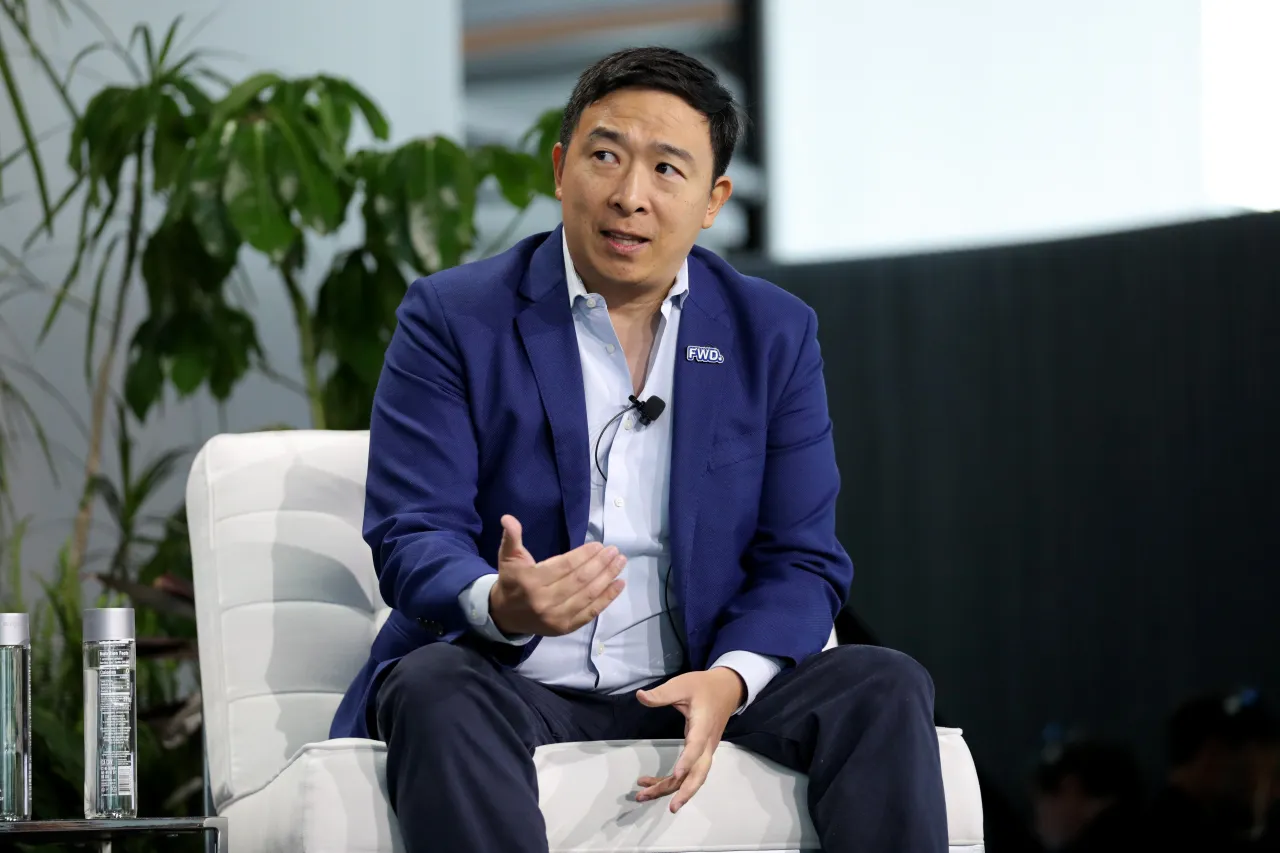
A surprising idea is gaining traction in Silicon Valley at a time when nearly every startup seems obsessed with AI.
Instead of figuring out how to extract more money from consumers, former presidential candidate and entrepreneur Andrew Yang believes the next major startup opportunity may come from doing the exact opposite: helping people spend less.
And as artificial intelligence threatens to reshape jobs, wages, and entire industries, Yang argues that lowering the cost of basic necessities could become one of the most valuable business models of the decade.
That may sound counterintuitive in an era defined by aggressive growth targets and premium subscriptions.
But Yang thinks the market is heading somewhere very different.
A Startup Model Built Around Giving Money Back
Speaking on TechCrunch’s Equity podcast, Yang pointed to a simple question that he believes too few founders are asking:
What if startups focused on returning value to customers instead of maximizing what they can extract from them?
The idea was inspired by entrepreneur Mark Cuban’s Cost Plus Drugs, which disrupted pharmaceutical pricing by selling medications at cost.
That example sparked a broader thought.
Yang identified several categories where Americans spend a significant portion of their income:
- Housing
- Education
- Food
- Fuel
- Transportation
- Media
- Wireless services
Instead of building another AI assistant or automation platform, Yang chose wireless.
Last September, he launched Noble Mobile, a mobile virtual network operator that offers lower-cost cellular service and gives customers money back when they use less data.
At first glance, it sounds almost old-fashioned.
But Yang believes it addresses a growing economic pressure that millions of people are already feeling.
Most Read: 2026’s Most Controversial AI Shutdown Just Hit Anthropic Hard
The AI Boom May Create a Different Kind of Opportunity
Much of Silicon Valley is currently focused on building increasingly powerful AI systems.
Yang is focused on what happens afterward.
His concern is that AI could compress wages, eliminate certain jobs, and concentrate enormous amounts of wealth among a relatively small number of companies and investors.
If that happens, consumers may become far more sensitive to everyday expenses.
As Yang put it, Americans could increasingly ask a simple question:
“How do I meet basic needs?”
That is where he sees a potentially massive startup opportunity.
Key Takeaway
| Traditional Startup Focus | Yang’s Alternative |
|---|---|
| Increase spending | Reduce spending |
| Premium upgrades | Cost savings |
| Revenue extraction | Profit sharing |
| More consumption | Lower living costs |
According to Yang, helping people access necessities more affordably could become an attractive business category as economic pressures intensify.
Noble Mobile Is Already Generating Revenue
The concept is no longer theoretical.
Yang said Noble Mobile has grown to “thousands and thousands” of customers since launching and is generating “millions in revenue.”
He also noted that the company is unit profitable on a per-customer basis.
The unusual part is what happens next.
Rather than keeping all of those profits, Noble Mobile shares profits with subscribers.
Yang believes the strategy encourages customer loyalty while creating a stronger relationship between businesses and consumers.
“We’re unit profitable per customer, but we just share the profits with our subscribers,” he said.
That approach stands in stark contrast to the subscription-heavy models that dominate much of the tech industry.
But that’s only part of the story.
Investors May Not Be Fully Convinced
While Yang sees a large market opportunity, convincing investors could be a different challenge.
Venture capital remains heavily concentrated around artificial intelligence.
Many investors are searching for the next breakthrough AI company rather than businesses built around thinner margins and consumer savings.
Yang revealed that at least one investor expressed enthusiasm about working with him—but attached a condition.
The investor reportedly said they would invest if Noble Mobile could somehow become an AI company.
That comment captures a broader reality in today’s startup ecosystem.
Right now, AI often attracts attention faster than almost anything else.
Contrarian View: Can Cost-Cutting Businesses Deliver Venture-Scale Returns?
Not everyone will agree with Yang’s thesis.
Many venture investors prefer startups capable of generating extremely high margins and rapid growth.
Businesses focused on reducing costs for consumers can face difficult economics, especially when they intentionally give part of their profits back.
Critics could argue that while customers may love lower prices, investors often reward companies that capture value rather than redistribute it.
The question is whether a customer-first model can consistently scale while still producing returns that venture capital expects.
That debate is likely to intensify as more founders explore similar ideas.
Why This Conversation Matters Beyond One Startup
Yang remains a supporter of Universal Basic Income, a policy he championed during his 2020 presidential campaign.
But he appears increasingly interested in another mechanism for redistribution: the market itself.
His argument is straightforward.
If AI creates extraordinary wealth, some of that value should ultimately flow back to ordinary consumers.
Whether that happens through government programs, private businesses, or a combination of both remains uncertain.
What is becoming harder to ignore is the growing tension between rapidly advancing technology and everyday affordability.
And that may be the real story here.
While much of the tech world races to build the future, Yang is betting that one of the biggest opportunities could come from helping people afford the present.
The bigger question now is whether entrepreneurs and investors will follow him—or continue chasing the AI gold rush.
Editorial Disclaimer: This article is based entirely on publicly available statements and reporting from TechCrunch. No facts, quotes, statistics, timelines, outcomes, or claims have been fabricated. Analysis reflects interpretation of reported information and may evolve as new developments emerge.