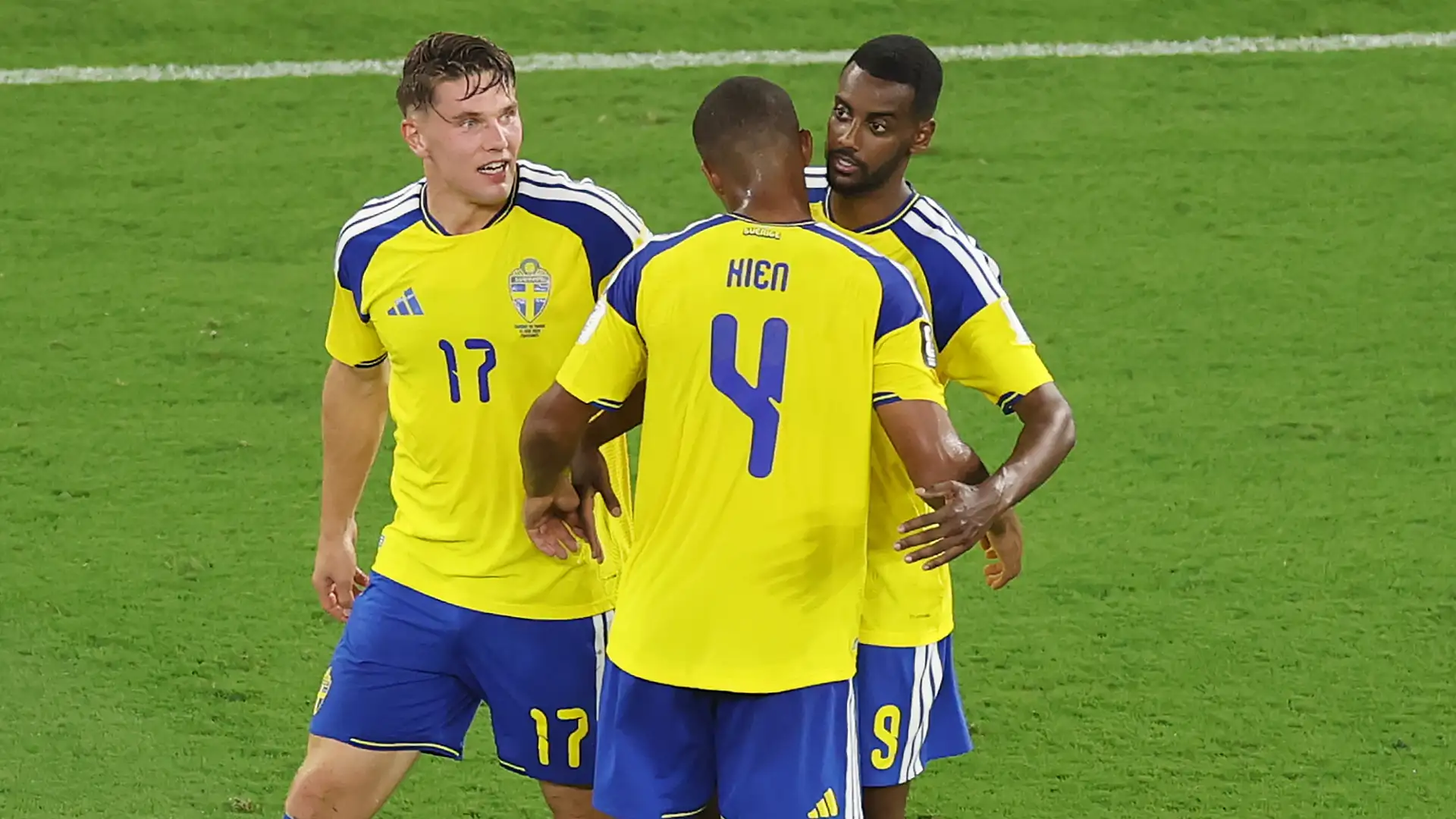
A lot of teams talk about making a statement at the World Cup. Sweden just delivered one.
In a ruthless opening performance at the 2026 FIFA World Cup, Sweden dismantled Tunisia 5-1 in Monterrey, sending an unmistakable message to the rest of Group F: this team looks ready for something much bigger.
And at the center of it all were two familiar names — Alexander Isak and Viktor Gyokeres.
The strike partnership that Sweden fans hoped would ignite their World Cup campaign did exactly that, tearing through a Tunisian side that arrived with a reputation for defensive resilience but left with serious questions to answer.
Table of Contents
ToggleWhat Happened?
The warning signs appeared almost immediately.
Just seven minutes into the match, Yasin Ayari broke the deadlock. The midfielder, who has Tunisian heritage, showed no hesitation when the opportunity arrived, firing home from the edge of the area after Tunisia initially managed to deny both Isak and Gyokeres during a frantic sequence inside the box.
That goal opened the floodgates.
Sweden’s attacking movement became increasingly difficult to contain, and Tunisia struggled to cope with the pace and directness of their opponents.
The second goal showcased exactly why so many eyes remain fixed on Isak despite a difficult debut season at Liverpool.
Released down the left flank during a rapid counterattack, the striker surged forward, cut inside, and curled a precise finish into the far corner. It was the type of goal that reminded everyone why he remains one of Sweden’s most important players.
Must Read: 2026 World Cup Shock: 1 Training Ball Left as England Hit by Massive Theft Scare
Key Moments
| Minute | Event |
|---|---|
| 7′ | Yasin Ayari scores Sweden’s opener |
| First Half | Alexander Isak doubles Sweden’s lead |
| Before HT | Omar Rekik pulls one back for Tunisia |
| 59′ | Viktor Gyokeres restores Sweden’s cushion |
| Late Game | Mattias Svanberg makes it 4-1 |
| Stoppage Time | Ayari scores his second |
But that’s only part of the story.
Tunisia Briefly Offered Resistance
Just when Sweden appeared ready to run away with the match before halftime, Tunisia found a response.
Omar Rekik rose highest to meet a cross from Hannibal Mejbri and headed home, reducing the deficit and giving Tunisia a glimmer of hope heading into the break.
For a brief moment, the game felt alive again.
A 2-1 scoreline at halftime suggested Sweden still had work to do.
That hope did not last long.
Isak and Gyokeres Turn the Screw
The decisive moment arrived in the 59th minute.
Sweden’s aggressive pressing trapped Tunisian captain Ellyes Skhiri near his own penalty area. The pressure came largely from Isak, whose relentless work forced a costly mistake.
The loose ball fell kindly for Viktor Gyokeres.
The Arsenal forward made no mistake.
His composed finish stretched Sweden’s lead and effectively ended Tunisia’s hopes of mounting a comeback.
From there, Sweden began to play with confidence, freedom, and growing authority.
The fourth goal arrived through substitute Mattias Svanberg, who scored moments after entering the match. Although the assistant referee initially flagged for offside, VAR confirmed that Isak’s touch had kept Svanberg onside.
Then came the final blow.
Deep into stoppage time, Ayari pounced on a loose ball to score his second goal of the evening and complete a dominant 5-1 victory.
Why This Result Matters
Opening matches can shape an entire World Cup group.
Sweden not only collected three points but also established an early goal difference advantage that could become crucial later in the tournament.
What Sweden gained:
- Three points
- Top spot in Group F
- Confidence heading into the next round
- Momentum for their attacking stars
What Tunisia lost:
- Defensive credibility from qualifying
- Valuable goal difference
- Margin for error in the remaining group matches
And this is where things become interesting.
The Contrarian View: Was Sweden Truly Tested?
The scoreline suggests complete domination.
Yet some observers may argue Sweden’s toughest examination is still ahead.
Tunisia’s defensive structure collapsed under pressure, and several goals came from costly mistakes rather than sustained tactical breakthroughs. While Sweden were undoubtedly impressive, questions remain about how this attack will perform against stronger opposition.
A 5-1 victory creates excitement.
Beating elite World Cup contenders is an entirely different challenge.
That challenge is coming soon.
What Happens Next?
Sweden now sit atop Group F after the draw between the Netherlands and Japan.
Their next match could be one of the group’s defining contests.
The Netherlands will enter that encounter knowing they can ill afford another slip if they hope to challenge for first place. Sweden, meanwhile, suddenly look like one of the tournament’s most dangerous attacking teams.
Tunisia face a different reality.
Their clash with Japan has quickly become a must-win situation if they want to keep their knockout-stage hopes alive.
One match into the tournament, Sweden have delivered one of the strongest statements of the World Cup so far.
The bigger question now is whether this was simply a spectacular opening night—or the first sign of a team capable of making a deep run in 2026.
Editorial Disclaimer: This article is based entirely on publicly available information from match reporting and official events described in the source material. No facts, quotes, statistics, outcomes, or timelines have been fabricated. Analysis and interpretation may evolve as additional information becomes available.