Table of Contents
ToggleWhat’s Happening at the G7 Right Now
A war thousands of kilometers away is now sitting at the center of one of the world’s most powerful gatherings.
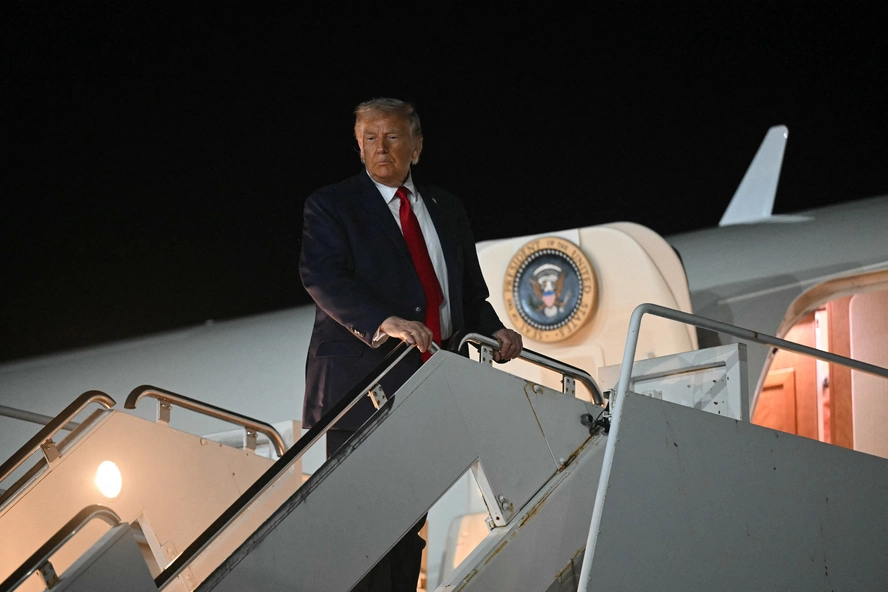
At the 2026 G7 summit in Évian-les-Bains, France, leaders aren’t just talking trade or AI anymore — they’re confronting a fast-escalating crisis linked to President Donald Trump’s military actions in Iran.
And the stakes are getting bigger by the day.
The conflict has already rattled oil markets, disrupted energy flows, and added fresh pressure to global inflation — turning what was expected to be a policy-heavy summit into something far more tense.
European leaders are arriving with a single concern: stability.
The U.S. arrives with a very different narrative.
Why This Moment Matters So Much
At the heart of the crisis is one chokepoint that powers the global economy: the Strait of Hormuz.
The U.S. appears to be moving toward a deal that could reopen the strait, but key details around Iran’s nuclear program remain unresolved — and that uncertainty is fueling anxiety across capitals from Paris to Tokyo.
The ripple effects are already visible:
- Oil and diesel prices spiking global inflation pressures
- U.S. inflation hitting 4.2% in May, the highest in three years
- Japan facing potential rate hikes to a 31-year high
- The European Central Bank raising interest rates again
- World Bank trimming global growth forecasts to 2.5% for 2026
One European official described the situation bluntly as fallout the G7 can’t ignore anymore.
Because this isn’t just diplomacy. It’s the global economy reacting in real time.
Must Read: ICE Detention Crackdown in 2026: 1,200 Rulings Fuel Shock Legal Split
The Summit Agenda Is Being Hijacked
On paper, the G7 was supposed to focus on the future:
- Artificial intelligence regulation
- Critical minerals supply chains
- Energy security
- Immigration and drug trafficking
- Global health risks like Ebola
But reality has other plans.
The Iran conflict is now bleeding into every conversation — from energy ministers to finance chiefs trying to contain inflation shocks.
French President Emmanuel Macron has even invited regional power players — including Saudi Crown Prince Mohammed bin Salman, Qatar’s emir, and Egypt’s president — in an attempt to stabilize discussions around the Strait of Hormuz.
Because if that waterway stays unstable, everything else becomes secondary.
Market Shock: The Hidden Economic Domino Effect
This isn’t just about geopolitics. It’s about pressure building across fragile global systems.
A quick snapshot of what’s already shifting:
| Area | Impact |
|---|---|
| Energy | Oil supply disruptions and price volatility |
| Inflation | Rising fuel costs pushing consumer prices higher |
| Interest rates | Central banks tightening again |
| Growth outlook | Global slowdown forecast deepening |
Economists warn the fallout could reach unexpected areas — even artificial intelligence supply chains and fertilizer production, raising fears of a broader food price shock during planting seasons.
One former U.S. official described the mood as “worry about the day after,” not just the crisis itself.
Industry Reaction: A Divided Room
Inside the G7, frustration is mixed with cautious diplomacy.
European leaders are skeptical of Washington’s military approach, concerned about long-term consequences on global trade and energy security.
Germany’s leadership has even gone as far as describing the situation as politically humiliating for the U.S. in global perception terms — a rare public rebuke inside the alliance.
But Washington officials are pushing back, arguing the summit still revolves around trade and cooperation, not war strategy.
That tension is shaping nearly every hallway conversation.
Contrarian View: Is the Panic Overdone?
Not everyone at the summit believes the Iran war will dominate the G7 agenda long-term.
A senior U.S. official downplayed the idea that this is a defining rupture, arguing that G7 meetings always orbit trade, investment, and economic coordination — even during global crises.
Their view is simple:
Yes, tensions are high.
But the system adapts.
And some economists agree — warning that markets often overreact in the short term before stabilizing once diplomatic frameworks begin forming.
So the real question becomes whether this is a structural turning point… or just another geopolitical shock absorbed by global institutions.
What Happens Next
Everything now hinges on whether diplomatic efforts around the Strait of Hormuz can turn into something stable — or whether the region slips further into prolonged uncertainty.
For Trump, the summit is also a test: can military escalation translate into diplomatic leverage?
For Europe and Asia, the concern is simpler — how long can the global economy absorb the shock before inflation becomes structural?
And for the G7 itself, the bigger fear is quiet but obvious:
What if the “elephant in the room” doesn’t leave after the meeting ends?
Disclaimer
This article is based on publicly available information from reporting on the 2026 G7 summit and related geopolitical developments. No facts, figures, or outcomes have been fabricated. Analysis reflects interpretation of reported events and may evolve as new information emerges.