England cricket is suddenly facing two uncomfortable questions that seemed almost unthinkable just days ago.
Could alcohol be banned entirely from the men’s team setup?
And can Ben Stokes continue as England’s Test captain?
Those questions are now hanging over English cricket after the nightclub incident involving Stokes and fast bowler Gus Atkinson, forcing England’s leadership into damage-control mode at one of the most sensitive moments of the team’s recent rebuild.
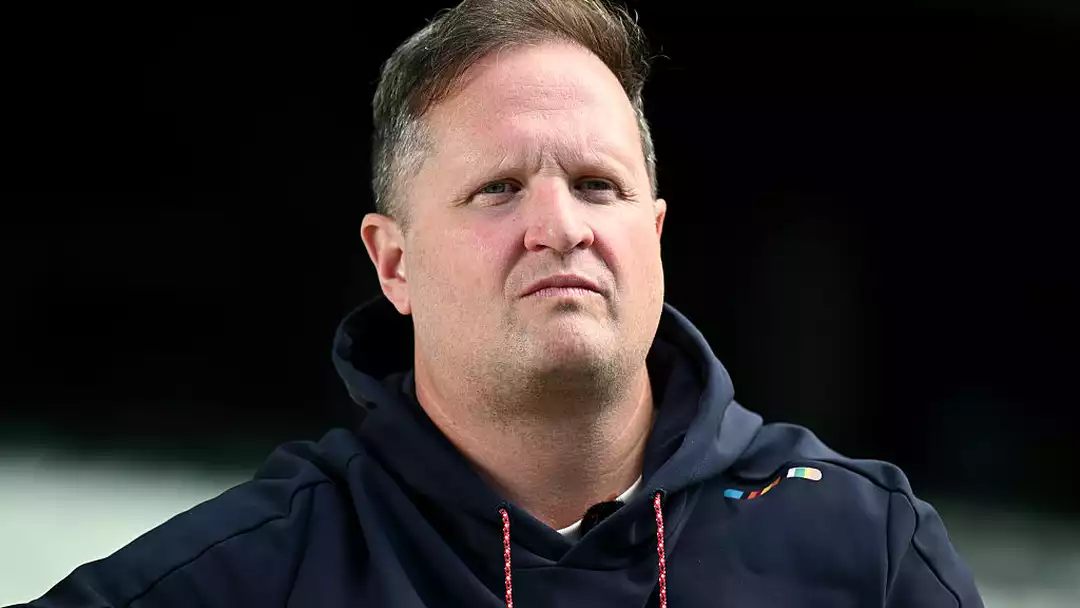
Speaking at The Oval on Thursday, England men’s cricket director Rob Key did not hide his frustration.
In fact, he admitted his first reaction was shock.
“I had that sinking feeling,” Key said, describing the moment he learned about the incident.
And while no major decisions have been made yet, one possibility is now firmly on the table: a complete alcohol ban for England players.
The Alcohol Debate Has Suddenly Become Very Real
Earlier this year, England introduced a midnight curfew as part of efforts to improve standards and rebuild trust around the national team.
At the time, Key rejected suggestions that England had a drinking culture problem.
Now, the conversation has changed.
Key revealed he is actively considering whether existing rules are simply not strict enough.
The most dramatic possibility?
No alcohol at any stage, even after victories.
But there is a catch.
Key repeatedly stressed that he does not want to make emotional decisions while still angry about what happened.
That balance between accountability and overreaction appears to be at the heart of England’s current dilemma.
Must Read: Bangladesh’s Massive 2026 Breakthrough: Australia Series Win Changes the Conversation
Key Takeaway
- Midnight curfew was already in place
- Stokes and Atkinson breached team protocols
- England are considering tougher restrictions
- A full alcohol ban has not been approved
- No final decisions have been made
But that’s only part of the story.
Why Stokes’ Involvement Changed Everything
What seems to have hit England’s leadership hardest is not merely the incident itself.
It’s the identity of one of the players involved.
According to Key, the “overriding” emotion was shock that Stokes was connected to the situation.
That matters because Stokes has been central to England’s cultural reset alongside head coach Brendon McCullum and Key himself.
For months, the trio have worked to improve standards and strengthen public trust around the team.
Now, those efforts face renewed scrutiny.
“We have spent a lot of time over the past few months trying to make sure we’re going to regain the fans’ trust,” Key admitted.
And this is where reactions started intensifying.
The controversy arrives precisely when England believed they were moving in the right direction.
Instead, Key described the feeling as being “smashed in the face” by recent events.
What Actually Happened?
According to Key, several England players went to a London pub after the Lord’s Test victory over New Zealand.
He said those players were well-behaved.
Most returned before the curfew.
Stokes and Atkinson did not.
They later went to a nightclub and became involved in an altercation.
However, Key also made an important distinction.
Based on information available so far, he said neither Stokes nor Atkinson were the aggressors.
The investigation remains ongoing.
Timeline
| Event | Status |
|---|---|
| England beat New Zealand at Lord’s | Completed |
| Players visited London pub | Confirmed |
| Most returned before curfew | Confirmed |
| Stokes and Atkinson went to nightclub | Confirmed |
| Altercation occurred | Confirmed |
| Investigation continues | Ongoing |
The bigger issue may be what happens next.
No Decision Yet on Stokes’ Captaincy
One question continues to dominate discussions around English cricket.
Will Ben Stokes remain Test captain?
For now, nobody knows.
Key was clear that England intends to let the investigation run its course before deciding.
He even emphasized that the decision must consider what is best for both England and Stokes personally.
Asked whether Stokes could play Test cricket for England again, Key responded: “I don’t see why not.”
Asked whether he would captain England again, the answer was far less definitive.
That uncertainty alone is likely to fuel debate across the cricket world in the coming weeks.
The Joe Root Decision
England have already made one significant leadership move.
With Stokes unavailable for the second Test, Joe Root has been appointed interim captain.
Interestingly, England chose Root over white-ball captain Harry Brook.
Key explained that Brook already has major responsibilities ahead of important white-ball assignments, including upcoming matches against India.
In Key’s words, when English cricket finds itself in a difficult position, Root is often the player asked to help pull it through.
Contrarian View: Is England in Danger of Overcorrecting?
Not everyone will automatically agree that stricter rules are the answer.
Even Key acknowledged the risk of introducing restrictions that could create an environment where players feel they cannot do anything outside cricket.
The available information also suggests Stokes and Atkinson were not the aggressors in the altercation.
That does not excuse breaching team protocols.
But it raises a separate question: should England focus on punishment, culture, or simply better judgment from players?
That debate could become just as significant as the investigation itself.
What Happens Next?
For now, England’s leadership is trying to avoid snap decisions.
The investigation remains active.
Stokes and Atkinson have been stood down from the second Test.
A potential alcohol ban is being discussed.
And perhaps most importantly, the future of England’s Test captaincy remains unresolved.
The coming weeks may determine not only what happens to Ben Stokes, but also what kind of culture England cricket wants to build moving forward.
And right now, that question appears far from settled.
Editorial Disclaimer: This article is based entirely on publicly available information and statements reported by Cricbuzz. No facts, outcomes, timelines, or quotations have been fabricated. Analysis and interpretations may evolve as additional information emerges from the ongoing investigation.