Something unusual is happening in the middleweight motorcycle space in 2026.
A brand long associated with heritage and exclusivity has just entered one of the most competitive segments on earth.
And it didn’t come quietly.
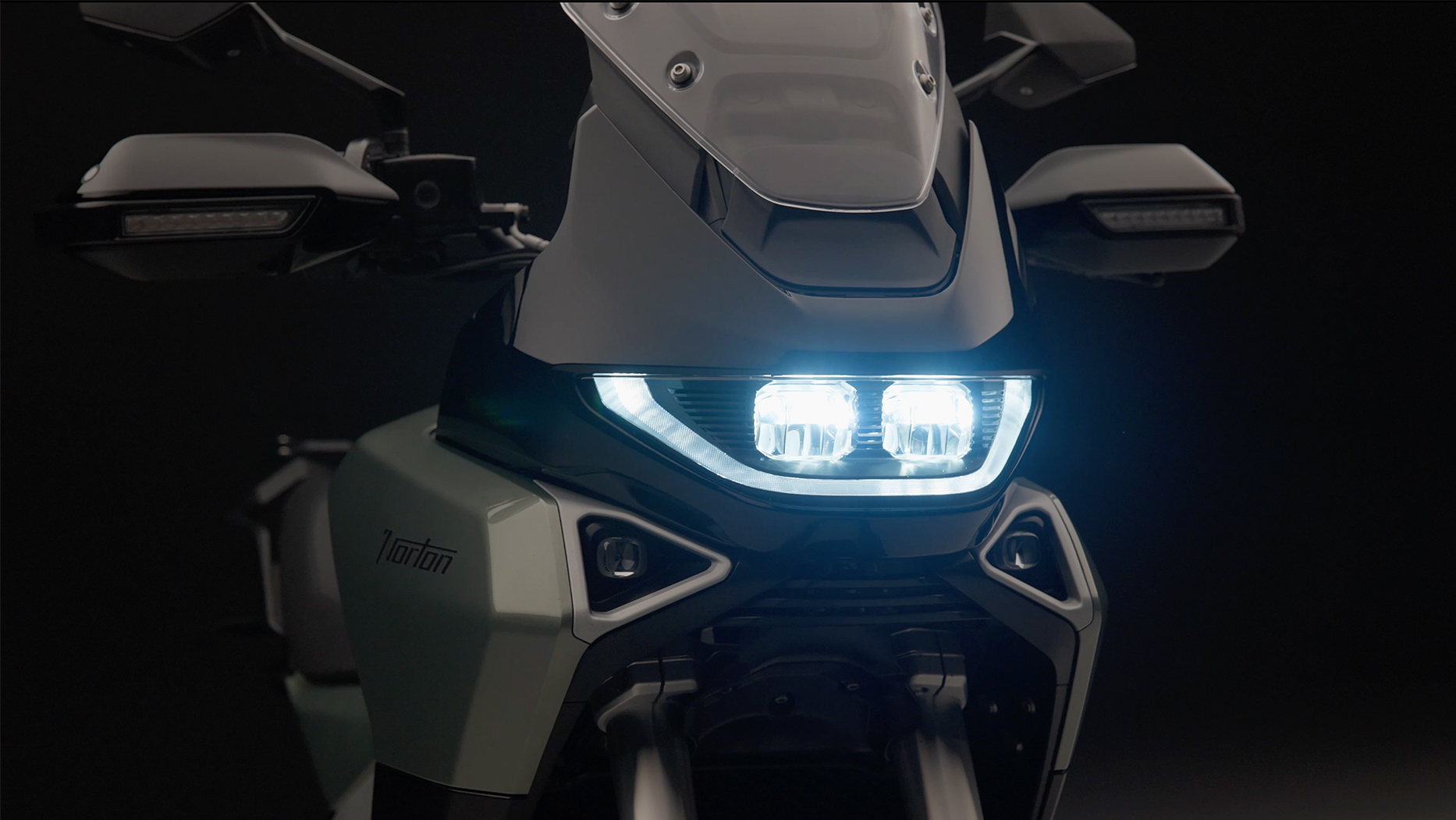
Norton Atlas and Norton Atlas GT have officially been revealed — and they’re already stirring debate across the industry.
Because this isn’t just a new bike launch.
It feels like a strategic reset.
Table of Contents
ToggleWhat Happened: Norton’s Bold Middleweight Entry
Norton Motorcycles has unveiled two closely related motorcycles built on a shared 585 cc parallel-twin platform developed at its Solihull headquarters.
At first glance, the twins look like siblings with different personalities:
- Atlas → adventure + mixed terrain focus
- Atlas GT → road-biased sport touring machine
But the deeper you look, the more deliberate the split feels.
Both bikes use a 585 cc liquid-cooled DOHC parallel-twin engine with a 270-degree crankshaft, producing:
- 69 bhp at 9,300 rpm
- 57.5 Nm at 7,300 rpm
That’s not mild. That’s intentional.
A bi-directional quickshifter, ride-by-wire throttle, and assist-and-slipper clutch complete the mechanical package.
And then comes the tech layer — where things start to feel almost aggressive for the segment.
Must Read: 2026 Shock: Maruti Suzuki Fronx Hits 5 Lakh Fastest Nexa Record
Why It Matters: Tech Level That Disrupts Expectations
These aren’t “simple” middleweight bikes trying to play safe.
They’re packed with premium hardware usually seen in higher categories:
- 8-inch full-color TFT touchscreen
- 6-axis IMU system
- Cornering ABS and traction control
- Cruise control
- Multiple riding modes (Urban, Rain, Sport, Tour, Enduro)
And the suspension story is where the split becomes obvious.
A quick breakdown:
| Feature | Atlas | Atlas GT |
|---|---|---|
| Front wheel | 19-inch | 17-inch |
| Suspension travel | 180 mm | 140 mm |
| Riding intent | Off-road biased | Road focused |
Suspension comes from KYB, fully adjustable, with hydraulic preload at the rear.
The braking setup uses twin 310 mm front discs with radially mounted calipers from ByBre, plus a 270 mm rear disc.
Everything is overseen by a Bosch 6-axis IMU from Bosch, enabling lean-sensitive safety systems.
And yes — even wheelie and slide control are part of the package.
That’s where industry watchers started raising eyebrows.
Because this is not entry-level engineering anymore.
Hidden Problem: Is It Too Much for the Segment?
Here’s where the excitement gets complicated.
On paper, this is a feature-rich, highly capable platform. But it raises a subtle question:
Are riders in the 585 cc category actually asking for this much tech?
Some concerns emerging from early analysis:
- Complexity could overwhelm newer riders
- Higher electronics = potentially higher repair costs
- Feature overlap with larger ADV and touring bikes
Even the display alone — an 8-inch touchscreen with navigation, telemetry, and OTA updates — feels closer to a premium motorcycle ecosystem than a mid-capacity machine.
And that’s exactly why opinions are splitting.
Contrarian View: Maybe This Is Exactly What the Market Needed
Not everyone sees this as overkill.
A growing counterargument is gaining traction:
What if midweight bikes have been under-equipped for years?
Supporters argue:
- Riders now expect car-level tech in motorcycles
- Safety systems like cornering ABS should be standard, not premium
- Middleweight buyers are increasingly experienced, not beginners
- Touring expectations have evolved dramatically
In this view, Norton isn’t overloading the bikes.
It’s catching up a segment that has been slow to evolve.
And there’s another angle people are ignoring: brand repositioning.
This could be Norton signaling that it’s no longer just a heritage name — but a modern engineering competitor.
What Happens Next: The Real Test Begins
The Atlas range is backed with:
- 36-month warranty
- Roadside assistance
- Keyless ignition, USB-C charging, OTA updates
- LED lighting package with advanced variants adding heated grips and tyre pressure monitoring
On paper, it looks ready for global competition.
But the real test won’t be specs.
It will be trust.
Can Norton Motorcycles convince riders that a tech-heavy, highly electronic middleweight platform can be reliable long-term?
Or will riders prefer simpler rivals that feel easier to maintain and repair?
Because the Atlas isn’t just entering a segment.
It’s challenging how that segment defines itself.
Final Takeaway
The Norton Atlas and Atlas GT don’t feel like incremental updates — they feel like a statement. A calculated push into a crowded battlefield where expectations are already rising faster than ever.
But one question lingers as the dust settles:
Are riders ready for a middleweight motorcycle that behaves like a premium tech platform — or is Norton arriving too early to a market still catching up?
Disclaimer: This article is based on publicly available information from the provided source. No facts, figures, or outcomes have been fabricated. Analysis and interpretation may evolve as new details emerge.