It wasn’t supposed to feel like this.
A hybrid Honda coupé, priced around $42,000, showing up and quietly stealing attention from proper sports cars.
Yet that’s exactly what the 2026 Honda Prelude is doing—and it’s confusing almost everyone who expected it to be “just efficient.”
After a week behind the wheel, the conclusion from the review is surprisingly blunt: you stop caring about the specs faster than you think.
Table of Contents
ToggleWhat Happened
Honda positioned the new Prelude carefully from the start. It’s not a sports car, the company stressed.
But on paper, the comparisons look brutal:
- Mazda MX-5: lighter, more focused
- Subaru BRZ: more power, sharper intent
- Volkswagen Golf GTI: more power + practical rear seats
And yet the Prelude still lands in the conversation because it doesn’t behave like the numbers suggest.
It produces 200 hp (149 kW), uses a hybrid setup built around a 2.0L Atkinson-cycle engine, and leans heavily on electric traction for most driving.
Electric motor output does most of the work, with the engine stepping in as needed—or even directly driving at highway speeds for efficiency.
Key stat that changes the narrative:
44 mpg combined (5.3 L/100 km), up to 466 miles of range
That alone reframes what this car is trying to be.
Why It Matters
This isn’t just another hybrid launch.
It’s Honda revisiting a nameplate with history—one that once showcased tech like four-wheel steering and VTEC-era innovation.
Now the focus has shifted again:
- Efficiency first
- Driving engagement second
- Performance branding… carefully avoided
But the twist is that the car still feels engaging.
The S+ system, which simulates an 8-speed gearbox experience, is a clear attempt to inject emotion into a drivetrain that technically doesn’t need gears at all.
And it works more than it should.
Must Read: Valve Ends Steam Gift Cards in 2026 After Scam Wave — A Quiet Industry Shock
Inside the Drive Experience
The Prelude constantly changes personality depending on mode:
Comfort
- Quiet, soft ride
- Engine shuts off often
- Feels almost like a refined commuter hybrid
GT (sweet spot)
- Balanced steering weight
- Slightly firmer damping
- Best overall drivability
Sport + S+
- Engine stays active
- Simulated “shifts” become sharper
- More aggressive feedback without becoming harsh
There’s also adjustable regenerative braking via paddles—ranging from gentle coasting to noticeable deceleration up to 0.2 g.
Quick Snapshot
| Feature | Character |
|---|---|
| Powertrain | Hybrid EV-first system |
| Suspension | Civic Type R-derived components |
| Weight | ~3,261 lbs |
| Range | ~466 miles |
| Driving feel | Momentum-focused, not aggressive |
Despite weighing as much as a modern hatchback, the chassis tuning and grip (especially on optional $1,200 summer tires) give it a surprisingly agile character.
Market Impact
Honda is clearly targeting a strange gap in the market: drivers who want:
- coupe styling
- high efficiency
- some emotional driving feel
- but not full sports car compromise
That puts the Prelude in a category of its own.
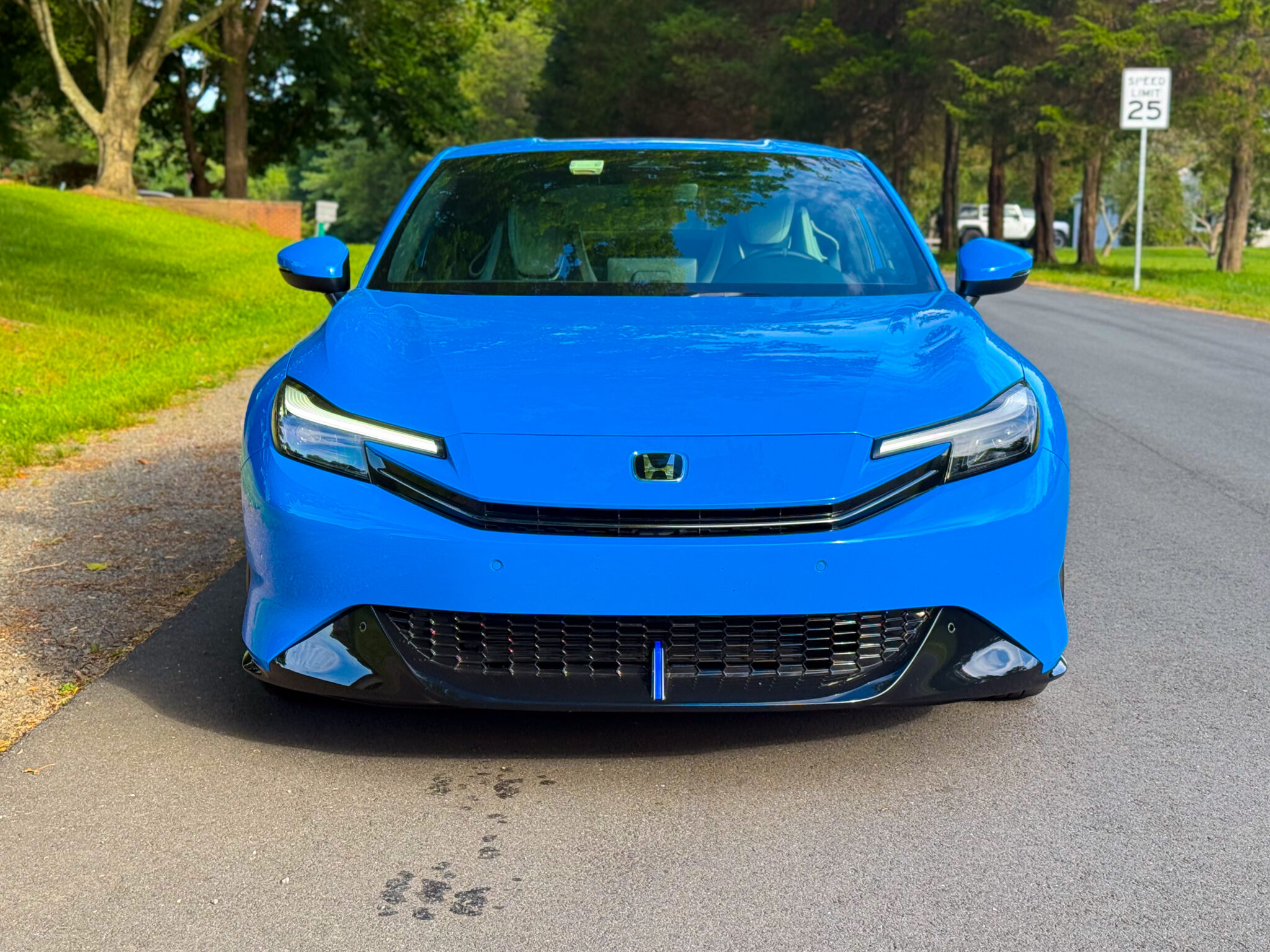
The styling also plays a bigger role than expected. The review notes it attracts attention everywhere—parking lots, traffic, even pedestrians.
Painted in Boost Blue Pearl ($455 option), it becomes less of a subtle hybrid and more of a rolling design statement.
Contrarian View
Not everyone will be impressed.
The criticism is simple but sharp:
If you want a sports car, this is too soft.
If you want practicality, a hatchback does more.
If you want pure performance, you’re paying for efficiency you may not care about.
Even the comparison to a Toyota Prius-like silhouette in certain angles adds fuel to that debate.
And the simulated gear shifts? For purists, it’s unnecessary theatre layered onto a fundamentally efficiency-first drivetrain.
In other words: it’s a compromise car that sometimes feels proud of the compromise.
What Happens Next
The bigger question is whether this formula signals a shift in how performance coupes survive.
Because the Prelude is doing something subtle but important:
- It refuses to compete on raw speed
- It leans into efficiency as identity
- It tries to manufacture emotion through software logic
And strangely, it works—at least for many drivers.
But it also raises a risk:
what happens when “fun” becomes something simulated rather than mechanical?
Final Thought
The 2026 Honda Prelude doesn’t behave like what people think a coupé should be. And that’s exactly why it’s getting attention.
It’s not trying to win spec sheets. It’s trying to win daily driving.
Whether that’s evolution or dilution depends entirely on what you think a sports coupe should feel like.
But one question lingers after the drive:
is this the future of affordable driver-focused cars—or the beginning of their soft replacement?
Disclaimer: This article is based on publicly available review information. No facts, specifications, or outcomes have been altered or fabricated. Interpretations reflect the source material and may evolve as new information emerges.