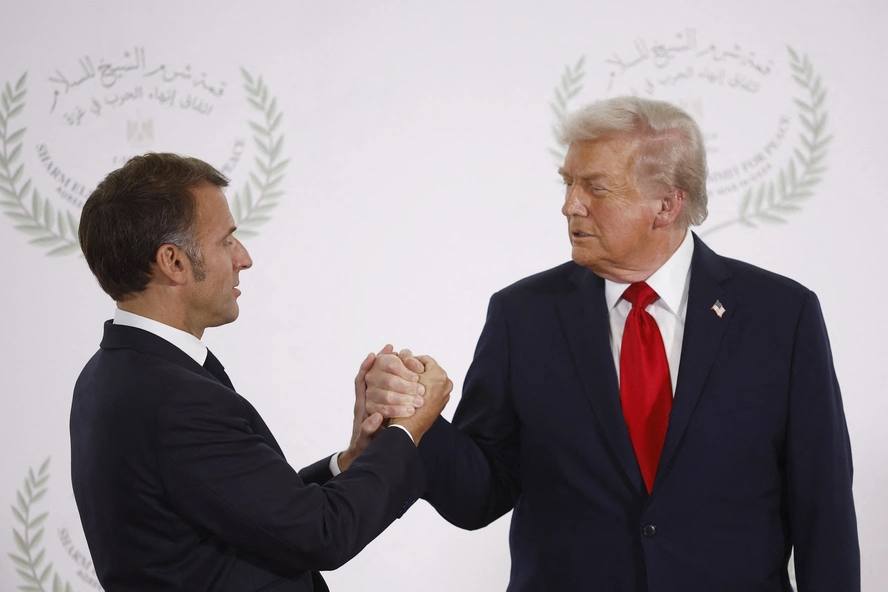
He’s going from a G7 summit straight into one of Europe’s most iconic palaces.
And the setting alone is already sparking conversations across diplomatic circles.
U.S. President Donald Trump is set to attend a dinner with French President Emmanuel Macron at the Palace of Versailles after the G7 summit in Évian-les-Bains this week.
It’s not just another diplomatic meal. It’s Versailles.
And that detail is doing a lot of political heavy lifting.
Table of Contents
ToggleWhat Happened
According to a senior U.S. administration official, Trump will attend a dinner hosted by Macron at Versailles on Wednesday, following the G7 summit in France.
The White House had not previously confirmed whether he accepted the invitation. That uncertainty ended when the Élysée confirmed the dinner over the weekend.
The timing places the dinner at the end of a packed diplomatic sequence:
- Arrival in France on Monday
- Bilateral meeting with Macron
- Official greeting and working dinner
- G7 working sessions with allied leaders
- A slate of bilateral meetings across Tuesday and Wednesday
And the guest list around the summit is just as loaded.
Trump is also expected to meet:
- Ukrainian President Volodymyr Zelenskyy (informally on sidelines, no confirmed bilateral)
- Qatar’s Emir
- President of the United Arab Emirates
- Egypt’s President Abdel Fattah El-Sisi
- Indian Prime Minister Narendra Modi
Plus sessions involving G7 outreach partners and tech CEOs focused on artificial intelligence.
Must Read: Pentagon’s China Company List Sparks Fury in 2026 — Beijing Warns “Forceful Countermeasures”
Why Versailles Matters More Than It Looks
On paper, it’s a dinner after a summit.
In reality, the location is doing something very intentional.
Macron extended the Versailles invitation months after prior tensions and diplomatic friction at past global gatherings. The palace setting—gold interiors, historical symbolism, and state grandeur—adds a layer of theatrical diplomacy.
And according to a senior administration official, topics expected to come up include:
- Economic growth and development
- Supply chain resilience
- Illegal immigration
- Artificial intelligence
But there’s another layer: optics.
Trump left last year’s summit early amid tensions linked to Iran-related developments. This time, the message from Paris appears more controlled, more curated, and arguably more symbolic.
Hidden Layer: This Isn’t Just a Dinner
Diplomats familiar with G7 dynamics say these end-of-summit events often matter less for speeches—and more for access.
Versailles becomes less of a venue and more of a pressure chamber.
Here’s what makes this moment unusually loaded:
- Ukraine remains a central talking point across allied leaders
- Iran-related tensions are still shaping regional diplomacy
- AI regulation and competition is now a G7-level strategic issue
- Middle East leaders are directly present in side meetings
And all of it is happening in the same 48-hour window.
That compression of issues is where decisions often shift—quietly.
But not everyone sees the Versailles framing as purely strategic.
Contrarian View: Is This Diplomacy or Stagecraft?
Some analysts argue the real story isn’t policy—it’s performance.
Critics of high-profile summit theatrics say:
- Symbolic venues can overshadow substantive negotiations
- Leaders may prioritize optics over outcomes
- Media focus shifts from agreements to personalities and settings
In this case, Versailles becomes more than a backdrop—it becomes part of the message.
And that raises a sharper question:
Is the diplomacy shaping the image, or is the image shaping the diplomacy?
There’s no consensus.
But the debate itself is now part of the summit narrative.
What’s Actually at Stake Next
Beyond the palace doors, the G7 agenda is packed with unresolved global pressure points.
A simplified snapshot of the summit’s focus:
| Issue Area | Why It Matters |
|---|---|
| Ukraine | Ongoing war coordination among allies |
| Iran | Regional stability and nuclear concerns |
| AI | Competition, regulation, and global standards |
| Trade & Supply Chains | Economic resilience amid fragmentation |
| Middle East ties | Expanded outreach with regional leaders |
The challenge is not just discussion—it’s alignment across very different national priorities.
And with multiple bilateral meetings scheduled across two days, fragmentation is just as likely as consensus.
Why This Moment Feels Different
Versailles is not a neutral setting.
It amplifies hierarchy, history, and symbolism in a way modern conference rooms simply don’t.
That’s exactly why Macron’s invitation is being read as both diplomatic gesture and strategic framing.
And for Trump’s visit, the question becomes less about attendance—and more about influence inside tightly staged diplomatic choreography.
Because once the summit ends, each leader returns home with different interpretations of what actually happened inside those rooms.
What Happens Next
Trump’s schedule in France continues through Wednesday, including further bilateral meetings and G7 outreach discussions.
But the Versailles dinner may end up being the moment everyone remembers—not because of what is said publicly, but because of what is implied privately.
And as global tensions over Ukraine, Iran, and artificial intelligence continue to evolve, the real impact of this summit may only become visible weeks later.
The lingering question is simple:
When diplomacy is this carefully staged, are the real decisions made at the table—or between the lines?
Disclaimer
This article is based on publicly available information from official statements and reported scheduling details. No facts, outcomes, or events have been fabricated. Interpretations reflect contextual analysis and may evolve as new information emerges