The U.S. just redrew the line on Chinese corporate power — and Beijing didn’t wait even a day to hit back.
Within hours of the latest Pentagon move targeting major Chinese firms, China’s Commerce Ministry fired off a warning that sounds less like diplomacy and more like a countdown.
“Forceful countermeasures” are on the table unless Washington backs down.
And the companies caught in the middle? Some of the biggest names in global tech and EVs.
Table of Contents
ToggleWhat Happened
The U.S. Department of Defense updated its so-called 1260H list, adding dozens of new firms and subsidiaries it considers “Chinese military companies operating in the United States.”
Among the most attention-grabbing names:
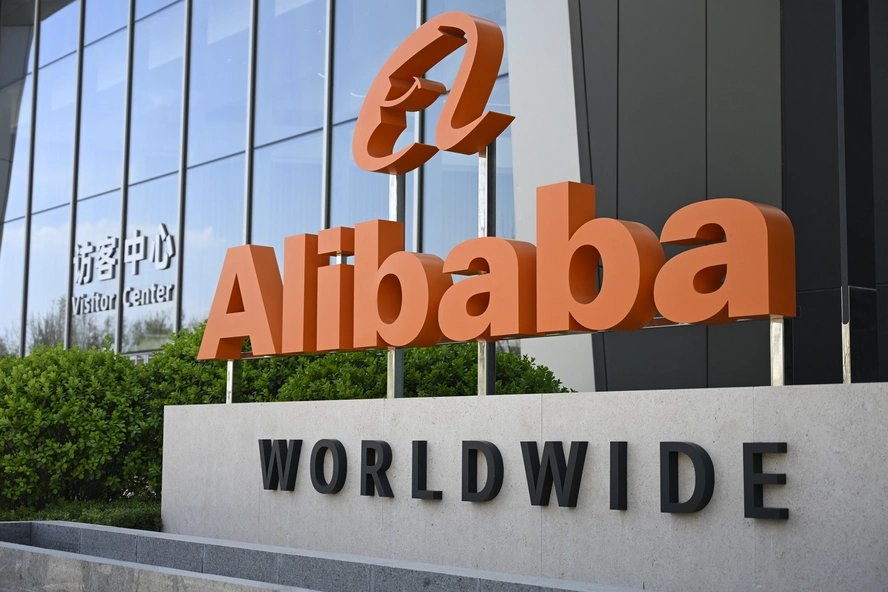
- Alibaba
- Baidu
- BYD
The designation doesn’t ban these companies outright from operating in the U.S.
But it does two things that matter:
- Blocks them from doing business with the Pentagon
- Places a reputational warning label on them in sensitive sectors
The Pentagon’s list is widely seen as a signal — not a sanction — but signals can still move markets and geopolitics.
Must Read: RFK Jr. Shake-Up Inside HHS in 2026 Sparks Uneasy Calm and Deep Doubts
Why Beijing Is Furious
China’s Commerce Ministry didn’t hold back.
It accused Washington of:
- “Abusing state power”
- Ignoring “consensus” between leaders
- Undermining recent efforts to stabilize relations between the U.S. and China and United States
The ministry warned that unless the Pentagon reverses the listings, Beijing will respond with “resolute and forceful countermeasures.”
That phrase is doing a lot of heavy lifting — and very little calming.
The Bigger Strategic Shockwave
This isn’t just about company labels. It’s about trust — or the lack of it — between the world’s two largest economies.
The update lands in a moment already packed with tension:
- Allegations of Chinese-linked espionage efforts via platforms like LinkedIn and Indeed
- Rising U.S. concerns over tech transfer and data access
- Ongoing friction over Taiwan arms sales worth roughly $14 billion
And behind it all, a fragile attempt at diplomatic reset after high-level talks in Beijing last month between President Donald Trump and Xi Jinping.
Market Impact: Quiet Panic, Loud Signals
While the list doesn’t impose direct bans, markets tend to read between the lines.
Investors are watching three pressure points:
| Sector | Risk Level | Why it matters |
|---|---|---|
| EV industry | High | BYD’s global expansion could face reputational drag |
| Tech & AI | High | Alibaba and Baidu sit at the center of data concerns |
| Defense contracting | Medium | Pentagon restrictions tighten procurement pipelines |
Even without formal sanctions, the “military company” label can chill partnerships and slow cross-border deals.
Industry Reaction: A Cold Silence
So far, companies named on the list haven’t escalated publicly.
But industry analysts note a familiar pattern:
When Washington tightens lists, global partners often quietly reassess exposure long before governments act.
One issue stands out — ambiguity.
Because the designation doesn’t block commercial operations, companies are left in a gray zone where:
- Business continues
- But trust becomes conditional
- And partnerships get harder to secure
That uncertainty is often more disruptive than a clean ban.
Contrarian View: Is This Really Escalation — Or Just Posturing?
Not everyone sees this as a crisis moment.
Some geopolitical analysts argue the Pentagon’s move is more administrative signaling than strategic escalation.
Their argument:
- The list has existed for years
- Additions are routine updates, not new sanctions
- Most listed firms continue operating normally in the U.S.
From this perspective, Beijing’s strong language may be more about domestic signaling — showing toughness — than preparing actual retaliation.
But there’s a catch: even “routine” moves are now happening in a highly charged environment. That makes everything feel bigger than it is.
What Happens Next
The situation now hinges on three moving parts:
- Whether Washington defends or revises the updated 1260H list
- Whether Beijing follows through on “countermeasures”
- Whether upcoming diplomatic engagements — including a possible state visit by Xi Jinping to Washington in September — can cool tensions
Also looming in the background: trade normalization talks and earlier commitments involving aircraft purchases from Boeing and agricultural imports.
Key Takeaway
A list update that looks bureaucratic on paper is now feeding into one of the world’s most sensitive geopolitical fault lines — where tech, trade, and security all overlap.
And both sides seem to be asking the same question in different ways:
How far can pressure go before cooperation breaks entirely?
Final Thought
For now, neither Washington nor Beijing has crossed into full rupture. But every new list, warning, and counter-warning is tightening the space between them.
And the real uncertainty isn’t what just happened — it’s what happens the next time one side decides the “signal” is no longer enough.
Disclaimer: This article is based on publicly available reporting. No facts, quotes, or outcomes were altered or invented. Analysis reflects interpretation of reported events and may evolve as new information emerges