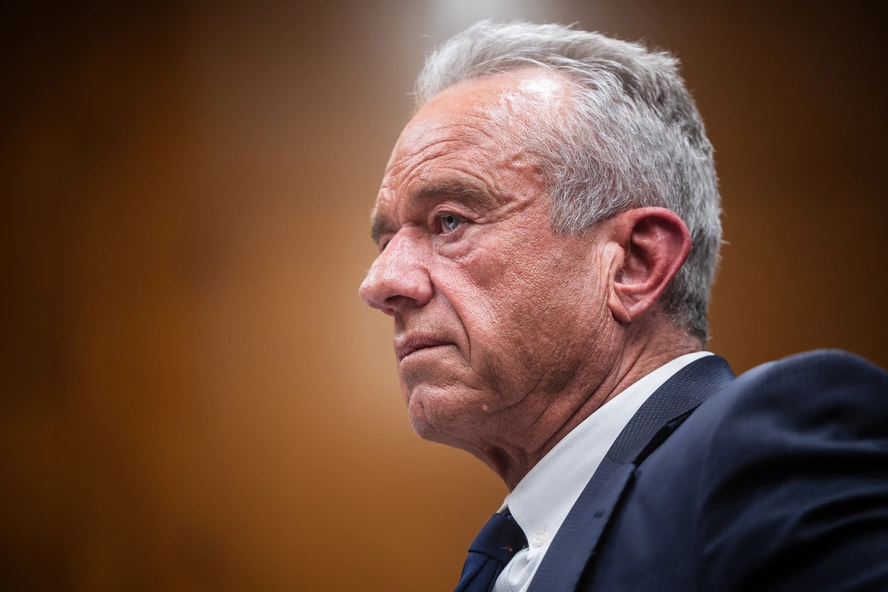
When hostility turns into politeness, does anything actually change?
Inside the U.S. health system, employees say something strange is happening under Health and Human Services Secretary Robert F. Kennedy Jr.: the tone is softer, the language is calmer — but the system still feels broken beneath it.
After a year of mass layoffs, political turbulence, and internal distrust, staffers now describe a workplace that looks “normal” on the surface… yet still feels unstable underneath.
And that contradiction is where the real tension begins.
Table of Contents
ToggleWhat Happened
Over the past year, the Department of Health and Human Services (HHS) went through a dramatic transformation.
According to multiple employees and contractors:
- Roughly 20,000 staff were bought out or dismissed during earlier restructuring tied to the so-called DOGE-era overhaul
- Leadership previously used harsh language toward career civil servants, including accusations of failure during the pandemic
- Major agencies like the Centers for Disease Control and Prevention, Food and Drug Administration, and National Institutes of Health were hit by instability and leadership turnover
Now, the tone has shifted.
Kennedy and senior officials have begun praising career staff, restoring some hiring, and signaling a return toward pre-restructuring staffing levels.
But employees inside say the emotional damage hasn’t reset.
“People are not just going to forget what’s been done,” one contractor said.
A CDC employee described the environment bluntly: trust is still missing — even if shouting has stopped.
Must Read: Trump Name Removal at Kennedy Center in 2026 Sparks Shock After 2 Court Rulings
Why It Matters
At stake is not just workplace morale — but how America’s public health machine functions.
Behind the scenes, agencies are juggling real-world health threats:
- Ebola outbreak response efforts in Central Africa
- Hantavirus cases tied to a cruise ship
- Massive federal grant pipelines worth billions of dollars
Yet staff say the administrative environment is slowing everything down.
Key pressure points inside HHS:
| Area | What staff report |
|---|---|
| NIH grants | Slower review cycles, added political screening layers |
| FDA approvals | Uncertainty over shifting internal standards |
| CDC communications | Fear of political influence on scientific messaging |
| SAMHSA funding | Delays affecting addiction and mental health services |
At the Substance Abuse and Mental Health Services Administration, one official even said earlier chaos ironically “protected” the agency from further disruption.
That’s not stability — it’s survival mode.
Inside the Agencies: “Better Than Before… But Not Normal”
The shift in tone is real. Multiple senior figures have tried to reassure staff.
Jay Bhattacharya, now leading the National Institutes of Health and temporarily overseeing the CDC, told employees he was “inspired every day” by their work and promised more flexibility, including expanded remote work.
At CMS, leadership praised staff as “extraordinary individuals.”
But employees describe a split reality:
- Tone: noticeably softer
- Systems: still overloaded
- Trust: still fragile
- Hiring: restarting, but uneven
One NIH employee said grant review work has become “very, very, very, very slow,” after changes reduced reliance on traditional peer scoring systems.
Another staffer summed it up more sharply:
“My job doesn’t feel like science anymore — it feels like paperwork.”
Hidden Problem: Ideology vs Administration
The biggest tension is not visible on press releases.
It’s inside decision pipelines.
Staff report:
- Grant applications flagged for politically sensitive wording
- Diversity-related terminology triggering extra review
- Leadership involvement increasing in funding decisions
- Scientific staff feeling “second-guessed” in routine work
At FDA, concerns persist over new programs that critics say blur lines between science and political priorities.
Even when officials insist that scientific review remains intact, employees describe a growing sense of caution — especially around communications and funding language.
Contrarian View: Stability Might Be Slowly Returning
Not everyone sees collapse or dysfunction.
Some insiders argue the system is actually stabilizing after a violent shock.
Their case:
- Leadership turnover has reduced the most controversial figures
- Hiring is resuming after the 2025 cuts
- Agencies like CDC are actively managing major outbreaks again
- Some staff say routine workflows are “less chaotic than last year”
One CDC official said conditions feel:
“Better than it did a year ago… even if not back to normal.”
From this perspective, the system isn’t failing — it’s still recovering from a massive forced reset.
And recovery, they argue, is never smooth.
What Happens Next
The next phase depends on whether “tone change” becomes structural reform — or just a temporary easing of pressure.
Key uncertainties ahead:
- Will staffing levels truly return to pre-DOGE norms?
- Will grant and review systems be simplified or further politicized?
- Can agencies like CDC and NIH rebuild internal trust?
- Or will quiet instability remain the new baseline?
Even within HHS, employees admit they don’t know which direction wins out yet.
For now, the system sits in an uneasy middle: less chaotic than before, but far from healed.
And that raises a bigger question no one inside can fully answer yet — is this the beginning of recovery, or just a calmer version of the same disruption?
Disclaimer: This article is based on publicly available reporting and source material. No facts, outcomes, or quotes were fabricated. Interpretation and framing reflect journalistic analysis and may evolve as new information becomes available.