surprising thing happened during a review of Sonos’s newest speaker: it didn’t replace headphones. It made them feel unnecessary for parts of the day.
That may sound like a small shift. It isn’t.
For millions of people working from home, audio has become deeply personal and increasingly isolated. Earbuds and headphones dominate desks, kitchens, and home offices. But Sonos’s new Play speaker appears to be targeting a different idea altogether — convenience without disconnecting from the world around you.
And that’s exactly where this story gets interesting.
The Speaker That Refuses to Stay in One Place
The Sonos Play, launched in March for $299, is the company’s first new device in more than a year.
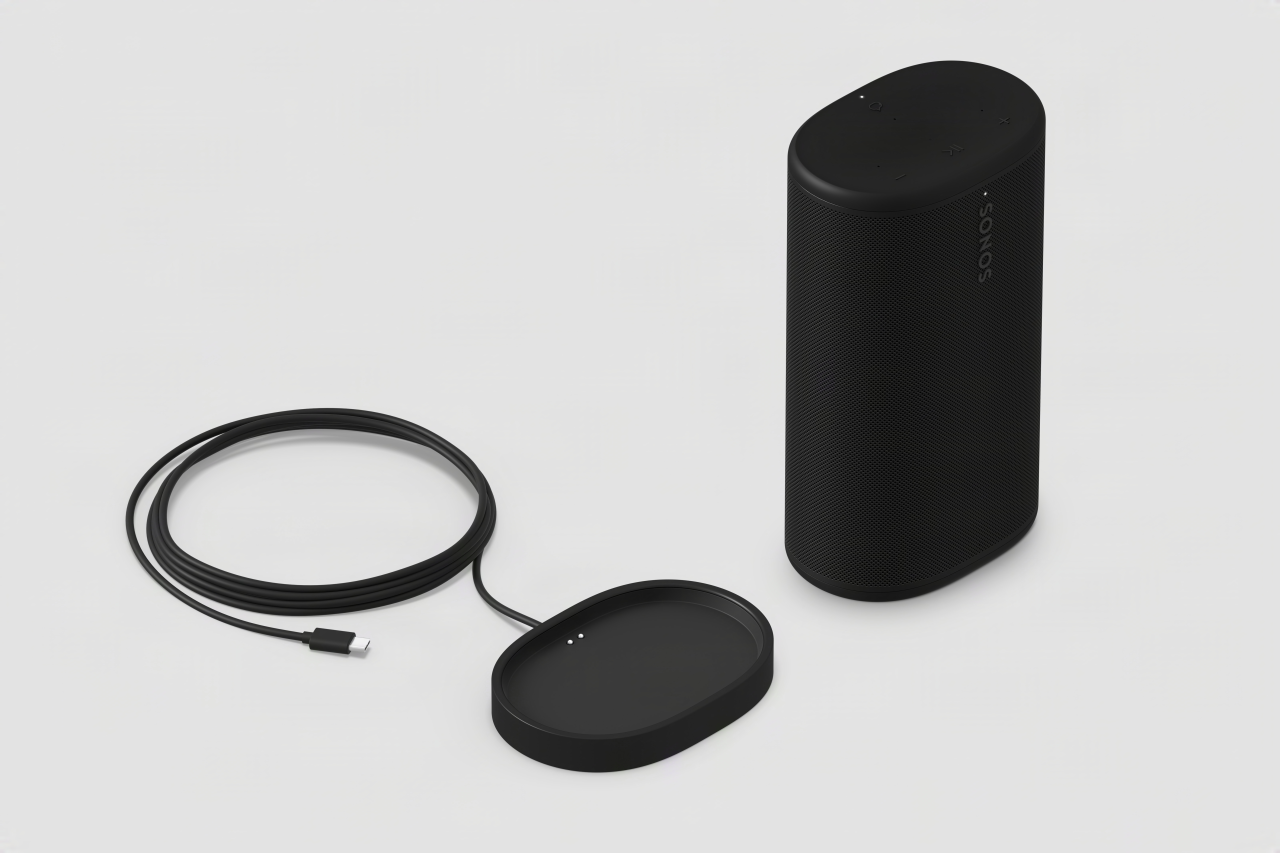
At first glance, it looks like a traditional home speaker. It sits in a pill-shaped charging dock and fits naturally on a desk.
But it was designed to move.
Weighing 1.3 kilograms and featuring a built-in utility loop, the Play can be carried from room to room without much effort. During testing, podcasts started at a desk and continued into the kitchen while making coffee or cooking.
That flexibility creates a different experience from using AirPods.
Instead of sealing yourself off from everything around you, the Play allows users to remain aware of conversations, sounds, and activity nearby.
In an era where people are constantly plugged in, that might be its most underrated feature.
Must Read: TCL CSOT’s 2026 Game-Changing AI Display Push Could Reshape How We See Screens
Quick Take
What stands out about the Sonos Play?
- Hybrid home-and-portable design
- Built-in Sonos Assistant and Alexa
- Physical playback controls
- IP67 water resistance
- Can function as a power bank
- Automatic Trueplay sound calibration
But that’s only part of the story.
The Small Design Choice That Creates a Frustration
The Play includes physical buttons for playback and volume control.
That sounds simple. Yet anyone who has tried changing tracks with messy hands while cooking knows how useful real buttons can be.
The catch?
The controls are surprisingly difficult to spot.
They blend into the silicone top surface and sit only slightly above it. After a few days, their positions become familiar. Still, better contrast or more tactile feedback could have reduced the learning curve.
It’s a minor complaint.
But it highlights an interesting contradiction: a speaker designed around convenience occasionally makes simple interactions harder than necessary.
Sound Quality: Strong, But With Limits
Sonos packed the Play with dual-angled tweeters, a mid-woofer, three digital amplifiers, and two passive radiators designed to strengthen bass performance outdoors.
The result is a balanced sound profile with particularly good instrument separation at moderate listening levels.
Music feels detailed.
Podcasts sound clear.
Voices come through naturally.
Yet the speaker has boundaries.
The soundstage remains relatively narrow, meaning audio feels more contained than expansive. Push the volume higher, and some clarity starts to fade.
That’s where Sonos seems to have made a deliberate decision.
The Play is not trying to dominate an entire room.
It’s trying to be the speaker that follows you around the house.
And those are very different goals.
Sonos Play vs. Bigger Room Speakers
| Feature | Sonos Play |
|---|---|
| Focus | Desk, patio, portable use |
| Portability | High |
| Water Resistance | IP67 |
| Power Bank Function | Yes |
| Best Use Case | Personal and small-space listening |
For users wanting more room-filling sound, Sonos positions the Era 100 SL as the stronger option.
The Hidden Upgrade Most Users May Appreciate
One of the smarter additions is the updated version of Trueplay.
Earlier versions required users to walk around a room waving a phone while audio calibration took place.
It worked.
But it wasn’t exactly elegant.
The Play handles this process automatically using built-in microphones.
No awkward setup.
No extra steps.
Just automatic tuning based on the environment.
In a product focused on portability, that change makes a lot of sense.
The Problem Sonos Still Hasn’t Fully Solved
And this is where reactions become more complicated.
Sonos has spent years dealing with criticism surrounding its software experience.
The company has made improvements, but some frustrations remain.
During testing:
- Speaker syncing with a MacBook occasionally felt laggy.
- YouTube playback sometimes showed noticeable response delays.
- Audio switching worked reliably through AirPlay.
- The same process repeatedly failed inside the Sonos app until Apple Music integration was installed.
- Pocket Casts occasionally restarted podcasts from the beginning instead of resuming playback.
Even the app’s required “Apply” button adds an extra confirmation step that feels unnecessary compared to AirPlay’s simpler approach.
These aren’t catastrophic failures.
But they are reminders that great hardware can still be limited by software friction.
Contrarian View: Is the Play Actually Overpriced?
Not everyone will see the Play as the obvious choice.
In fact, some buyers may struggle to justify it.
If portability isn’t important, Sonos already offers alternatives that cost less while delivering more volume.
The Era 100 sells for $219.
The Era 100 SL costs $189.
Meanwhile, shoppers prioritizing rugged portability have other options, including the Sonos Roam 2 and JBL Charge 6.
That creates an uncomfortable question for Sonos:
Is the Play solving a problem most people actually have, or is it creating a new category that only certain users will appreciate?
The answer likely depends on how often someone moves between rooms during the day.
What Happens Next?
The Sonos Play ultimately succeeds because it embraces a middle ground that many speakers ignore.
It’s not purely portable.
It’s not purely stationary.
It’s built for modern home life, where workspaces, kitchens, patios, and living rooms increasingly blend together.
The hardware largely delivers on that promise.
The software still has room to improve.
And that lingering tension may define the Play’s future more than any specification on its product page.
Because the biggest question isn’t whether the speaker sounds good.
It’s whether Sonos can make the software experience feel as seamless as the hardware already does.
Editorial Disclaimer: This article is based solely on publicly available information from the original review and related product details cited in that source. No facts, quotes, outcomes, or claims have been fabricated. Analysis and interpretation may evolve as new information becomes available.