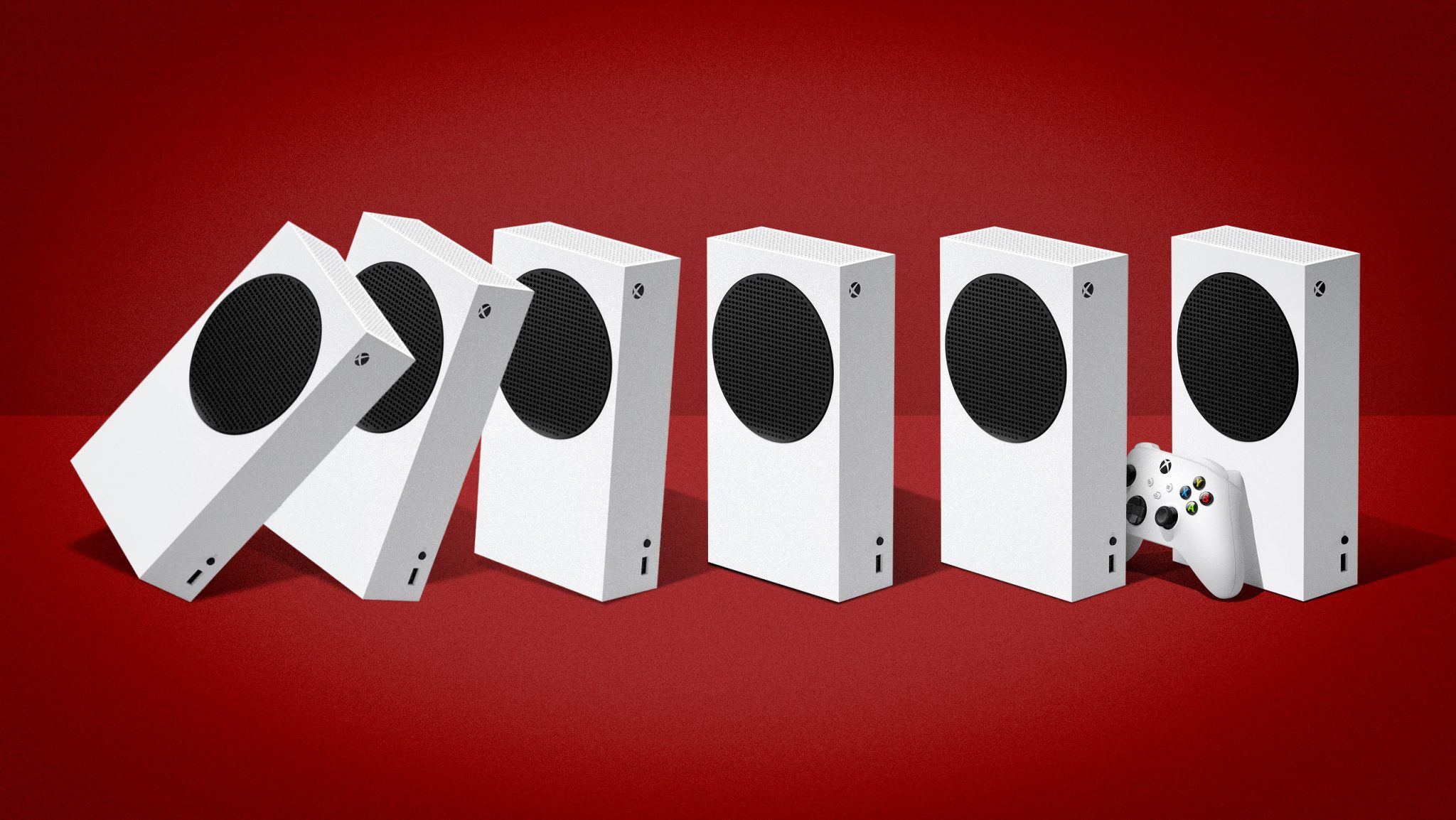
A dramatic admission from Xbox leadership has pulled back the curtain on one of gaming’s biggest struggles.
After years of acquisitions, platform shifts, subscription pushes, and changing strategies, Microsoft’s gaming division is now publicly acknowledging deep problems across the Xbox business.
And the numbers behind that assessment are raising difficult questions about where the brand goes next.
Xbox Leaders Deliver a Rarely Seen Public Reality Check
When Asha Sharma took over as CEO of Microsoft Gaming roughly 100 days ago, her message was focused on understanding what made Xbox successful and protecting it.
Now, the tone has changed dramatically.
In a message sent to employees and later shared publicly, Sharma and Xbox Studios chief Matt Booty described what they called an “Xbox reset” — a sweeping effort to address years of underperformance, rising costs, and strategic mistakes.
The memo paints a picture of a business under pressure from nearly every direction.
According to the executives, Xbox is operating with only a 3 percent accountability margin, significantly below broader industry standards and far from Microsoft’s reported expectations for its business units.
That alone would be concerning.
But the deeper details reveal why leadership believes change can no longer be delayed.
Must Read: 2026 Shocking Iron Age Discovery Raises New Questions About Britain’s Dead
Billions Spent, Yet Revenue Is Lower
One of the most striking revelations involves Microsoft’s spending.
Over the past five years, the company invested heavily in gaming through acquisitions, platform development, and hardware support.
The centerpiece was the $69 billion acquisition of Activision.
That deal came on top of roughly $20 billion spent on other acquisitions, platform investments, and hardware subsidies during the same period.
Yet despite those massive investments, Microsoft says overall gaming revenue has fallen by nearly $500 million compared to five years ago.
That’s the contradiction at the heart of Xbox’s current challenge.
More spending.
More acquisitions.
But less revenue.
Key Figures Mentioned by Xbox Leadership
| Metric | Figure |
|---|---|
| Activision acquisition | $69 billion |
| Other gaming investments (5 years) | $20 billion |
| Gaming revenue change | Down nearly $500 million |
| Accountability margin | 3% |
But that’s only part of the story.
Xbox Admits It Underfunded Its Biggest Franchises
While Microsoft invested aggressively in acquisitions, leadership also acknowledged another problem.
The company says it failed to adequately fund some of its most important gaming franchises.
That admission arrives after years of studio layoffs, project cancellations, and restructuring efforts that have frustrated many Xbox fans and developers.
The memo also emphasizes the importance of a reliable pipeline of first-party and third-party exclusives.
That stands out because Xbox had increasingly embraced a broader multi-platform strategy in recent years.
Now, exclusives are once again being described as critical to success.
And this is where reactions started intensifying.
For years, Xbox supporters debated whether exclusives still mattered.
The company’s latest message suggests leadership believes they do.
Hardware Problems Are Creating New Risks
Xbox’s challenges are not limited to software.
The company says rising storage and memory costs are affecting the entire industry.
However, Microsoft believes its own hardware situation has been impacted more severely because of decisions made over the past several years.
Leadership did not specify those decisions.
But the consequences are becoming clearer.
Microsoft says it currently cannot manufacture enough consoles to meet demand.
That’s a surprising statement given that Xbox hardware sales have faced significant declines in recent years.
The combination of supply constraints and rising component costs could increase pressure on future console pricing.
What Xbox Says Is Going Wrong
- Profit margins remain extremely low
- Gaming revenue has declined despite major investments
- Key franchises were not funded adequately
- Hardware costs continue rising
- Console supply remains constrained
- Strategic priorities have shifted repeatedly
The list is unusually blunt for a company of Microsoft’s size.
A New Hardware Strategy May Already Be Emerging
One of the most intriguing parts of the memo involves a project known as Helix.
Microsoft says it will pursue a new business model and new hardware partnerships for the initiative.
That immediately sparked speculation because Microsoft recently partnered with Asus on the Windows-powered ROG Xbox Ally device.
The memo does not provide extensive details.
However, the emphasis on partnerships suggests Microsoft may increasingly rely on outside manufacturers as part of its future gaming hardware strategy.
The bigger issue may be what happens next.
Game Pass and Cloud Gaming No Longer Look Like Easy Answers
For years, Xbox Game Pass was viewed as one of Microsoft’s strongest advantages.
But leadership now faces a different reality.
The service has reportedly lost millions of subscribers following major price increases introduced last year.
Meanwhile, the company’s earlier push into cloud gaming has yet to become a dominant part of overall Xbox usage.
Together, those developments weaken two pillars that once appeared central to Xbox’s future.
Contrarian View: Is Xbox Being Too Hard on Itself?
Not everyone will interpret the memo the same way.
A different perspective is that Microsoft still controls some of gaming’s largest studios, owns valuable intellectual property through Activision, and remains one of the world’s most financially powerful technology companies.
From that viewpoint, the memo could be less about imminent crisis and more about resetting expectations after years of ambitious expansion.
Still, even that interpretation does not change the concerns leadership itself outlined.
Layoffs Could Be Next
According to Bloomberg, Sharma is planning additional layoffs across the Xbox division after Microsoft’s fiscal year ends on June 30.
The report also points to significant reductions in marketing and departmental budgets.
That means employees may once again bear the consequences of broader strategic decisions made over many years.
And that leaves Xbox facing an uncomfortable question.
Can a company that says it has already underinvested in key franchises improve performance while simultaneously reducing spending?
The answer could determine the future of one of gaming’s most recognizable brands.
For now, Microsoft’s own leaders appear convinced that the status quo is no longer sustainable.
And the success—or failure—of this “Xbox reset” may become one of the defining gaming industry stories of 2026.
Editorial Disclaimer: This article is based entirely on publicly available information from statements attributed to Microsoft Gaming leadership and reporting cited in the source material. No facts, figures, quotes, outcomes, or events have been fabricated. Analysis and interpretation may evolve as additional information becomes available.