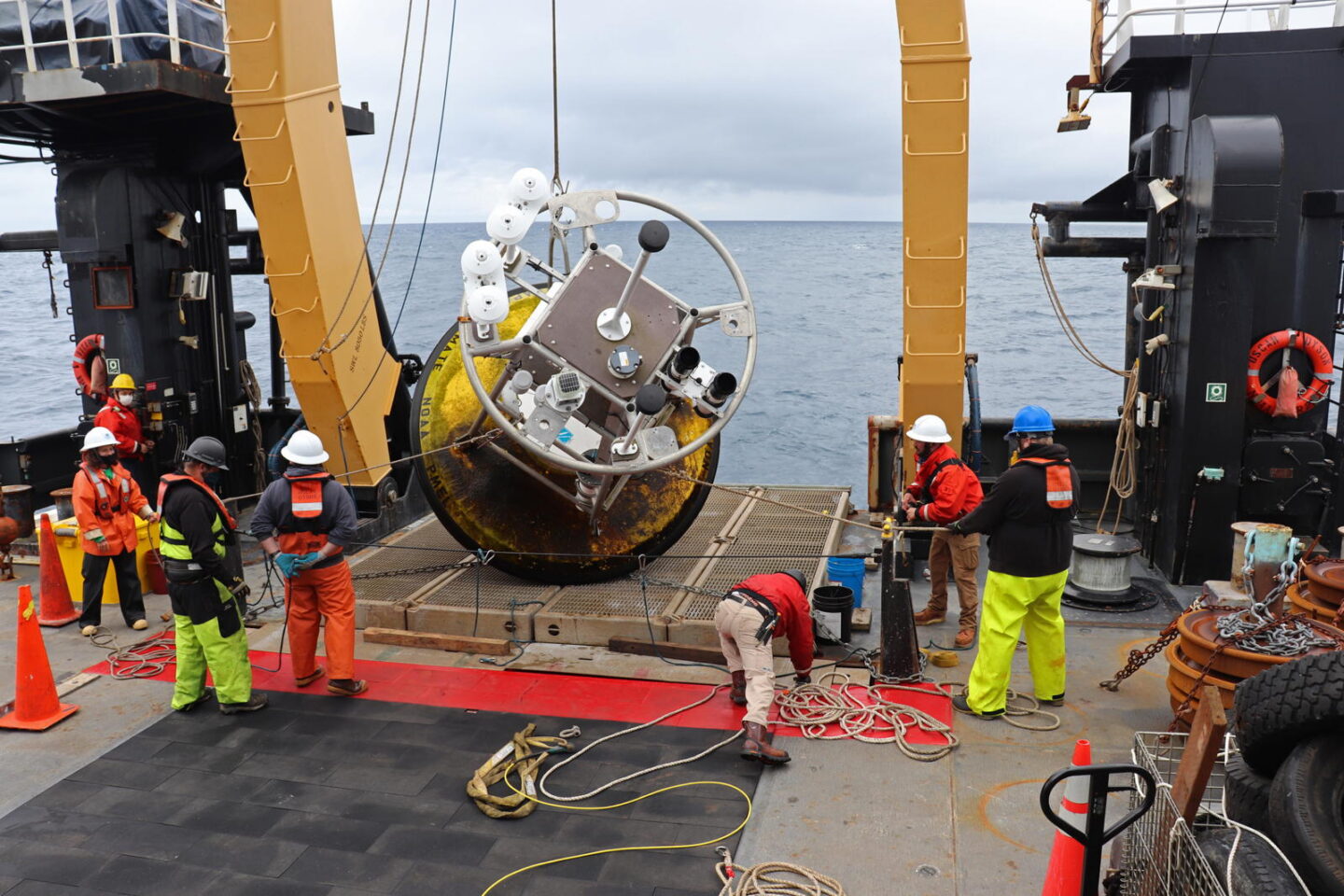
A critical scientific system that helps track ocean conditions, forecast storms, and manage fisheries in Alaska is being shut down—and researchers, fishing groups, and coastal communities are warning of serious consequences.
Table of Contents
ToggleWhat Is Being Shut Down?
The U.S. National Science Foundation (NSF) plans to decommission the Ocean Observatories Initiative, a nearly $368 million network of around 900 deep-sea instruments spread across the Pacific and Atlantic oceans.
These instruments continuously collect real-time data on:
- Ocean temperature
- Salinity
- Wave conditions
- Ocean chemistry
- Currents
- Wind stress
One of the most important stations for Alaska is Ocean Station Papa, located in the Gulf of Alaska over waters nearly 14,000 feet deep.
Why Scientists Are Alarmed
Researchers compare losing Ocean Station Papa to driving on a dark highway with no headlights.
The observatory provides continuous measurements from the ocean surface all the way to the seafloor, offering insights that satellites cannot capture.
According to oceanographers and climate specialists quoted in the report, the system helps scientists understand:
- Marine heatwaves
- Ocean warming trends
- Fish population changes
- Storm development
- Coastal flooding risks
Without those observations, Alaska loses one of its few real-time windows into how its surrounding oceans are changing.
Must Read: Xbox’s 2026 Crisis Exposed: 5 Shocking Problems Behind the Brand’s Decline
A Threat to Alaska’s Fishing Industry
Alaska’s commercial seafood sector is enormous:
- Worth roughly $5.3 billion
- Supports about 42,000 jobs
Fishing managers use data from the observatories to determine:
- Fish stock health
- Sustainable harvest levels
- Environmental conditions affecting salmon, crab, and other species
The concerns come as Alaska is already dealing with:
- Salmon population declines
- Snow crab collapses
- Repeated marine heatwaves
Industry advocates argue that removing monitoring tools during a period of ecological instability makes decision-making harder, not easier.
Coastal Communities Could Be More Vulnerable
The data isn’t only about fisheries.
Information from Ocean Station Papa feeds forecasting models used by agencies and universities to predict:
- Severe storms
- Coastal flooding
- Ocean-driven hazards
Alaska has experienced increasingly destructive weather events in recent years. Researchers say ocean observations are critical for understanding how storms intensify before reaching vulnerable coastal villages.
Many remote Indigenous communities rely heavily on fisheries and subsistence resources, meaning disruptions can affect:
- Food security
- Local economies
- Cultural traditions
- Community stability
Why NSF Says It’s Doing This
NSF says the move is part of a broader strategy to make its research infrastructure portfolio more flexible and focused on emerging scientific priorities.
The agency emphasizes that:
- Previously collected data will remain publicly available.
- NSF continues to support ocean science research.
However, critics argue that ending a major long-term monitoring program reduces the nation’s ability to understand ongoing climate and ocean changes.
The Political Debate
Some opponents link the decision to ideas promoted in Project 2025, which criticized federal climate and atmospheric research programs as sources of “climate alarmism.”
Others view the shutdown primarily as a budget and infrastructure management decision.
Regardless of the political interpretation, many ocean scientists argue that long-term monitoring programs become more valuable—not less valuable—the longer they operate because they reveal trends that short-term studies cannot detect.
Could Other Countries Fill the Gap?
Some researchers believe the data gap may not last forever.
Because Ocean Station Papa sits in international waters and provides information useful to many nations, scientists suggest other countries could eventually deploy replacement monitoring systems.
As one climate specialist noted, ending U.S. participation does not stop the ocean from being studied—it may simply shift leadership in ocean observation to other nations.
The Bigger Picture
The debate over the Ocean Observatories Initiative goes beyond a single buoy or research project.
For scientists, it is about maintaining continuous records of a rapidly changing ocean.
For Alaska’s fishing industry, it is about protecting a multibillion-dollar economic engine.
For coastal communities, it is about early warning, resilience, and adaptation in a region warming roughly twice as fast as the global average.
The central concern voiced by researchers is simple: when environmental change is accelerating, losing one of the world’s most sophisticated ocean-monitoring networks means making critical decisions with less information than before.