What if the story of human origins is even messier than scientists thought?
A new 2026 study suggests the first complex cells—the ancestors of every plant, animal, and fungus alive today—weren’t simply born from a one-time merger between two ancient microbes.
Instead, their genomes may have been assembled through multiple waves of genetic borrowing from entirely different groups of organisms.
And that could change how scientists think about one of evolution’s biggest transitions.
The Traditional Story Just Got More Complicated
For years, biologists have largely agreed on the broad outline of how complex life emerged.
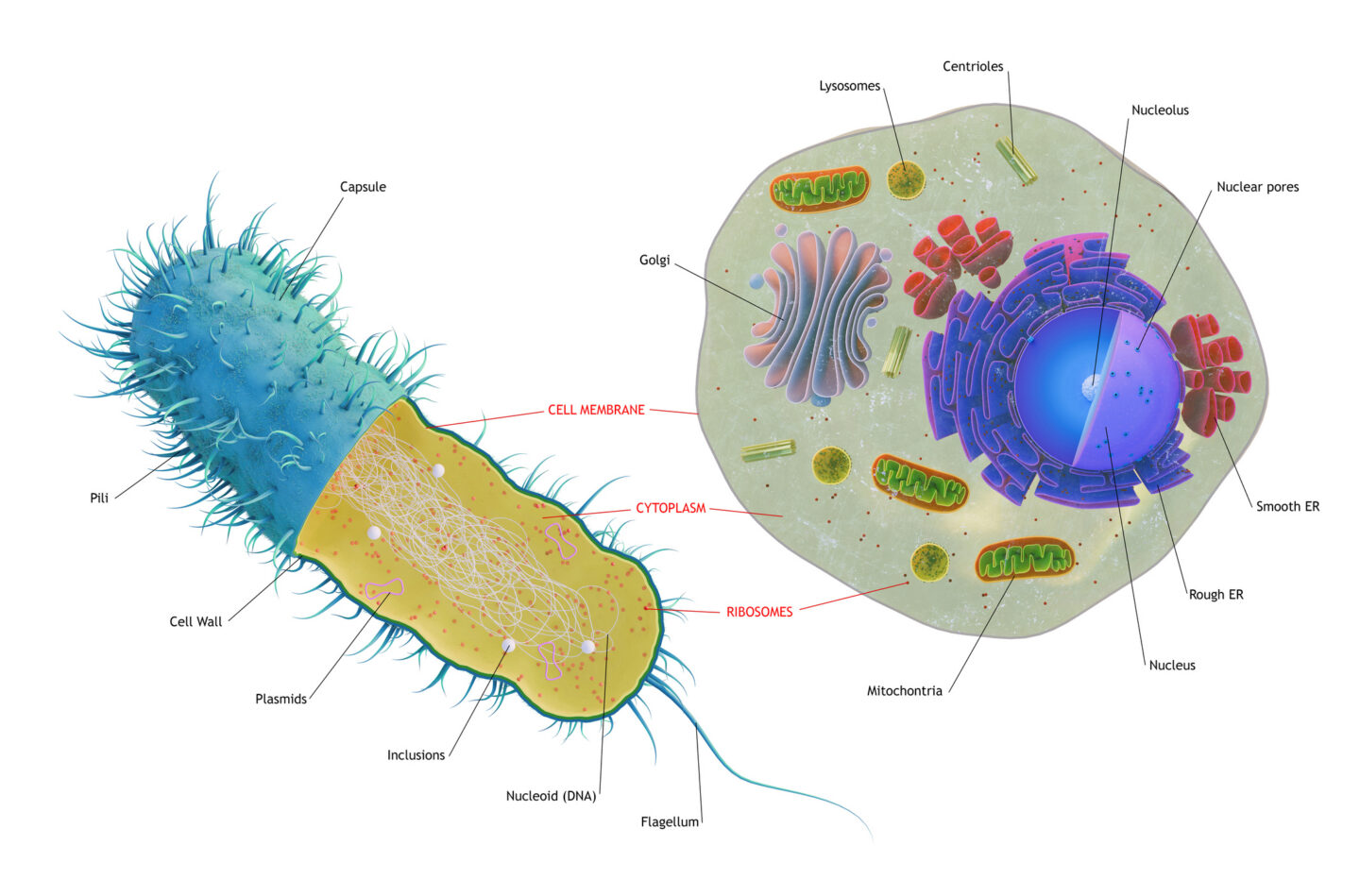
The leading explanation says an ancient archaeal cell absorbed a bacterium. That bacterium eventually became the mitochondrion—the energy-producing structure still found inside nearly every complex cell today.
Over time, many bacterial genes moved into the host cell’s nucleus, mixing with archaeal genes and helping create the first eukaryotes, the group that ultimately gave rise to animals, plants, fungi, and humans.
But the new research suggests that wasn’t the whole story.
Not even close.
Researchers found evidence that the earliest eukaryotic genomes may have accumulated genes from multiple bacterial groups across different periods of time rather than through a single transformative event.
That means our cellular ancestors may have been participating in a long-running genetic exchange network.
And that’s where things become interesting.
Must Read: Alaska Faces a Major Ocean Data Blackout as NSF Shuts Down Monitoring Network
Key Finding
Researchers identified major genetic contributions from:
- Asgard archaea
- Alphaproteobacteria
- Planctomycetota
- Myxococcota
They also detected smaller contributions from other bacterial groups and even genes associated with giant-virus lineages.
Scientists Rebuilt the Earliest Eukaryotic Genome
One challenge has always haunted researchers studying ancient evolution:
How do you reconstruct a genome that existed billions of years ago?
The Barcelona-based research team tackled the problem by carefully selecting species spread across the eukaryotic family tree rather than relying heavily on animals and other commonly studied organisms.
They filtered out repetitive genetic material and simplified large collections of related genes.
Then they repeated the process multiple times using different gene selections to make sure the results weren’t being driven by a particular dataset.
Remarkably, the same overall pattern kept appearing.
The findings consistently pointed toward multiple genetic inputs from different microbial groups.
What the First Complex Cells Looked Like
The study also offers a fascinating glimpse into the last common ancestor shared by all modern eukaryotes.
This organism wasn’t primitive by modern standards.
According to the researchers, it already possessed:
| Feature | Present? |
|---|---|
| Internal transport systems | Yes |
| Motor proteins | Yes |
| DNA replication machinery | Yes |
| RNA production systems | Yes |
| Lysosomes | Yes |
| Peroxisomes | Yes |
| Oxygen-based lifestyle | Yes |
In other words, many hallmarks of modern complex cells were already in place.
One notable exception stood out.
Researchers found fewer signs of sophisticated systems that regulate when cells divide.
That raises the possibility that early cell division may have been governed more by metabolic conditions than by the highly regulated processes seen today.
The Hidden Twist: Gene Sharing Was Everywhere
The study fits into a growing realization that ancient microbial life wasn’t neatly separated into isolated branches.
Genes moved.
Frequently.
Scientists have increasingly discovered that horizontal gene transfer—the movement of genes between unrelated organisms—is extremely common in microbial communities.
That means evolution wasn’t always a simple branching tree.
Sometimes it looked more like a web.
The researchers suggest early eukaryotes may have evolved within dense microbial mats where many species lived in close proximity and exchanged biological innovations over long periods of time.
If true, the rise of complex life may have been less of a single dramatic event and more of an extended collaborative process.
But Not Everyone Will Interpret This the Same Way
A key point is that the new findings do not overturn the established model of eukaryotic origins.
The archaeal host and bacterial mitochondrion remain central players.
Instead, the study argues that additional genetic contributions were layered onto that foundation over time.
There is also an important limitation.
Researchers acknowledge that future discoveries could alter the picture.
As more genomes are sequenced and added to public databases, some genes currently thought to have originated from one lineage may eventually be traced elsewhere.
In fact, the authors explicitly note that database completeness may be one of the biggest factors influencing future revisions.
So while the broad trend appears robust, some details could change.
What Happens Next?
The most intriguing question may be whether some of these genetic contributions came from additional ancient symbiotic relationships that left behind only DNA traces.
The current data cannot answer that.
The viral contribution is also puzzling.
Some genes linked to giant viruses today may actually represent genetic material from extinct lineages that no longer exist independently.
Scientists simply don’t know yet.
What is becoming increasingly clear, however, is that the emergence of complex life was probably far less tidy than biology textbooks once suggested.
Rather than a straightforward merger between two ancient cells, the rise of eukaryotes may have involved repeated exchanges, multiple contributors, and a surprisingly crowded evolutionary stage.
And if future genome discoveries continue pointing in the same direction, humanity’s deepest origins may turn out to be one of evolution’s most complicated collaborations.
Editorial Disclaimer: This article is based solely on publicly available information from the cited Nature study and reporting on that research. No facts, outcomes, quotes, timelines, or statistics have been invented. Scientific interpretations may evolve as new evidence and genome data become available.