What happened to the dead in Iron Age Britain?
A newly analyzed burial site in northern Scotland is forcing archaeologists to ask an unsettling question: were some bodies deliberately altered after death in ways never before documented in the region?
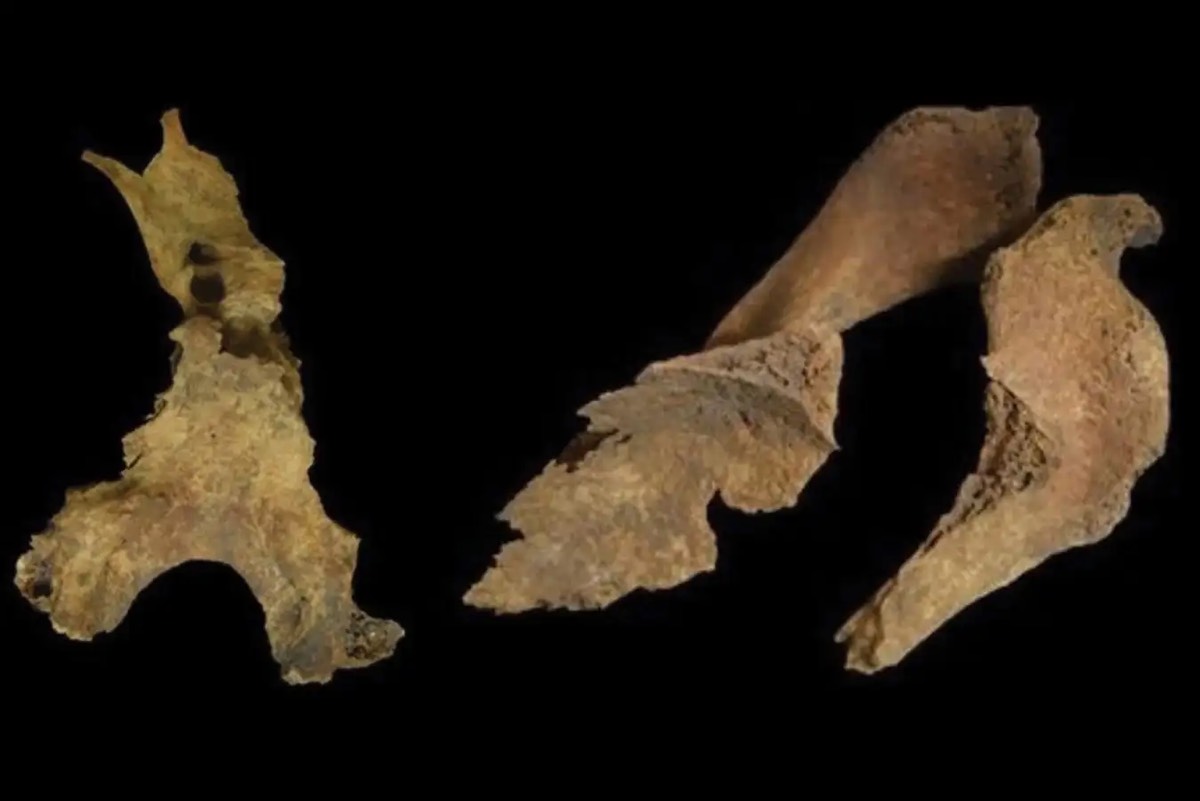
Researchers studying 2,000-year-old human remains have identified what appear to be scrape marks inside a skull, potentially indicating that brain tissue was intentionally removed shortly after death. They also found evidence suggesting several limb bones may have been shaped into tools before being returned to the grave.
And that’s only the beginning of the mystery.
Table of Contents
ToggleA Burial Site That Refuses to Give Up Its Secrets
The remains were discovered near Loch Borralie in northwest Scotland after erosion exposed a human skull from an ancient burial cairn.
Excavations revealed two individuals:
- An adult woman
- A juvenile later identified through DNA analysis as a male
Radiocarbon dating placed both deaths between 50 BCE and 70 CE, during Britain’s Iron Age.
At first glance, the burial appeared significant but not extraordinary.
A fresh scientific investigation changed that.
Must Read: $10 Million F1 Simulators in 2026 Reveal a Shocking Millisecond Advantage
The Discovery Inside the Skull
The most surprising finding came from the woman’s cranium.
Researchers identified several straight, parallel marks on the inside surface of the skull.
According to the study published in Antiquity, those marks appear consistent with deliberate scraping using a sharp tool shortly after death.
The interpretation is striking because it could represent the first known evidence of postmortem brain removal in this part of Iron Age Britain.
Researchers believe the marks were created methodically rather than accidentally.
That distinction matters.
If the interpretation is correct, it points to a funerary practice that has never previously been documented in the region.
Key Finding
| Discovery | Interpretation |
|---|---|
| Parallel marks inside skull | Possible deliberate brain removal |
| Broken base of skull | Targeted impact near time of death |
| Modified limb bones | Possible reshaping into tools |
But the skull wasn’t the only puzzle.
Bones That May Have Been Turned Into Tools
The woman’s long bones produced another unexpected twist.
Earlier examinations had interpreted marks on several bones as evidence of rodent gnawing.
The new analysis reached a different conclusion.
Researchers argue the markings are more consistent with deliberate whittling using sharp implements.
Four bones attracted particular attention:
- Both upper arm bones (humeri)
- Left ulna
- Left femur
Three appear to have been shaped into sharpened edges.
A fourth may have been used as a tool after being fashioned into a point.
Yet despite this apparent modification, the bones were ultimately placed back into the grave in their correct anatomical positions.
That’s where the story becomes even more intriguing.
The people handling the remains may have carefully manipulated the body after death while still preserving its overall arrangement for burial.
Evidence of Violence?
Researchers also identified an unusual fracture at the base of the woman’s skull.
Such injuries are typically associated with high-energy impacts.
Modern forensic examples include:
- Serious falls
- Assaults
- Sporting accidents
- Vehicle collisions
- Long-drop hangings
However, the fracture pattern did not neatly match known modern cases.
Instead, researchers suggest the injury may have resulted from a targeted impact occurring around the time of death.
Additional fractures were also observed on both shoulder blades.
The findings raise new questions, although the study does not determine exactly how the woman died.
But Not Everyone Is Convinced
As often happens with major archaeological claims, skepticism emerged almost immediately.
Contrarian View
Some experts believe the evidence is open to interpretation.
Richard Madgwick of Cardiff University, who was not involved in the research, told New Scientist that while the skull marks clearly indicate some form of manipulation, connecting them directly to brain removal may be difficult.
He also questioned whether the long bones were intentionally transformed into tools.
Instead, he suggested the bones may have already been broken and only later repurposed.
What he found especially remarkable was the idea that modified bones could then have been returned to the grave in anatomical order.
In other words, even specialists agree that the evidence is fascinating—but debate over its meaning is far from settled.
The Teenager Buried Nearby
The second individual also revealed important clues.
Ancient DNA analysis identified the juvenile as male.
Researchers estimate he died between 14.5 and 15.5 years old.
His remains showed signs of:
- Growth disruption
- Vitamin C deficiency
Genetic analysis suggests both individuals were closely related, possibly maternal second cousins.
Yet they were not buried simultaneously.
The burial layers indicate separate interments, and the two bodies appear to have received different postmortem treatment.
A Window Into Iron Age Britain
The study goes beyond a single burial.
Isotope evidence suggests both individuals spent their early years in a coastal environment, likely on the eastern coast of Sutherland, before moving to the Loch Borralie region later in life.
Researchers argue this supports the idea that communities around northern Scotland maintained long-distance connections and exchanged people, ideas, and cultural practices across maritime networks.
That broader context may be just as important as the unusual treatment of the woman’s remains.
For archaeologists, the discovery offers a rare glimpse into how Iron Age communities may have interacted with their dead—an aspect of life that is notoriously difficult to reconstruct because so few human remains have survived.
What Happens Next?
The Loch Borralie remains have opened a new chapter in the study of Iron Age Britain.
Were the skull markings really evidence of deliberate brain removal?
Were human bones intentionally crafted into tools and then returned to the grave?
Or could there be another explanation hidden within the evidence?
For now, the answers remain uncertain.
But one thing is clear: a burial site uncovered by erosion on Scotland’s remote northern coast is forcing researchers to rethink what they thought they knew about death, remembrance, and ritual nearly 2,000 years ago.
Editorial Disclaimer
This article is based entirely on publicly available information from the reported study in Antiquity and related expert commentary. No facts, quotes, outcomes, timelines, or conclusions have been fabricated. Interpretations discussed reflect the researchers’ findings and published reactions at the time of reporting and may evolve as new evidence emerges.