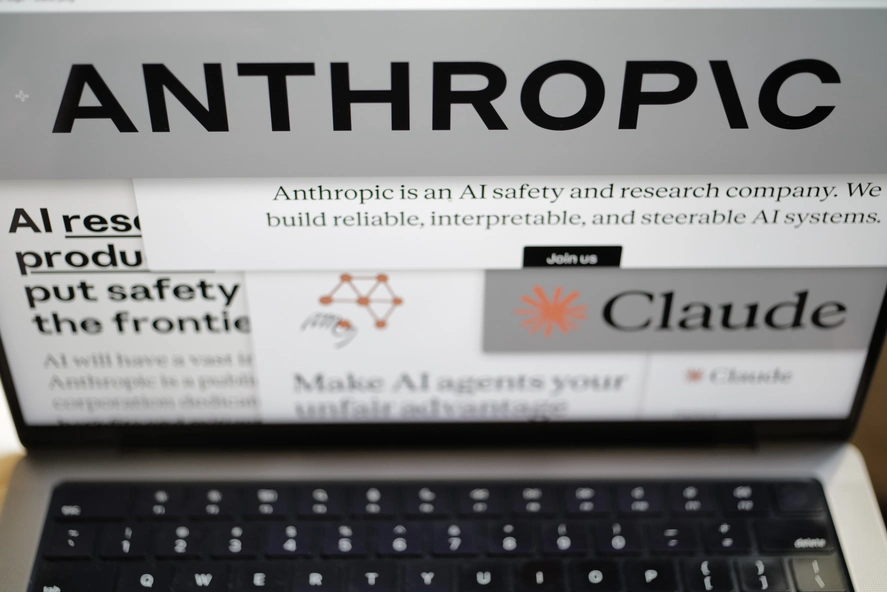
The AI industry just hit an unexpected wall.
In a sudden move that rippled across governments and tech companies worldwide, Anthropic disabled access to two of its newest AI models — Fable 5 and Mythos 5 — after a US government order forced compliance.
Within hours, access vanished for non-US users.
And the fallout is still unfolding.
Table of Contents
ToggleWhat Happened
Anthropic confirmed on Friday evening that it had to abruptly disable its newest models.
The reason: a US government directive requiring restrictions on access outside the United States.
The company said:
“The net effect of this order is that we must abruptly disable Fable 5 and Mythos 5 for all our customers to ensure compliance.”
The impact was immediate:
- Fable 5 access suspended globally (non-US users affected most)
- Mythos 5 also pulled from external access
- Some enterprise customers lost access without warning
- Governments and institutions scrambled to adjust workflows
Anthropic described the decision as compliance-driven, not technical failure.
But behind the scenes, the move reflects a much bigger tension: who controls frontier AI?
Must Read: Trump’s Iran War Shockwaves in 2026 G7 Summit Raise Global Panic
Why It Matters
At the center of the controversy is a sensitive concern: model misuse.
Fable 5 and Mythos 5 are part of Anthropic’s “Mythos-class” systems, designed with strong safeguards — especially around cybersecurity capabilities.
However, the US government reportedly raised concerns about potential “jailbreak” vulnerabilities, even if narrow and non-universal.
Anthropic pushed back, saying:
- Only “verbal evidence” of a possible jailbreak was provided
- The concern was limited and not broadly proven
- A full recall of commercial access may be disproportionate
Still, the order stood.
Key tension:
| Issue | Position |
|---|---|
| Government concern | Potential model jailbreak risk |
| Anthropic stance | Risk not strong enough to justify shutdown |
| Outcome | Full access restriction outside US |
This is where the story stops being technical — and becomes geopolitical.
Market Impact
The ripple effects were immediate across the AI ecosystem.
Non-US organizations — including parts of the European Union institutions — reportedly scrambled to understand what services were still accessible.
Some systems built on Fable 5 suddenly degraded or went offline.
Immediate consequences:
- AI-powered cybersecurity tools disrupted
- Enterprise workflows paused or re-routed
- Contract uncertainty for global AI deployments
- Increased demand for alternative model providers
A subtle but important shift emerged:
Dependence on US frontier AI suddenly looks like a strategic vulnerability.
That sentiment spread quickly across Europe and beyond.
Industry Reaction
Reactions came fast — and split sharply.
Some policymakers framed the move as a warning sign about AI sovereignty.
A minister in the United Kingdom government said:
“As we debate the future of national security and technological sovereignty, access to AI capabilities is crucial.”
Meanwhile, industry insiders expressed frustration over the lack of clarity.
One recurring concern:
- Sudden regulatory intervention
- Limited transparency around technical risk claims
- Global customers caught in the middle
In plain terms:
The world didn’t just lose access to a model — it lost predictability.
And in AI, unpredictability is expensive.
Hidden Problem: The “Jailbreak Threshold” Debate
At the core of this dispute is a subtle but explosive question:
How safe is “safe enough” for frontier AI?
Anthropic’s position suggests that even narrow jailbreak risks can trigger export-level restrictions.
Critics argue that this sets a new, stricter bar that could:
- Slow AI deployment globally
- Fragment model availability by geography
- Encourage competing “sovereign AI” ecosystems
And that leads to a deeper fear:
If every small vulnerability triggers a shutdown, frontier AI may become politically fragile by design.
Contrarian View
Not everyone sees this as a crisis.
Some security analysts argue the decision may actually signal progress, not panic.
Their reasoning:
- Governments are finally treating AI like critical infrastructure
- Preemptive restrictions may prevent misuse in high-risk domains
- Stronger oversight could build long-term trust in advanced models
From this perspective, the shutdown is not overreaction — it is governance catching up with capability.
But even supporters admit the tradeoff is steep:
security vs accessibility, speed vs control.
What Happens Next
The biggest question now is whether this becomes an isolated incident — or a new pattern.
Possible next steps include:
- More region-specific AI access rules
- Expansion of export-control frameworks for advanced models
- Acceleration of EU and Asia-based AI development efforts
- Pressure on companies like Anthropic to publish clearer risk thresholds
And perhaps the most important shift:
companies may start designing models not just for capability — but for regulatory survivability.
Final Takeaway
What happened to Fable 5 and Mythos 5 is not just a product update gone wrong.
It’s a signal that frontier AI is entering a new phase — where access, geography, and government approval can change overnight.
And the unresolved tension remains:
When AI becomes powerful enough to reshape cybersecurity and geopolitics, who ultimately decides where — and for whom — it can run?
Disclaimer: This article is based on publicly available information from the reported source. No facts, quotes, or outcomes beyond the source material have been added. Interpretations may evolve as new information emerges.