A few years ago, the biggest transportation story seemed obvious: Tesla.
Now, the conversation is changing fast.
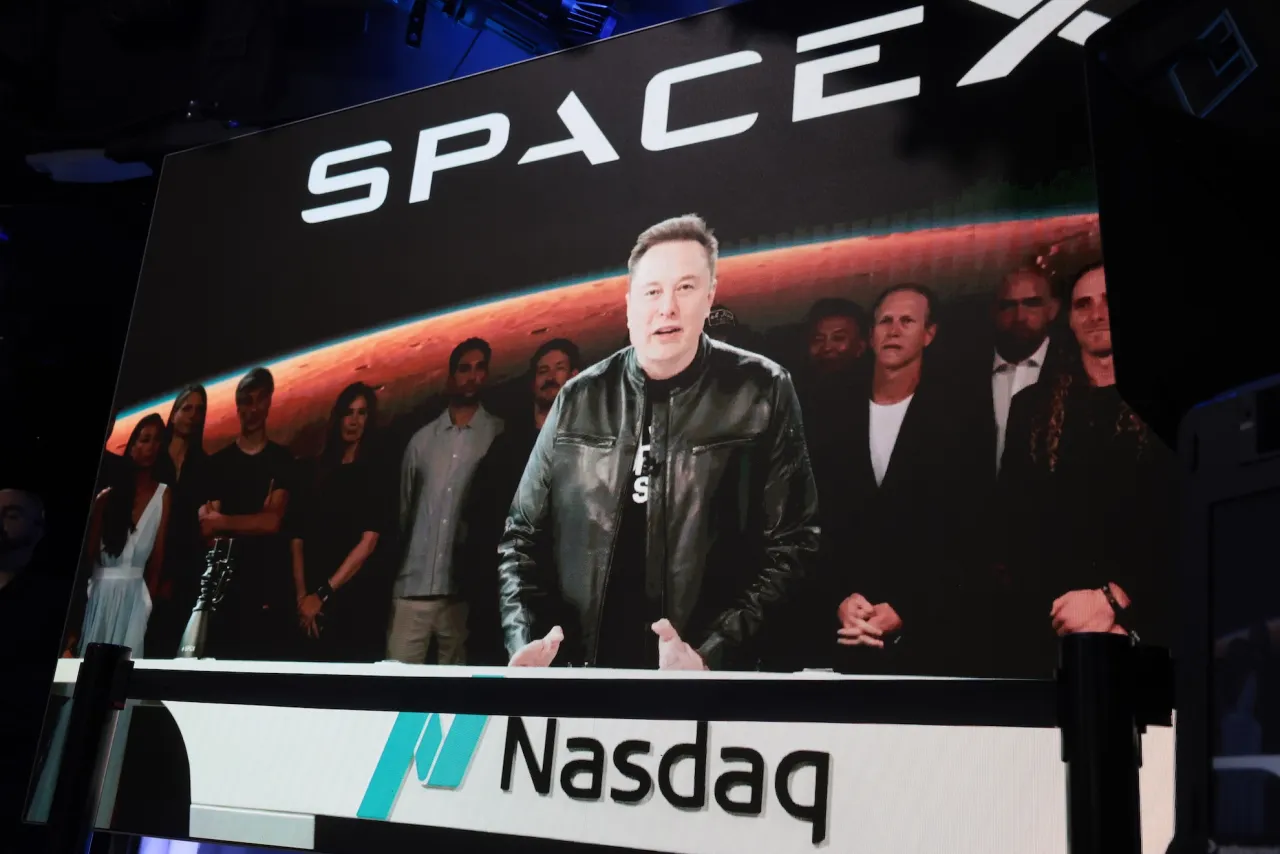
After its long-awaited IPO, SpaceX closed Friday with a staggering $2.1 trillion market value, overtaking Tesla’s roughly $1.52 trillion market capitalization and becoming the sixth most valuable publicly traded company in the United States.
But the numbers may not be the most important part.
The bigger story is the question suddenly hanging over Elon Musk’s empire:
Could SpaceX and Tesla eventually become one company?
Table of Contents
ToggleSpaceX Has Officially Moved Ahead of Tesla
The first day of SpaceX trading delivered a milestone few companies ever reach.
The rocket maker now sits behind only Nvidia, Apple, Alphabet, Microsoft, and Amazon among U.S.-listed companies by market value.
For years, Tesla was the centerpiece of Musk’s transportation ambitions. Now SpaceX has taken the lead.
And that shift is causing investors and industry observers to look beyond stock prices and toward what might happen next.
Must Read: Why This 2026 Sonos Speaker Delivered a Surprising Win for Work-From-Home Users
Quick Snapshot
| Company | Market Cap |
|---|---|
| SpaceX | $2.1 trillion |
| Tesla | $1.52 trillion |
That gap alone would have been headline news.
But another development added fuel to speculation.
The Merger Question Won’t Go Away
Last week, new language appeared in SpaceX’s IPO filing warning investors about possible future equity issuance connected to future transactions.
That wording immediately attracted attention.
TechCrunch noted that the language appears larger in scope than a typical small acquisition.
Then came another moment that amplified the discussion.
During a CNBC interview, SpaceX President and COO Gwynne Shotwell appeared open to the idea of a merger, saying such a move “might make Elon’s life a little easier.”
No merger has been announced.
No formal plans have been disclosed.
But investors are clearly paying attention.
And that’s where things become interesting.
General Motors Has a Battery Puzzle of Its Own
While SpaceX dominated headlines, another story quietly emerged inside the electric vehicle industry.
According to information obtained by TechCrunch, a foreign supplier is expected to provide lithium-iron-phosphate (LFP) battery cells for the 2027 Chevrolet Bolt.
The supplier was previously identified in a Wall Street Journal report as Chinese battery giant CATL.
At the same time, sources familiar with GM’s operations indicated the automaker is beginning LFP production at an Ultium facility.
However, those batteries are reportedly destined for energy-storage systems produced by LG Energy Solution rather than future GM electric vehicles.
The key uncertainty:
GM has not yet decided whether LFP batteries will play a larger role in future EV programs beyond the Bolt.
A Leadership Shake-Up Hits Lucid Motors
Meanwhile, luxury EV manufacturer Lucid Motors is experiencing executive turbulence.
TechCrunch reported that Emad Dlala has left the company only months after being promoted into a major leadership role.
The departure marks the first significant executive exit since Lucid appointed Silvio Napoli as CEO in April.
Sources also suggested additional leadership changes could follow.
For a company trying to scale production and strengthen its position in the EV market, investors will likely be watching closely.
Key Takeaway
- SpaceX is now worth more than Tesla.
- Merger speculation between SpaceX and Tesla is growing.
- GM’s battery strategy remains in transition.
- Lucid faces executive turnover.
- Transportation and AI are becoming increasingly interconnected.
Waymo Just Made Another Major Move
One of the more surprising developments involved Waymo.
Documents reviewed by TechCrunch showed that Waymo acquired a massive 5,500-acre proving ground in Arizona for approximately $220 million.
The property had been owned by Route 14 Investment Partners LLC, a Delaware entity associated with Apple.
The acquisition offers another signal that Waymo is preparing for larger-scale operations as autonomous driving competition intensifies.
And competition is arriving from multiple directions.
Uber, Wayve, and Waymo are all moving toward what could become a significant robotaxi battle in London.
At the same time, Waymo launched a new subscription program called Waymo Premier, aimed at frequent robotaxi riders.
The Transportation Industry’s AI Race Is Accelerating
The transportation sector increasingly looks like an AI industry.
Several developments highlighted that trend this week:
- Decart introduced Oasis 3, an interactive world model capable of generating photorealistic driving environments in real time.
- GM announced plans involving energy-storage systems for AI data centers and electric grids.
- Wing expanded autonomous drone delivery operations into seven additional U.S. cities through its Walmart partnership.
- Rivian began deliveries of its highly anticipated R2 SUV.
The common theme is difficult to miss.
Whether the technology is batteries, autonomous vehicles, simulation platforms, logistics, or robotics, AI is becoming deeply embedded in transportation strategy.
Contrarian View: Bigger Isn’t Always Better
SpaceX’s market debut has generated enormous excitement.
But not everyone sees ever-larger valuations as an automatic victory.
As transportation, AI, energy storage, autonomous vehicles, and aerospace become increasingly concentrated around a handful of giant companies, critics may question whether scale itself becomes a competitive advantage that smaller innovators struggle to match.
SpaceX’s rise is remarkable.
The unanswered question is whether industry consolidation accelerates alongside it.
What Happens Next?
The transportation industry entered 2026 expecting AI to be a major theme.
Few expected SpaceX to emerge as perhaps the most powerful transportation company in the world so quickly.
Now investors are watching for signs of a possible Tesla-SpaceX future, automakers are reshaping battery strategies, robotaxi competition is intensifying, and AI is becoming a foundational technology across the sector.
The next chapter may not be about rockets or electric cars alone.
It may be about how all of those industries converge—and who controls that future when they do.
Editorial Disclaimer: This article is based entirely on publicly available information reported by TechCrunch and referenced sources. No facts, quotes, outcomes, or future events have been fabricated. Analysis and industry implications may evolve as new information emerges.