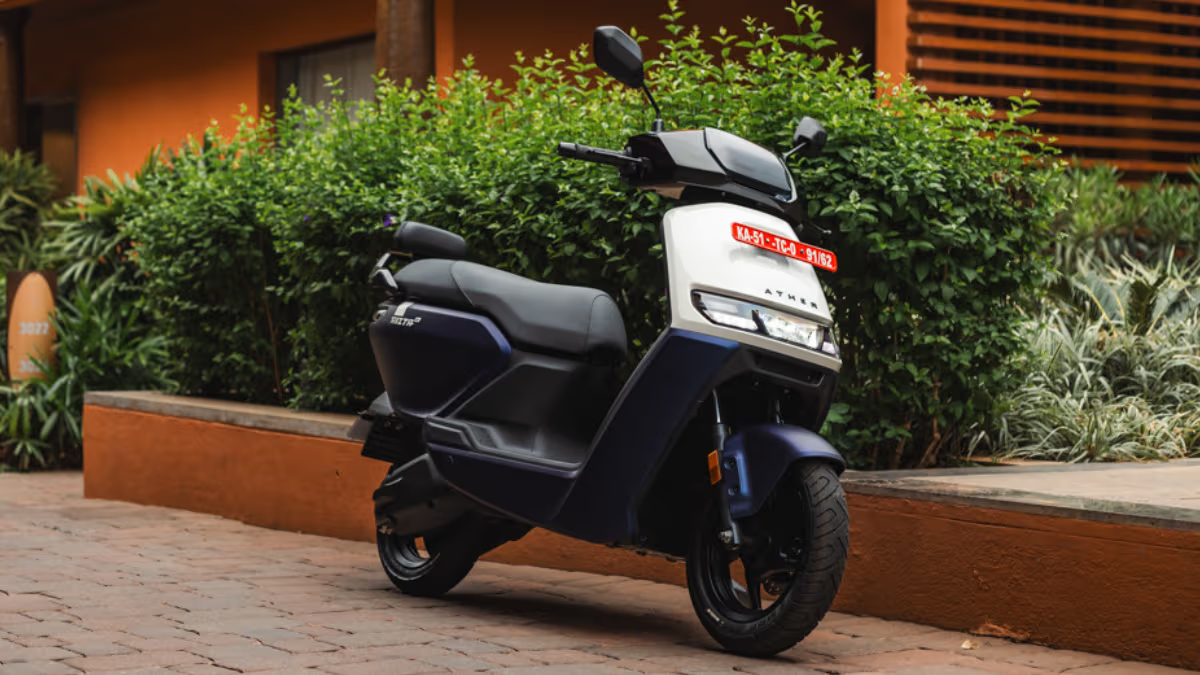
Two-wheelers in India just took an unexpected tech turn.
And this time, it’s not about speed or battery range—it’s about voice control while riding.
Ather Energy has rolled out a new OTA update that quietly changes how riders interact with their scooters. And for many users of the Ather Rizta and 450X lineup, the dashboard may never feel the same again.
Table of Contents
ToggleWhat Happened
Ather 450X, Ather 450 Apex, and Ather Rizta are now getting a major Over-The-Air upgrade called AtherStack7.
And the headline feature?
Voice commands.
But that’s only part of the story.
The update also quietly adds a mix of safety tools, AI-driven interactions, and even entertainment-style updates like live cricket alerts on the scooter display.
All of it is aimed at one big idea:
less screen time, more hands-free riding.
Must Read: Ultraviolette F77’s 2026 Isle of Man TT Run Sparks Shockwaves in EV World
Why This Update Is Turning Heads
At first glance, voice control in a scooter sounds like a gimmick.
But Ather is positioning it differently.
The system is designed to work through:
- Ather’s Halo smart helmets
- Or any Bluetooth headset
No onboard mic on the scooter itself. That detail changes everything—because it keeps rider interaction fully external.
The AI system reportedly understands multiple Indian accents and dialects, making it more practical for real-world riding conditions.
Quick Snapshot of AtherStack7 Features
| Feature | What It Does |
|---|---|
| Voice commands | Navigation, calls, media control |
| Pothole alerts | Road hazard warnings |
| Crash detection | Emergency safety alerts |
| Remote controls | Charge management via app |
| Anti-theft tools | Remote locking system |
| Cricket updates | Live match info on display |
And yes—cricket updates on a scooter dashboard are now real.
That’s where things start getting interesting.
The Bigger Market Impact
This update is not just about convenience—it signals where EV scooters in India are heading.
Instead of focusing only on hardware upgrades, brands like Ather are now treating software as the main battlefield.
And with Gen 3 hardware support, the update is limited to higher-end variants only:
- Gen 3+ scooters
- Top trims like Rizta Z and 450 Apex
- Excludes lower trims like 450S and Rizta S
That creates a quiet divide in the lineup—software capability is now a premium feature.
Industry Reaction
Early reactions across the EV community are split.
Some riders see it as a genuine leap forward:
- safer riding experience
- reduced screen distraction
- smarter commuting ecosystem
Others are less convinced.
Because the reality is simple: voice control while riding depends heavily on headset usage, connectivity, and real-world noise conditions.
And not every rider is ready to rely on that.
Hidden Problem No One Is Talking About
Here’s the uncomfortable part.
While Ather promotes “less distraction,” voice commands still require:
- active listening
- verbal interaction
- Bluetooth device dependency
In chaotic traffic conditions, that could become another layer of cognitive load—not less.
And the feature only works through helmets or external audio devices, meaning the system is not truly standalone.
That raises a subtle question:
Is this reducing distraction—or just shifting it elsewhere?
Contrarian View: Is This Actually Overkill?
Not everyone is impressed.
A growing counter-opinion in EV circles suggests this might be an example of unnecessary tech layering.
Critics argue:
- basic riding doesn’t need AI interaction
- safety systems already exist without voice layers
- cricket updates and media controls may distract more than help
One blunt perspective floating around:
“This is a smartphone feature pretending to be a scooter upgrade.”
And it’s not an unreasonable argument.
Because while innovation is clear, the real-world necessity is still being tested on roads that are anything but predictable.
What Happens Next
Ather has hinted that this is just the beginning.
A future “talkback” system is reportedly in development—where the scooter may proactively give suggestions and feedback to riders in real time.
If that happens, scooters may shift from being passive machines to semi-interactive assistants on wheels.
But the big question remains:
Will riders actually want their scooter talking back to them during a commute?
Final Takeaway
AtherStack7 is not just another software update—it’s a quiet push toward AI-powered mobility in India’s EV space.
Whether it becomes a daily-use breakthrough or an overengineered experiment will depend on one thing: real road experience, not lab promises.
And right now, that story is still unfolding.
Disclaimer: This article is based on publicly available information. No facts, outcomes, or claims have been fabricated. Interpretations and analysis may evolve as new updates emerge.