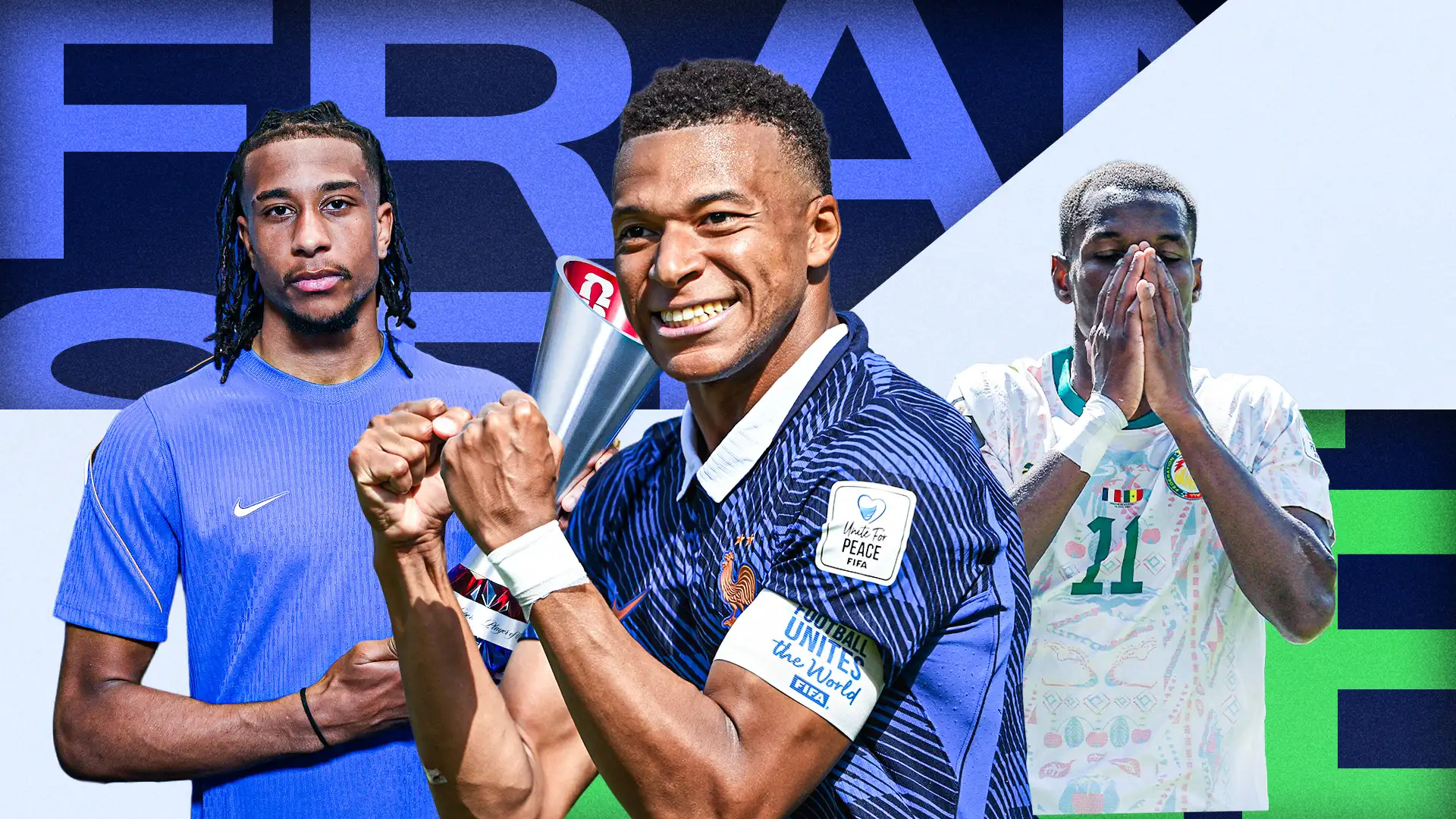
France looked lost, then unstoppable — and it all flipped around one man.
A shaky first half, a furious second, and a captain who went from blamed to record-breaker in a single night.
What unfolded in France’s 3-1 win over Senegal in the 2026 World Cup opener wasn’t just a comeback. It felt like two completely different matches stitched together.
And right at the center of it was Kylian Mbappe rewriting history — again.
Table of Contents
ToggleWhat Happened: From Chaos to Control
For 45 minutes, France barely looked like a tournament favorite.
Senegal had the clearest chances early:
- A shot off the post after a rapid break
- A shocking miss from inside 8 yards right before halftime
France? Disjointed, slow, and unusually wasteful.
Even Mbappé himself looked off rhythm — losing possession in dangerous areas and struggling to impose himself.
But the second half flipped everything.
France suddenly turned aggressive, sharper, and more direct:
- Desire Doue and Mbappé both came close early
- Edouard Mendy was finally forced into real saves
- Pressure began to suffocate Senegal’s back line
Then the breakthrough arrived.
Mbappé latched onto a precise wide pass from Michael Olise and finished calmly into the bottom corner.
From there, the game unraveled for Senegal.
Must Read: Messi’s 2026 Hat-Trick Shock: Argentina’s 3-0 Win Over Algeria Stuns World
The Moment Everything Changed
Once the first goal went in, France didn’t slow down — they accelerated.
- A Senegal equalizer was ruled offside immediately after
- Substitute Bradley Barcola finished a delicate chip after a perfect through ball from Adrien Rabiot
- Senegal managed a late consolation through Ibrahim Mbaye
But the final word belonged to Mbappé.
From 30 yards out, he unleashed a looping strike that sailed beyond Mendy — sealing the game and his place in French football history.
That goal also made him France’s all-time top scorer.
A match that started with criticism ended with legacy.
Why It Matters: More Than Just a Win
On paper, it’s a 3-1 victory.
In reality, it raises bigger questions.
Key Turning Points
- France were seconds away from trailing at halftime
- Senegal missed two major chances that could’ve changed everything
- Mbappé shifted from liability to match-winner in 45 minutes
- Tactical change: Olise moved centrally and unlocked France’s attack
That adjustment by manager Didier Deschamps quietly became one of the game’s defining decisions.
Player Snapshot: Not Just Mbappé
A few performances stood out beyond the headline name:
- Michael Olise (8/10) – became the creative switch France needed after halftime
- Dayot Upamecano (7/10) – calm under early pressure
- Adrien Rabiot (7/10) – delivered the assist that broke Senegal’s resistance
- Bradley Barcola (7/10) – immediate impact off the bench
- Mike Maignan (6/10) – shaky moments despite key saves
France didn’t dominate. They evolved mid-game.
Hidden Problem: A Dangerous First Half Pattern
Despite the win, France’s opening 45 minutes were alarming.
They:
- Lost control of midfield battles
- Gave away possession cheaply in transition
- Looked vulnerable to counterattacks
Senegal didn’t just compete — they exposed gaps.
And this is where the concern grows. Against stronger teams, those early mistakes don’t get forgiven.
Contrarian View: Was This Really a “Statement Win”?
Not everyone will be convinced.
A growing counter-argument is that France didn’t dominate Senegal — they survived them early.
From that angle:
- Senegal missed two “must-score” chances
- France relied heavily on individual brilliance
- The scoreline may flatter the performance gap
In other words, critics may say this wasn’t control — it was efficiency under pressure.
And efficiency doesn’t always repeat in knockout football.
That’s where the debate begins.
What Happens Next
France leave with three points, a win, and a historic milestone for Mbappé.
But they also leave with a warning:
early tournament nerves are real, and stronger opponents won’t miss the same chances Senegal did.
The biggest question now isn’t about the scoreline.
It’s whether France’s “second-half version” is their real identity — or just a reaction to nearly going behind.
Because at this level, slow starts don’t just create headlines.
They end campaigns.
Disclaimer: This article is based on publicly available match information and player ratings from the reported game. No facts or outcomes have been fabricated. Interpretations and analysis reflect current understanding and may evolve with future matches.