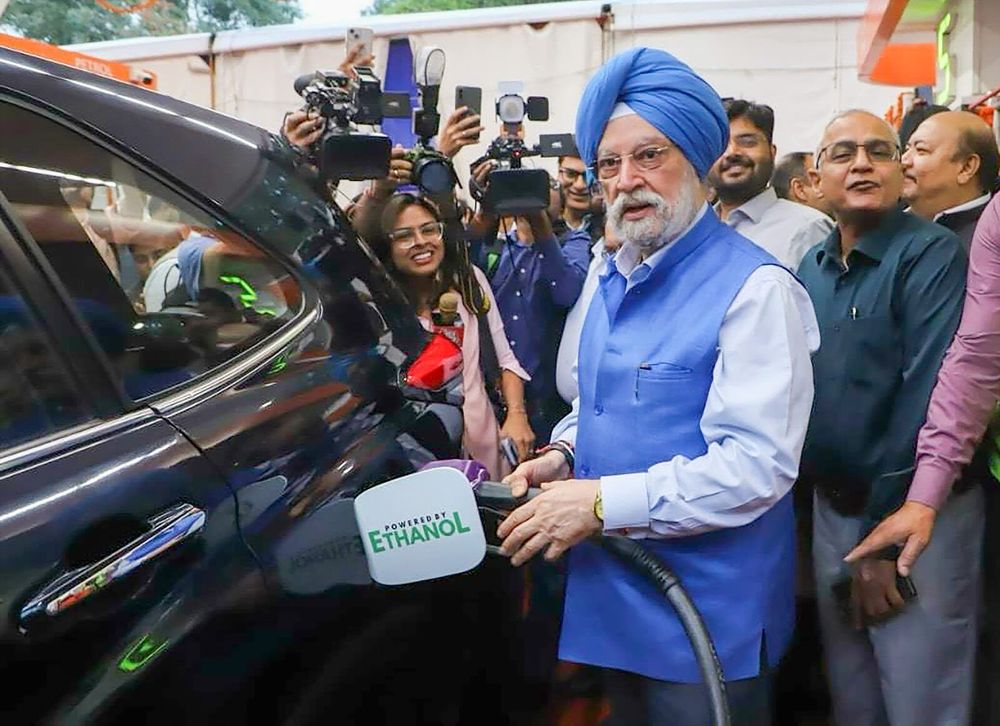
India’s fuel story just took a sharp turn in 2026.
Not quietly. Not gradually. But with a shift that could redefine what you pump into your bike or car in the next few years.
Because E85 fuel is no longer theory in India—it’s already at the pump.
And E100 is waiting in the wings.
But here’s the uncomfortable question nobody is answering clearly yet:
Are Indian vehicles—and drivers—actually ready for this ethanol leap?
Table of Contents
ToggleWhat Happened: E85 Has Officially Entered India’s Fuel Map
India has pushed ethanol blending aggressively in recent years, moving to 20% ethanol blending in petrol (E20) as the baseline from April 2025.
Now things escalate.
- E85 fuel: 85% ethanol + 15% petrol
- E100 fuel: 93–95% ethanol + 5–7% petrol/solvents (for cold starts and stability)
The rollout began in June 2026 with India’s first E85 dispensing station on Pusa Road, New Delhi.
According to the Ministry of Petroleum and Natural Gas, expansion is already mapped:
- 50–100 stations in Delhi-NCR + Mumbai-Pune-Nagpur corridor (early phase)
- 500 stations by December 2026
- 5,000 stations across major cities by end of 2027
And this isn’t just policy talk anymore. It’s physical infrastructure arriving on Indian roads.
Must Read: BSA Scrambler 650 2026 Sparks Confusion: Brilliant Engine, Flawed Ride?
Why It Matters: This Isn’t Just “Greener Fuel”
E85 and E100 are not upgrades to petrol. They are fundamentally different fuels.
Here’s what makes them disruptive:
- Ethanol content drastically higher than E20
- Engines need 30–40% more fuel volume to produce same power
- Lower oil import dependence for India
- Higher octane rating (100–110 RON), enabling better performance tuning
- Cleaner combustion with lower CO, NOx, hydrocarbons
But there’s a catch that hits your wallet directly.
Fuel Efficiency Reality Check
| Fuel Type | Ethanol % | Mileage Impact vs Petrol |
|---|---|---|
| E85 | 85% | ~20–30% lower |
| E100 | ~95% | ~35% lower |
That means more frequent fuel stops—no matter how “clean” it sounds.
Market Impact: Cheap Fuel, Expensive Engineering
At the pump, E85 looks attractive.
- E85 price in Delhi: ₹82.12/litre
- Roughly ₹20 cheaper than petrol
But vehicles need serious upgrades to handle it:
- Ethanol-resistant fuel lines and tanks
- High-flow fuel pumps and injectors
- ECU recalibration for richer fuel mapping
- Ethanol content sensors for real-time adjustments
- Cold-start tuning changes
And that’s where costs quietly stack up.
- Two-wheelers like the Hero Splendor+ Flex Fuel already carry a ₹5,153 premium
- Cars may cost ₹50,000 to ₹1 lakh extra to become E85/E100 compliant
So the question becomes blunt:
Is cheaper fuel really cheaper if the vehicle itself becomes more expensive?
Contrarian View: The “Green Fuel” Narrative Has a Blind Spot
On paper, ethanol looks like a win-win: lower imports, cleaner emissions, higher octane.
But critics point to a less comfortable reality.
Ethanol production and scaling depend heavily on agricultural inputs, supply chains, and water usage. And while emissions at the tailpipe drop, a different pollutant rises—acetaldehyde, a hazardous air pollutant.
This creates a split narrative:
- Pro-E85 view: energy security + lower emissions + performance boost
- Skeptical view: hidden environmental trade-offs + efficiency loss + infrastructure strain
And neither side is fully wrong.
That tension is exactly what makes this rollout controversial rather than universally celebrated.
Hidden Problem: Infrastructure Moves Slower Than Policy
The biggest gap isn’t enthusiasm—it’s readiness.
Even with planned rollout targets, E85 availability will remain limited in the early phase. That means:
- Drivers may not consistently find compatible fuel
- Mixed fueling ecosystems (E20, E85, petrol) will coexist
- Vehicle compatibility confusion will rise
Add one more issue: most existing vehicles in India cannot use E85 or E100 without modification.
That alone could slow real-world adoption far more than policy speed suggests.
What Happens Next: A Slow, Uneven Fuel Revolution
India’s ethanol strategy is no longer experimental. It is structural.
But the next 2–3 years will decide whether E85 becomes:
- a mainstream alternative fuel system
or - a niche corridor-based experiment with limited adoption
The success hinges on three pressure points:
- Vehicle manufacturer adaptation speed
- Fuel station expansion beyond metro corridors
- Real-world consumer acceptance of lower mileage
Because while policy can mandate change, consumer behavior decides survival.
And right now, both are moving—but not at the same speed.
Final Thought
E85 and E100 are not just fuel upgrades. They are a reset of how India thinks about mobility energy.
But the real question is no longer what these fuels are.
It’s whether the ecosystem around them can catch up before expectations outrun reality.
And that answer is still unfolding.
Disclaimer: This article is based on publicly available information from the provided source. No facts, figures, or outcomes have been fabricated. Interpretations reflect current reporting and may evolve as new data emerges.