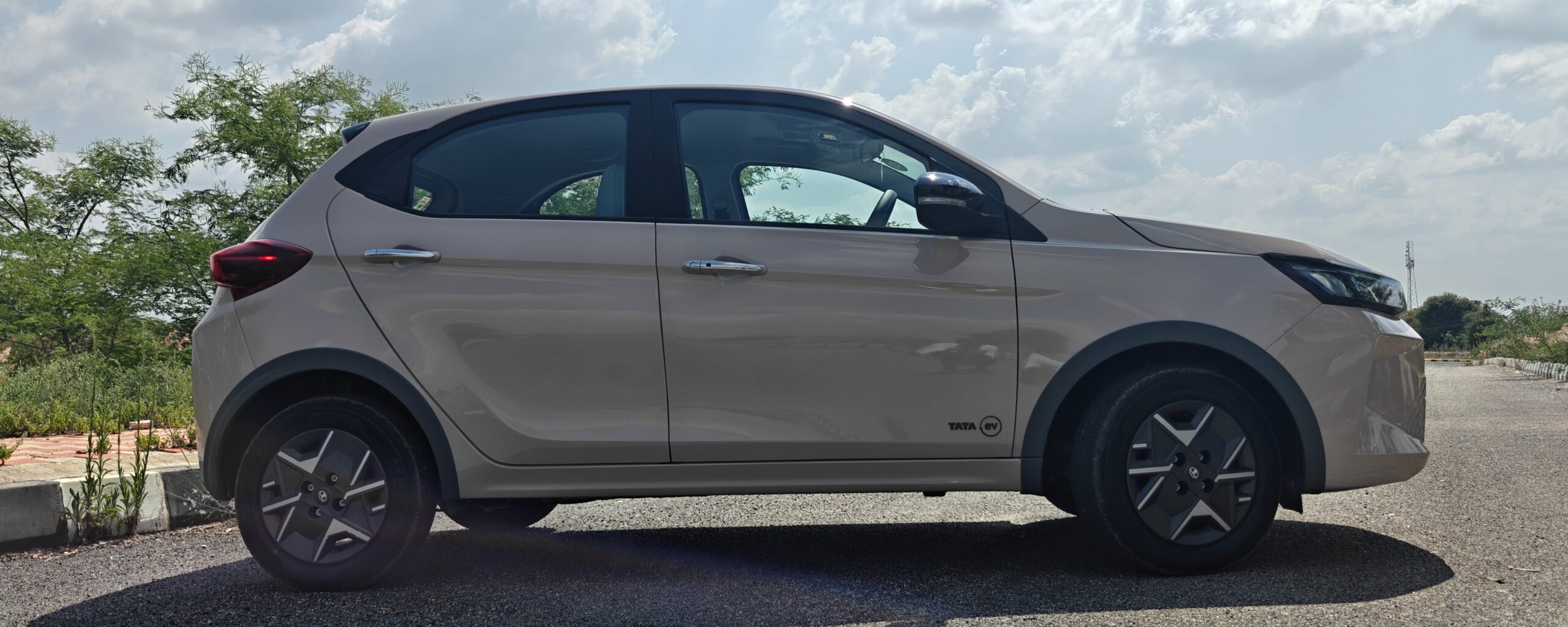
Something unusual is happening in India’s entry EV space.
A budget electric hatchback just got a major overhaul — yet it still leaves buyers strangely divided.
The 2026 Tata Tiago EV update looks bigger, smarter, faster… and yet not everyone is convinced it actually moves the needle enough.
And that tension is exactly what makes this story interesting.
Table of Contents
ToggleWhat Changed in the 2026 Tiago EV?
Tata Motors has given its entry-level EV a serious midlife refresh. And this isn’t just cosmetic polish.
Key updates include:
- Fresh exterior styling with LED headlamps and redesigned bumper
- A cleaner EV-focused “blanked-off” front face
- New cabin layout with a dual-screen modern dashboard
- Improved seat cushioning and comfort tuning
- Faster DC charging (20–80% in 30 minutes)
- Software tweaks for smoother throttle response
- Extended battery warranty of up to 15 years (first owner)
- Price drop of up to ₹1.15 lakh
The result? A car that feels more “2026-ready” than ever before.
But there’s a twist brewing underneath the upgrades.
Must Read: 2026 Renault Duster 1.0 MT Review: Surprise Value Move Shakes SUV Buyers
Why This EV Still Feels Like a City Specialist
On paper, the Tiago EV is clearly built for urban India.
It comes with two battery options:
- 19.2 kWh pack
- 24 kWh pack
And delivers a certified range of:
- 226 km to 285 km
Real-world testing paints a more grounded picture — around 200 km for the larger battery.
That’s enough for daily city life. But it quietly shuts the door on serious highway ambition.
And Tata seems to know it.
The driving character is intentionally softened for 2026:
- City mode limits output to ~75%
- Sport mode unlocks full performance
- Top speed: 122 km/h
- No true one-pedal driving mode
It’s not trying to thrill you. It’s trying to not scare you.
Inside the Cabin: Small Car, Big Tech Energy
Step inside and the transformation becomes more obvious.
The 2026 Tiago EV now feels closer to a tech product than a basic hatchback.
Highlights include:
- 10.25-inch floating touchscreen
- Digital instrument cluster
- Physical climate control buttons (a smart move)
- Rear AC vents for comfort
- 65W USB-C fast charging port
- Rubberised phone storage pads
But not everything is a win.
The Harman audio system has been removed and replaced with a standard six-speaker setup — a downgrade enthusiasts will notice immediately.
Still, Tata has tried to balance practicality and modernity, not luxury.
The Feature Loadout That Changes Expectations
For a car priced between ₹6.99 lakh and ₹9.99 lakh, the feature list feels almost aggressive.
Top variant includes:
- 360-degree camera (highly praised)
- Blind-spot monitoring with live feed
- Cruise control
- Auto LED headlamps
- Wireless Android Auto & Apple CarPlay
- Six airbags + ESP + hill assist
But here’s the contradiction:
Tata has added premium tech… while also removing premium audio and some comfort elements.
It feels like an EV caught between cost control and ambition.
Charging, Range & Real-World Reality
This is where the 2026 update genuinely improves usability.
Charging performance:
- 20% to 80% in 30 minutes (DC fast charging)
- Previously: around 45 minutes
- Charging slows sharply after ~93%
Battery improvements include smarter calibration and better efficiency prediction.
For daily users, this matters more than headline range numbers.
Because in real life, convenience beats specs.
Ride Comfort: The Silent Advantage
If there’s one area where the Tiago EV quietly dominates expectations, it’s ride quality.
- Softer suspension tuning
- Better low-speed absorption
- Stable highway behavior
- Light, predictable steering
It doesn’t feel exciting.
It feels easy.
And for first-time EV buyers — which reportedly form a large share of ownership — that’s exactly the point.
Contrarian View: Is the Upgrade Even Necessary?
Here’s where opinions split.
Critics argue:
- Range is still modest
- Performance remains deliberately dull
- Punch EV offers more space and a larger 30 kWh battery at lower price points
- Feature upgrades feel incremental, not revolutionary
Supporters counter:
- Most buyers never leave city limits
- Simplicity reduces ownership anxiety
- Lower running cost matters more than specs
- ₹1.15 lakh price cut changes value perception significantly
So the real question becomes uncomfortable:
Is Tata improving the Tiago EV… or just refining a limitation?
Market Impact: The Quiet Battle Inside Tata’s Own Showroom
Perhaps the biggest challenge doesn’t come from rivals — but from Tata itself.
The Punch EV now sits in a stronger position:
- More SUV-like appeal
- Bigger battery option (30 kWh)
- Higher practicality
- Competitive pricing overlap
This creates an internal rivalry that could split buyers rather than expand them.
And that’s where strategy gets tricky.
What Happens Next?
The 2026 Tata Tiago EV is no longer just an entry EV.
It’s becoming a test of what India actually wants:
- Maximum affordability
- Or maximum capability
- Or simply the easiest electric car experience possible
Tata has clearly chosen ease over excitement.
But whether buyers reward that decision — or move toward more “capable” alternatives — is still an open question.
And that uncertainty may define India’s entry EV market in 2026 more than any spec sheet ever could.
Disclaimer: This article is based on publicly available information from the 2026 Tata Tiago EV review. No facts, figures, or outcomes have been fabricated. Interpretations reflect editorial analysis and may evolve as new data or updates emerge.