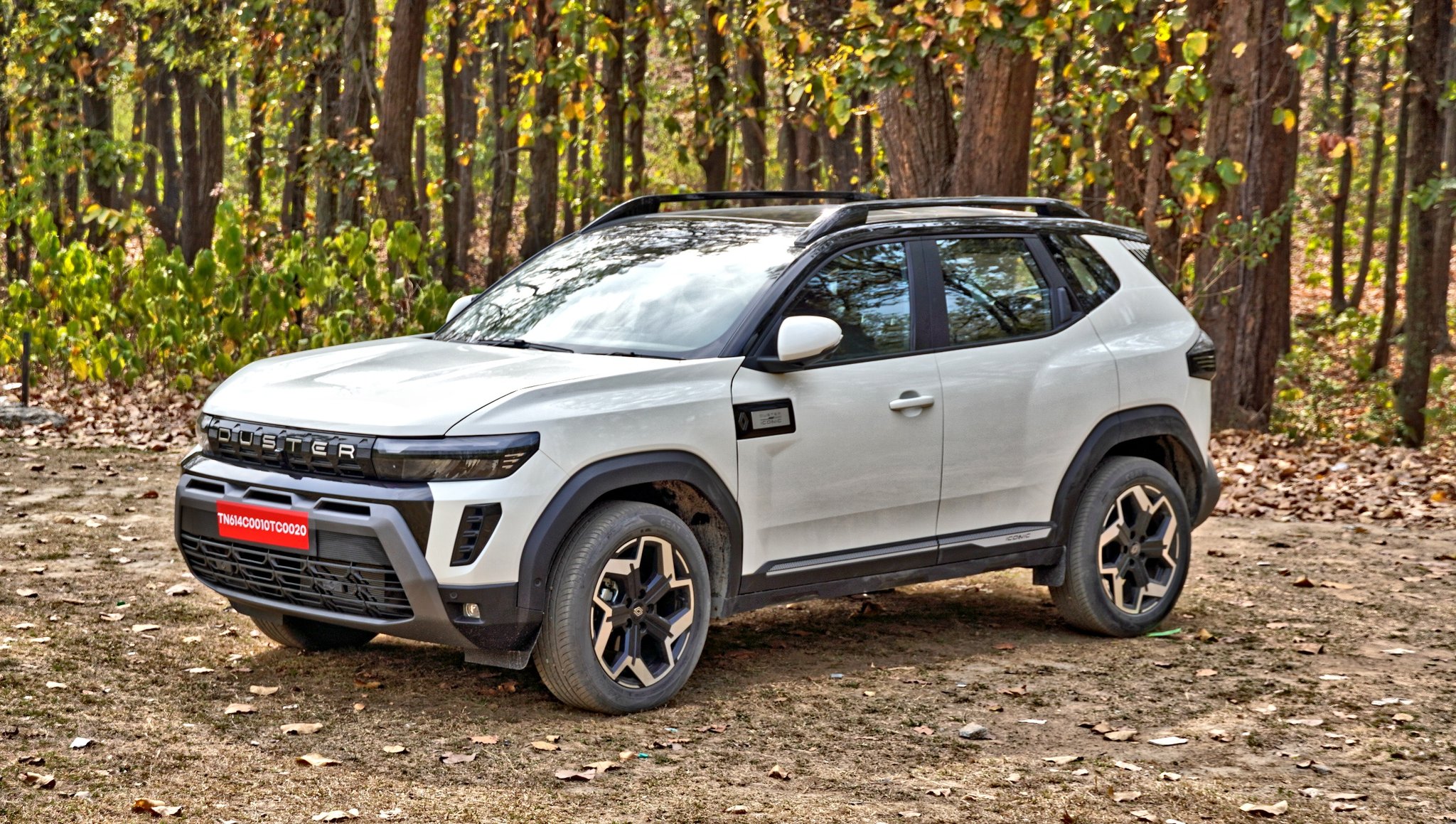
Something unexpected is happening in India’s midsize SUV space.
Not from EVs. Not from hybrids. But from a familiar name making a quieter, sharper comeback.
The new Renault Duster 1.0 MT isn’t trying to be the fastest SUV in the room.
It’s trying to be the one people actually buy.
And that shift alone is stirring the segment.
Table of Contents
ToggleWhat Happened: The “Simple” Duster That Isn’t So Simple
At the heart of this Duster is a 1.0-litre, 3-cylinder turbo-petrol engine producing 100hp and 166Nm torque. It’s paired with a 6-speed manual gearbox—and yes, there is no automatic option here.
That immediately changes the game for buyers expecting full flexibility.
But Renault has clearly tuned this version differently from its smaller sibling (the Kiger), adding slightly more torque and a taller gearbox setup for the midsize SUV role.
Quick snapshot:
- Engine: 1.0L turbo petrol
- Power: 100hp
- Torque: 166Nm
- Gearbox: 6-speed manual only
- Claimed efficiency: 19.41 kmpl
But reality, as always, tells a more complex story.
Must Read: BYD Seal U India Launch in 2026 Sparks Shock Over 1,200km Hybrid Claim
Why It Matters: A Budget SUV That Refuses to Feel “Budget”
The biggest shock isn’t performance. It’s balance.
The Duster still leans on what made it famous:
- strong ride comfort
- stable highway manners
- confident steering
- rugged SUV stance
Even at low speeds, it has a firmness—but not the uncomfortable kind. It absorbs broken roads without drama, which is still rare in this segment.
And in a market where SUVs often feel over-styled and under-engineered, that matters.
But there’s a catch forming underneath the polish.
The Real Driving Experience: Fast Enough, Not Fast
On paper, 100hp sounds modest for a midsize SUV. On the road, it behaves exactly like that—until it doesn’t.
Below 2,000rpm, there’s noticeable turbo lag. But once the engine wakes up, it becomes surprisingly usable in the city.
- Easy to drive in traffic
- Needs downshifts for overtakes
- Pulls cleanly after the midrange kicks in
The gearbox is precise, but not light. Enthusiastic shifts demand effort.
And that’s where the personality split begins:
calm commuter vs engaged driver.
Market Reality Check: Efficiency vs Expectation Gap
Renault claims 19.41 kmpl, but real-world testing shows:
- City: 8.9 kmpl
- Highway: 14.5 kmpl
That gap isn’t shocking for turbo petrols, but it does reset expectations.
Add 40°C heat conditions and heavy AC load, and efficiency drops further.
So the question becomes less about numbers—and more about trade-offs.
Feature Game: Surprisingly Loaded for the Price
Inside, the Duster doesn’t behave like a “base variant” SUV.
Even the mid Techno trim includes:
- 10.1-inch touchscreen with wireless smartphone integration
- Wireless charging
- 6-speaker Arkamys system
- Panoramic sunroof
- Dual-zone climate control
- Powered tailgate
- Cruise control
Safety is also strong:
- 6 airbags
- ESP + traction control
- Hill-start assist
- Tyre pressure monitoring
But here’s the twist: no ADAS, no ventilated seats, no 360° camera in this variant.
So it feels modern—but intentionally not over-loaded.
Hidden Strength: Space Still Wins Quietly
This is where the Duster quietly pulls ahead again.
- Segment-best 518L boot space
- Rear seat comfort for tall passengers
- Proper knee and headroom
- USB-C ports + rear AC vents
But the middle rear seat is tight.
Three adults? Technically yes. Comfortably? Not really.
Contrarian View: Is This Actually the Wrong Direction?
Here’s the uncomfortable question no brochure answers.
Is a manual-only midsize SUV in 2026 actually a smart move?
In a market shifting rapidly toward:
- automatics
- hybrids
- EV adoption
The Duster 1.0 MT feels almost deliberately old-school.
And yet—this is exactly why it might succeed.
Because it’s not trying to impress everyone.
It’s targeting buyers who still want:
- mechanical simplicity
- lower pricing
- predictable maintenance
- no over-dependence on electronics
That makes it polarizing, not universally appealing.
And that polarization is its biggest risk—and advantage.
Price Positioning: Where the Duster Hits Hard
The pricing keeps things sharp:
- Starts at ₹10.49 lakh
- Goes up to ₹13.49 lakh (1.0 Techno MT)
- Higher trims reserved for 1.3 turbo
For what it offers, it undercuts expectations in the midsize SUV space.
But it also forces compromise decisions that modern buyers may hesitate on.
What Happens Next: A Silent Bestseller or a Missed Opportunity?
The Renault Duster 1.0 MT sits in a strange space.
It’s:
- not the most powerful
- not the most tech-loaded
- not the most efficient
But it might still become the most balanced value SUV in its price band.
The real test is simple:
Will Indian buyers accept a manual-first midsize SUV in an automatic-first era?
That answer will decide whether this Duster becomes a legend again—or a niche survivor.
Editorial Disclaimer
This article is based on publicly available information from the provided source. No facts, figures, or outcomes have been fabricated. Analysis reflects interpretation of the reviewed data and may evolve as new information emerges.