Something big is brewing at Maruti Suzuki.
India’s largest carmaker is reportedly preparing one of its most aggressive product offensives in years, with as many as nine new vehicles expected over the next two to three years. And there’s one detail that immediately stands out: seven of them are likely to be SUVs.
That alone says a lot about where the Indian car market is heading.
For decades, Maruti Suzuki dominated the hatchback space. But now, the company appears ready to double down on the segment that is driving the industry’s biggest growth story—SUVs.
And that may only be the beginning.
Maruti Suzuki Is Preparing For A Major Shift
The company already has strong performers in its lineup.
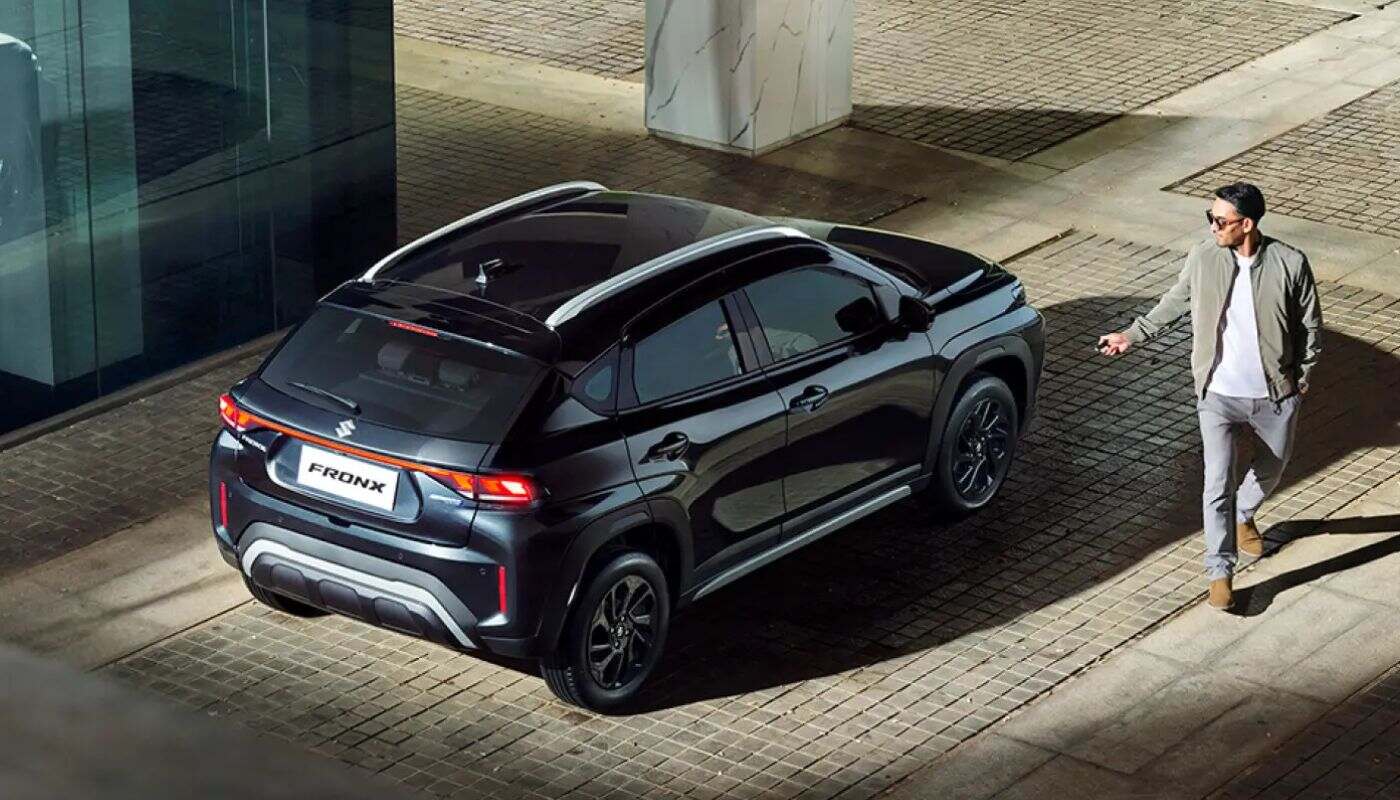
Models such as the Fronx, Brezza, and Grand Vitara have helped Maruti strengthen its position in the utility vehicle market. Yet competition is becoming fiercer by the month.
Hyundai, Mahindra, Tata Motors, Kia and Toyota are all fighting aggressively for SUV buyers.
Instead of playing defense, Maruti appears to be planning a large-scale counterattack.
According to available information, the company is expected to launch:
- 9 new vehicles over the next 2–3 years
- 7 new SUVs
- A new electric MPV
- Updated versions of key existing products
- Additional flex-fuel vehicle options
That’s a significant pipeline for a manufacturer already leading the Indian passenger vehicle market.
Must Read: Kia’s Massive 2026-27 SUV Push Could Change India’s Market Faster Than Expected
The New Electric MPV Could Be One Of The Biggest Launches
Among all the upcoming products, one vehicle may attract the most attention.
Internally codenamed YMC, the upcoming electric MPV is expected to share its architecture with the e Vitara.
If launched as expected, it would become Maruti Suzuki’s second battery-electric vehicle for India.
The timing is notable.
Electric MPVs remain a relatively underdeveloped space, and the YMC could target buyers looking for a practical, spacious family vehicle with zero tailpipe emissions.
Its expected rival?
The recently emerging Kia Carens Clavis EV.
That sets up what could become one of the more interesting EV battles in India’s family car market.
Key Takeaway
| Expected Product | Segment |
|---|---|
| YMC Electric MPV | Electric MPV |
| Multiple New SUVs | Utility Vehicles |
| Baleno Facelift | Premium Hatchback |
| Brezza Facelift | Compact SUV |
| Flex-Fuel Models | Alternative Fuel Vehicles |
But that’s only part of the story.
The Production Numbers Reveal The Real Ambition
New launches grab headlines.
Production plans reveal intent.
Maruti Suzuki is targeting production of approximately 2.82 million vehicles in FY27, compared with around 2.31 million units in FY26.
That represents growth of roughly 22 percent.
For a company already operating at enormous scale, that is a substantial increase.
The numbers become even more striking when viewed in context.
In FY26:
- Maruti Suzuki accounted for around 42% of India’s passenger vehicle production
- Domestic dispatches exceeded 1.82 million units
- Exports reached 443,825 units
Those figures underline why every product decision from Maruti carries industry-wide implications.
The Current Bestsellers Are Still Doing The Heavy Lifting
While future products generate excitement, the company’s existing lineup continues to drive volumes.
Production planning for FY27 is expected to focus heavily on:
- Fronx
- Baleno
- Ertiga
- Grand Vitara
- Swift
- WagonR
The Fronx, in particular, has emerged as one of the country’s strongest-selling SUVs, while the Grand Vitara remains a key player in the fiercely contested midsize SUV segment.
That gives Maruti a valuable advantage.
It can continue generating strong sales today while preparing for a dramatically different tomorrow.
But Not Everyone Will See This Strategy As Risk-Free
Here’s the contrarian view.
Maruti Suzuki’s SUV-heavy roadmap reflects market demand, but it also highlights how dramatically buyer preferences have shifted away from traditional small cars.
That creates an interesting question.
If SUVs continue receiving the bulk of investment and attention across the industry, what happens to the affordable hatchback segment that helped millions of Indians enter car ownership?
Maruti has recently introduced measures such as price protection on select small cars, suggesting the company still sees value in that market.
The challenge will be balancing future SUV growth without losing the strengths that built its dominance in the first place.
And that is where the real strategic test may lie.
What Happens Next?
The next few years could be among the most important in Maruti Suzuki’s recent history.
A wave of new SUVs, an electric MPV, expanded EV ambitions, flex-fuel initiatives, and a major production ramp-up all point toward a company preparing for the next phase of India’s automotive evolution.
The launches themselves will matter.
But the bigger question may be whether this ambitious product blitz is enough to stay ahead as competition from Hyundai, Mahindra, Tata Motors, Kia and Toyota becomes more intense than ever.
Because if Maruti’s plan succeeds, it could reshape the next chapter of India’s passenger vehicle market.
And if it doesn’t, rivals are waiting.
Editorial Disclaimer
This article is based entirely on publicly available information from the cited source and related industry data referenced in that report. No facts, figures, timelines, outcomes, or claims have been fabricated. Analysis and market implications are interpretative in nature and may evolve as new information becomes available.