A 1,200 km driving range.
A plug-in hybrid SUV.
And a brand that has so far sold only electric vehicles in India.
That’s the combination BYD has just put on the table, and it could reshape how many buyers think about electrified cars.
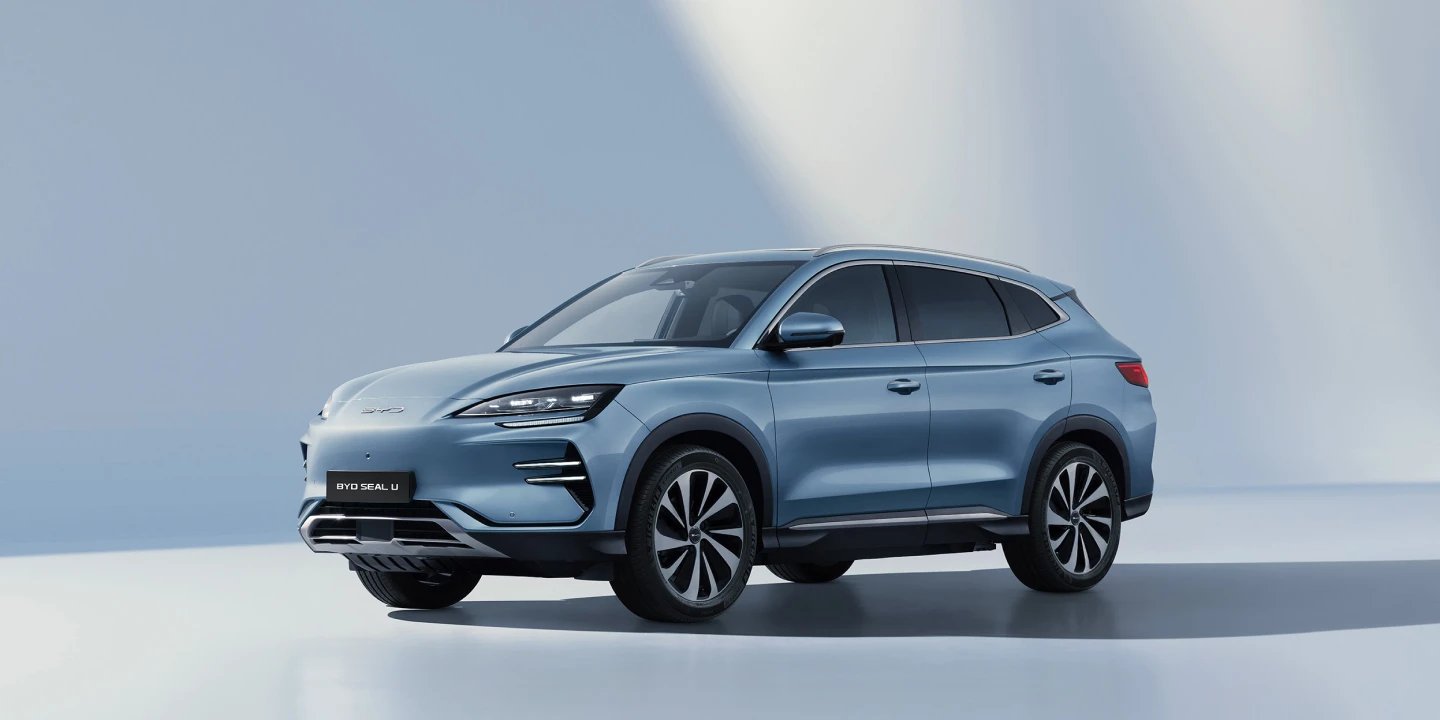
The company has officially showcased the BYD Seal U Plug-in Hybrid SUV for India, marking a major shift in strategy. Until now, BYD’s Indian lineup has been entirely electric. The Seal U changes that story.
And the timing may not be accidental.
While interest in EVs continues to rise, range anxiety remains one of the biggest reasons many buyers still hesitate to make the switch. BYD appears to be targeting that exact concern.
What Happened?
BYD has unveiled the Seal U plug-in hybrid SUV in India ahead of its expected launch before the end of 2026.
The headline figure immediately grabs attention: a claimed combined driving range of more than 1,200 km.
The SUV combines:
- 1.5-litre turbocharged petrol engine
- Dual electric motors
- 18.3 kWh Blade Battery
- Plug-in hybrid DM-i technology
The Seal U can also travel up to 70 km in pure electric mode before the petrol engine is needed.
For many urban commuters, that could mean completing daily trips without consuming any petrol at all.
But that’s only part of the story.
Why This Hybrid Is Different
India already has successful hybrid SUVs.
However, BYD says the Seal U operates differently from many conventional hybrid systems currently on sale.
The vehicle relies primarily on electric propulsion. During normal city driving, the electric motors do most of the work, while the petrol engine largely acts as a generator to maintain battery charge.
Only when higher power is required does the engine directly contribute to driving the wheels.
The system automatically switches between:
| Mode | Purpose |
|---|---|
| Pure EV | Electric-only driving |
| Series Hybrid | Engine generates electricity |
| Parallel Hybrid | Engine and motors work together |
Drivers do not need to manually manage any of these transitions.
And that simplicity could be one of the SUV’s biggest selling points.
Must Read: Kia’s Massive 2026-27 SUV Push Could Change India’s Market Faster Than Expected
The Efficiency Numbers Are Raising Eyebrows
BYD claims the Seal U can achieve fuel consumption of just 4.8 litres per 100 km.
For a mid-size SUV capable of travelling more than 1,200 km on a combined range, that’s a significant figure.
The company also says:
- Petrol engine thermal efficiency: 43.04%
- Electric motor efficiency: 97.5%
Those numbers are designed to maximize energy utilization while reducing fuel consumption.
In practical terms, the goal is straightforward: fewer fuel stops and lower running costs.
And this is where things become interesting.
The Blade Battery Advantage
At the heart of the Seal U sits BYD’s 18.3 kWh Blade Battery.
The battery uses lithium iron phosphate (LFP) chemistry and is already a core part of BYD’s global EV strategy.
According to the company, the battery has been engineered to improve:
- Thermal stability
- Durability
- Safety
The SUV also supports Vehicle-to-Load (V2L) functionality.
That means the battery can power external appliances and electronic devices directly from the vehicle.
It’s a feature that remains relatively uncommon in the mainstream Indian market.
Key Takeaway
70 km EV range + 1,200 km total range = a vehicle designed to reduce both charging anxiety and fuel anxiety.
That’s a combination very few products currently offer in India.
Why The Market Could Pay Attention
India’s hybrid passenger vehicle segment is currently dominated by Toyota and Maruti Suzuki.
Plug-in hybrids, however, remain largely absent from mainstream categories.
That creates an opportunity.
BYD is effectively targeting a growing group of buyers who like the idea of electric driving but are still uncomfortable depending entirely on charging infrastructure during long-distance travel.
For these consumers, the Seal U may appear to offer the best of both worlds.
Electric commuting during the week.
Petrol-backed flexibility for longer journeys.
At least on paper, that’s a compelling proposition.
The Contrarian View
Not everyone will be convinced.
Some EV advocates argue that plug-in hybrids are only a transitional technology and that fully electric vehicles remain the long-term destination.
Others may question whether buyers will consistently charge a plug-in hybrid battery, since doing so is necessary to maximize efficiency and realize the benefits of electric-only driving.
There is also the broader question of pricing.
BYD has not yet announced Indian pricing for the Seal U.
And in the automotive world, impressive technology often succeeds or fails based on one simple factor: affordability.
That means the real test may come when the price tag is finally revealed.
What Happens Next?
The Seal U signals an important evolution for BYD’s India strategy.
Until now, the company’s local portfolio has consisted exclusively of EVs such as the Atto 3, Seal and eMAX 7.
A plug-in hybrid SUV opens the door to a much larger audience—especially buyers who want electrification without fully committing to an EV lifestyle.
The bigger question is whether this approach becomes a niche experiment or the beginning of a larger shift in India’s electrified vehicle market.
If consumers embrace long-range plug-in hybrids, other manufacturers may find themselves under pressure to respond.
And that could make the next phase of India’s SUV battle far more interesting than anyone expected.
Editorial Disclaimer: This article is based entirely on publicly available information regarding the BYD Seal U Plug-in Hybrid SUV. No facts, figures, outcomes, quotes, or future developments have been fabricated. Analysis and market implications may evolve as new information becomes available.