Two things just changed the luxury SUV conversation in 2026—quietly, but sharply.
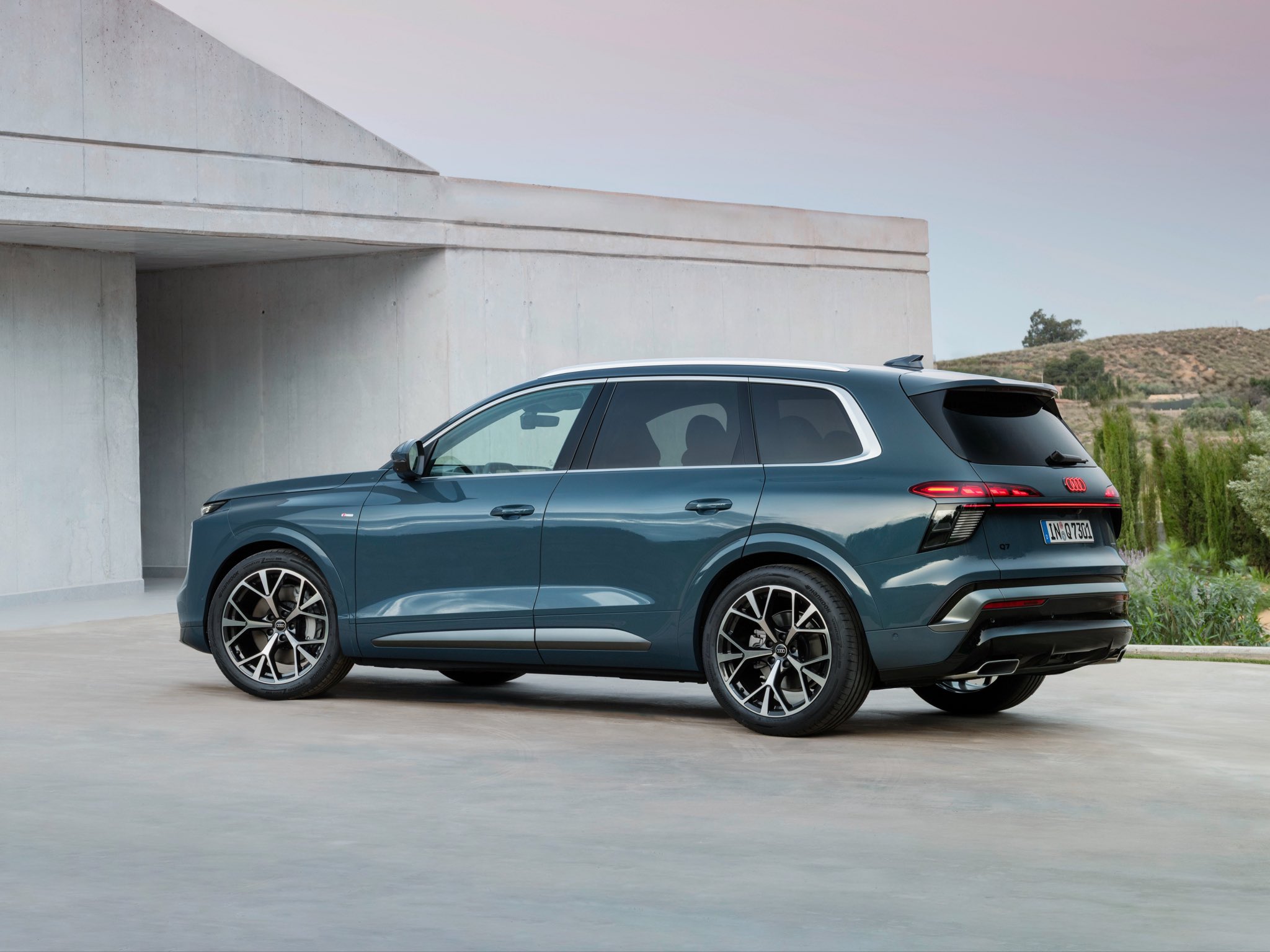
A new-generation Audi Q7 has arrived with three seating layouts. And it’s not playing it safe.
A 5, 6, or 7-seat luxury SUV from one of Germany’s biggest names? That’s not just a refresh. That’s a strategic reset.
And rivals like BMW and Mercedes-Benz are now looking at a very different battlefield.
Table of Contents
ToggleWhat Happened: Audi’s Big SUV Rebuild Moment
Audi has formally unveiled the third-generation Q7, replacing the long-running second-gen model after an 11-year cycle.
This isn’t a mild update.
It shifts onto the new Premium Platform Combustion (PPC) architecture and slots strategically between the Q5 and the upcoming Q9 in Audi’s SUV hierarchy.
But the real shock isn’t the platform.
It’s the flexibility.
Key headline changes:
- 3 seating layouts: 5-seat, 6-seat (captain chairs), 7-seat
- Split headlamp design + connected tail-lamps
- New triple-screen interior layout
- Mild-hybrid diesel + twin-turbo petrol V6 engines
- Optional V8-powered SQ7 variant
And yes, it’s still aimed directly at the BMW X5 and Mercedes-Benz GLE.
But the Q7 now feels like it’s trying to out-position them, not just match them.
Must Read: McLaren Price Cut in 2026 Sparks Shock: Up to ₹3.3 Cr Drop Ahead of FTA Shift
Why It Matters: Audi Is Redrawing the Luxury SUV Formula
The biggest shift here isn’t design—it’s usage philosophy.
Audi is no longer treating the Q7 as a single-family luxury SUV formula. It’s turning it into a modular experience.
A quick breakdown:
| Configuration | Purpose |
|---|---|
| 5-seat | Maximum luggage + executive comfort |
| 6-seat | Luxury-focused family travel (captain chairs) |
| 7-seat | Full practicality + third-row usability |
This matters because luxury SUVs have long struggled with identity.
Either they’re comfortable… or practical. Rarely both.
The 2026 Q7 is trying to be both—at scale.
But that’s only part of the story.
Design & Interior: The “Tech-Heavy Luxury” Shift
Visually, the new Q7 moves toward a more muscular stance with sharper intent.
At the front:
- Split headlamp setup
- Slim DRLs with pixel lighting elements
- Vertically oriented Matrix LED units in black housings
- Large grille + wide air intake design
At the rear:
- Split tail-lamp structure
- Connected light bar
- Illuminated Audi branding
- Dual exhaust design
Inside, things get even more aggressive.
The dashboard is dominated by a triple-screen layout, angled toward the driver.
Other key elements:
- New 4-spoke steering wheel
- Wood + leather-heavy cabin finish
- Dual wireless charging pads
- Bang & Olufsen 4D 22-speaker system
- Ambient lighting integrated into doors and headrests
And then there’s a detail that stands out:
Front seats include headrest speakers for phone calls.
Not flashy. But very “next-gen Audi”.
Powertrain: Diesel Still Lives—But Smarter
The Q7 doesn’t abandon combustion. It evolves it.
Engine options include:
Petrol:
- 2.9L twin-turbo V6
- 429 hp / 599 Nm
- 0–100 km/h in 4.8 seconds
Diesel:
- 3.0L mild-hybrid V6 TDI
- Two outputs: 245 hp or 299 hp
- Torque up to 630 Nm
- Mild hybrid boost adds up to 24 hp + 370 Nm
There’s also an interesting sustainability angle:
- Diesel can run on HVO fuel
- Claimed CO₂ reduction: up to 95% vs regular diesel
And for performance buyers:
- SQ7 with 4.0L twin-turbo V8
- 591 hp / 800 Nm
- 0–100 km/h in 3.7 seconds
This is still a combustion SUV—but heavily modernized.
Hidden Shift: Audi’s Real Strategy Move
Look closely and the Q7 isn’t just about luxury.
It’s about platform control and segmentation.
The PPC architecture allows Audi to:
- Standardize powertrains across models
- Expand hybrid flexibility
- Scale interior tech faster
But there’s a tradeoff.
More complexity inside the cabin and pricing tiers could blur the Q7’s identity.
Contrarian View: Is the Q7 Becoming Too Complicated?
Not everyone will celebrate this evolution.
Critics argue that:
- Three seating layouts may confuse buyers
- The triple-screen interior risks “tech overload”
- Luxury SUVs are drifting away from simplicity
And there’s a deeper question:
Is Audi optimizing for choice… or over-engineering the decision?
Because in luxury markets, too many options can sometimes reduce clarity instead of increasing appeal.
That’s where the debate is now starting.
What Happens Next: Pricing, Pressure, and Global Rollout
The European rollout timeline is already set:
- Orders open: this month
- Deliveries: September 2026
- Starting price: €87,900 (~₹96.9 lakh)
India is expected to follow, but timing remains unclear.
What’s certain is this:
- The Q7 will enter a more crowded luxury SUV segment than ever
- BMW and Mercedes-Benz will likely respond with refreshed rivals
- The real competition will be software + interior experience, not just engines
Key Takeaway
The 2026 Q7 isn’t just a redesign—it’s Audi testing how far luxury SUVs can stretch before they lose simplicity entirely.
And the industry now faces a quiet question:
Are buyers actually asking for more choice… or just better clarity?
Disclaimer: This article is based on publicly available information. No facts, outcomes, or specifications have been fabricated. Interpretations may evolve as new details emerge.