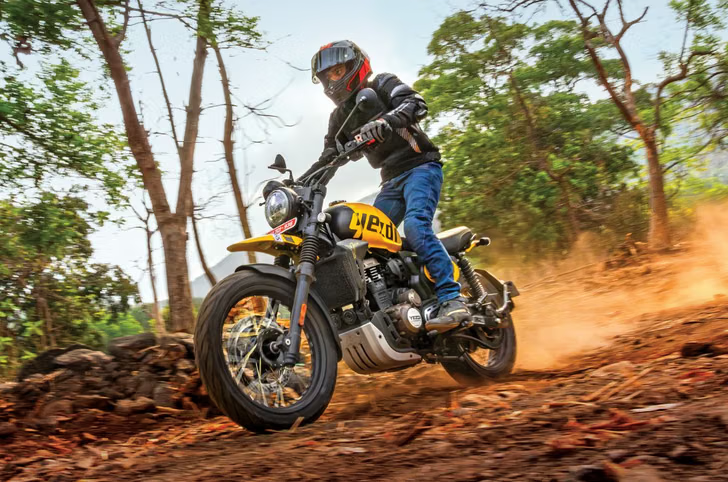
It looks like a simple scrambler upgrade on paper.
But the moment you dig into the BSA Scrambler 650, the story starts splitting in two directions.
One side screams old-school torque magic.
The other feels like a motorcycle still trying to figure itself out.
And that contradiction is exactly what makes this 2026 machine impossible to ignore.
Table of Contents
ToggleWhat Changed — And Why It Feels Bigger Than a Variant
The Scrambler 650 isn’t a clean-sheet motorcycle. It’s built on the same 652cc platform as the Gold Star 650 from BSA Motorcycles, but the changes go deeper than cosmetics.
You get:
- A 19-inch front wheel (up from 18)
- Around 20mm more suspension travel at both ends
- A new rear subframe and altered stance
- A longer swingarm (as confirmed by the company, though geometry details remain undisclosed)
- Seat height jump to 820mm (from 783mm)
- Heavier feel overall — up to 220 kg fully fuelled
On paper, it’s now a “scrambler.”
In reality, it’s a Gold Star that has been stretched, lifted, and reshaped.
And that’s where things start getting interesting.
Must Read: 2026 Tata Tiago EV: 9 Changes Spark Big Debate Over India’s Cheapest EV Upgrade
The Engine Everyone Agrees On (Almost Unfairly Good)
There’s one area where debate simply collapses: the engine.
The 652cc single-cylinder motor delivers:
- 45 hp at 6,500 rpm
- 55 Nm at 4,000 rpm
- 0–100 km/h in 6.3 seconds
But numbers don’t capture its personality.
This is pure thumper character — the kind that pulls hard from around 3,000 rpm and feels almost effortless in city and mid-range riding. In fact, it even challenges bigger reputations in its segment, including machines from Royal Enfield, especially in low- and mid-range shove.
Key takeaway:
This engine is not trying to be refined. It’s trying to be addictive.
But that addiction comes at a cost.
The Hidden Trade-Off Nobody Can Ignore
Push it hard on highways and the romance fades slightly.
- Noticeable vibrations at higher speeds
- The motor feels stressed compared to rivals
- Five-speed gearbox is well spaced, but limits relaxed cruising
- Long rides expose its rough edges
It’s not slow. It’s just not calm.
And in 2026, that balance matters more than ever as riders expect refinement alongside character.
Ride & Handling: Better, But Still Not Fully Tamed
Classic Legends has clearly worked on chassis behavior. The rear no longer feels as bouncy as the Gold Star.
But the reality is still nuanced.
Positives:
- More composed in corners than the Gold Star
- Comfortable upright riding position
- 19-inch front helps light trail exploration
Limitations:
- Suspension struggles on bad roads at speed
- Not a true off-roader despite the scrambler badge
- Feels heavy and tall in tight low-speed situations
It sits in a strange middle ground — too road-focused for hardcore trails, too rugged for pure highway comfort.
The Feature That Raises Eyebrows
Traction control exists… but not in the way most riders expect.
Test impressions suggest:
- Rear tyre can still spin noticeably
- TC behavior feels inconsistent
- Indicator logic appears reversed compared to standard systems
Add to that:
- No gear position indicator
- A cluttered-looking front design with stacked elements (headlamp, number plate, fender layers)
And suddenly the Scrambler 650 feels less “polished evolution” and more “work in progress.”
Contrarian View: Maybe That’s the Point
Here’s the uncomfortable argument.
What if this bike isn’t trying to match refinement benchmarks at all?
Because at ₹3.25–3.41 lakh (ex-showroom), the Scrambler undercuts comparable offerings like the Royal Enfield Bear 650 by roughly ₹50,000, while offering:
- A unique single-cylinder 650 experience
- Strong low-end torque character
- Genuine scrambler stance with real mechanical changes
From that angle, the rough edges start looking less like flaws… and more like identity.
It’s not polished. It’s not quiet. It’s not trying to be universal.
And that makes it divisive — but also memorable.
Market Impact: A Niche That Refuses to Blend In
The Scrambler 650 doesn’t aim for mass domination. It aims for a specific emotional buyer — someone who values torque feel over refinement charts.
But competition is tightening. And riders in 2026 are increasingly expecting:
- Better vibration control
- Smarter electronics
- Cleaner design execution
That gap between expectation and delivery is where the Scrambler will either build cult status… or remain a niche curiosity.
What Happens Next?
The real question isn’t whether the Scrambler 650 is good or bad.
It’s whether riders today still have patience for motorcycles that feel deliberately imperfect — even when they’re mechanically interesting.
Because this bike doesn’t ask for approval.
It asks for acceptance.
And not everyone will give it.
Disclaimer: This article is based on publicly available review information. No facts, specifications, or performance figures have been altered or fabricated. Interpretation may evolve as more long-term data and user feedback become available.